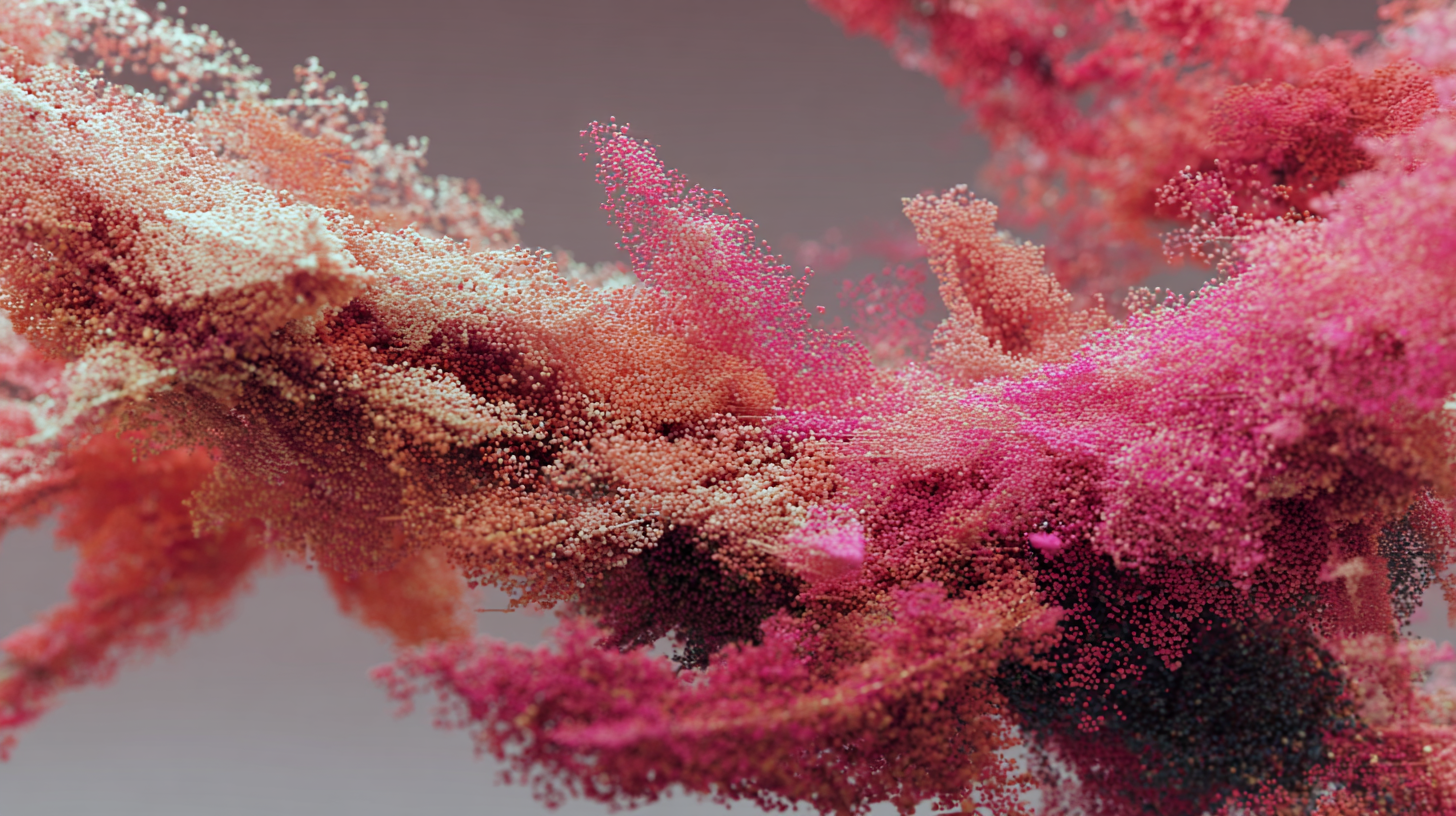
Twenty years of my work involved solvers — the part of a 3D program that decides how matter behaves. Gravity, collision, mass, drag. You set the rules and the machine resolves them.
These pieces have no solver. Nothing here was computed. The material falls, piles up, drifts and breaks apart because the model has seen enough falling to imitate it.
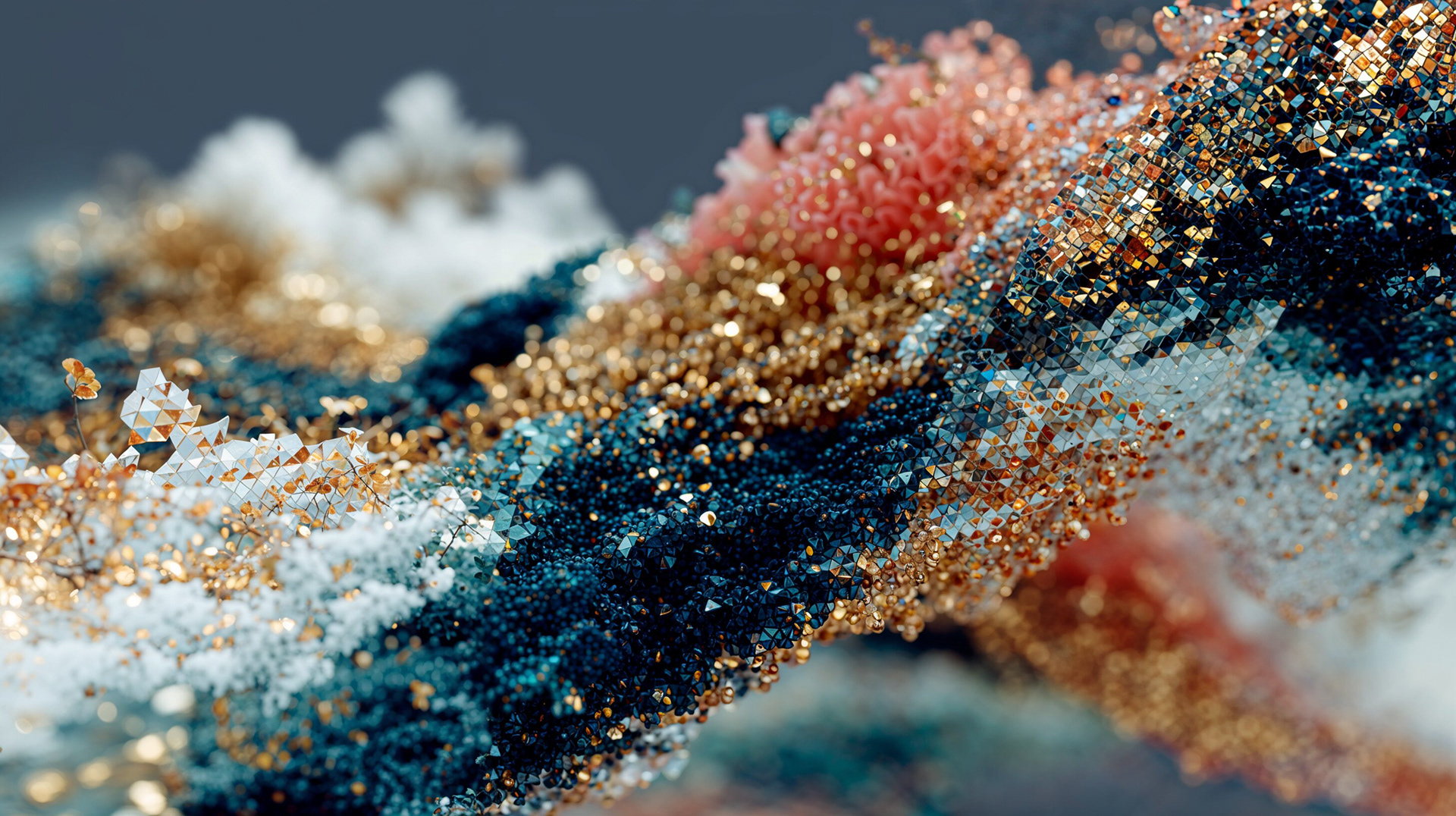
The first problem was shape. Particles come out as spheres by default — soft, round, generic. I was looking for a way to replace the primitive with a triangle, a cube, a rod, without leaving generation. It turned out to be one word. After that the question was no longer how to get it, but where it stops being an effect.
The series below are ordered by how much physics survives — from material that still behaves like matter, to form with no cause at all.
Reference & still generation Midjourney — form, material, palette Upscale Magnific — detail before motion Animation Kling AI / Seedance — image to motion Post After Effects — timing, grade, loop Edit CapCut — assembly
No simulation, no solver, no 3D scene. The material behaves because the model has seen it behave.
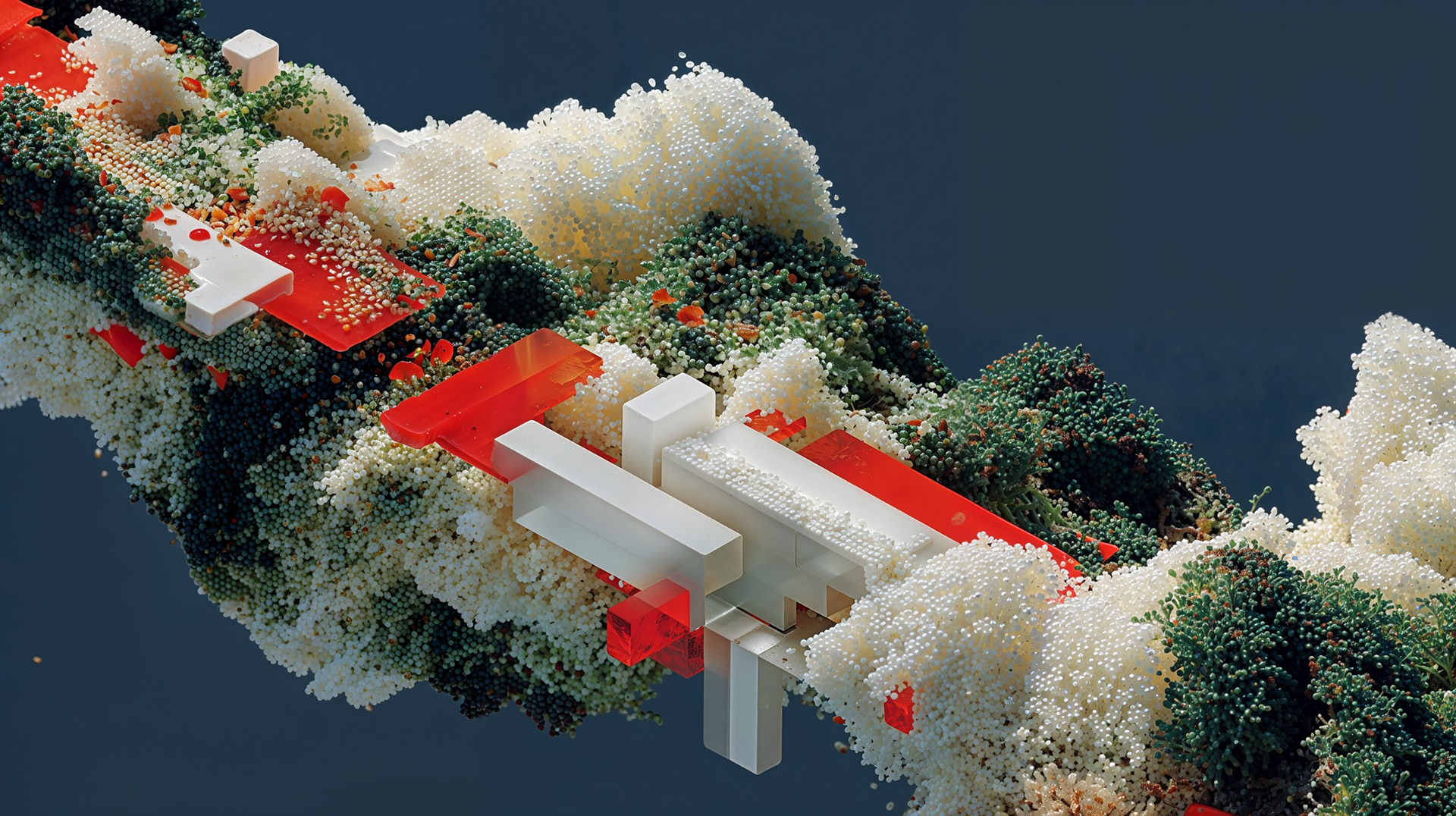
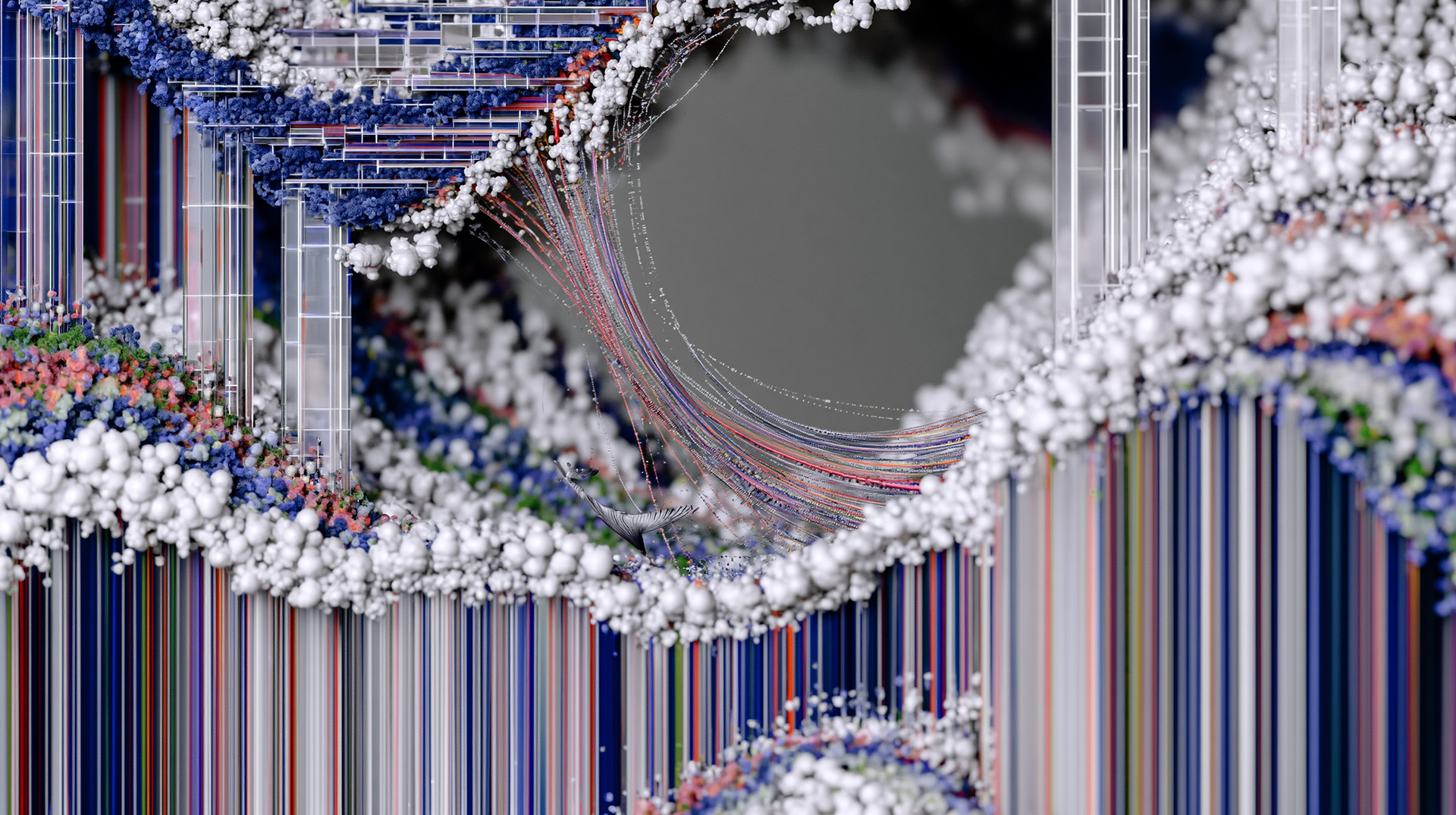
Foam City — Two materials, one frame. Weight is still convincing.


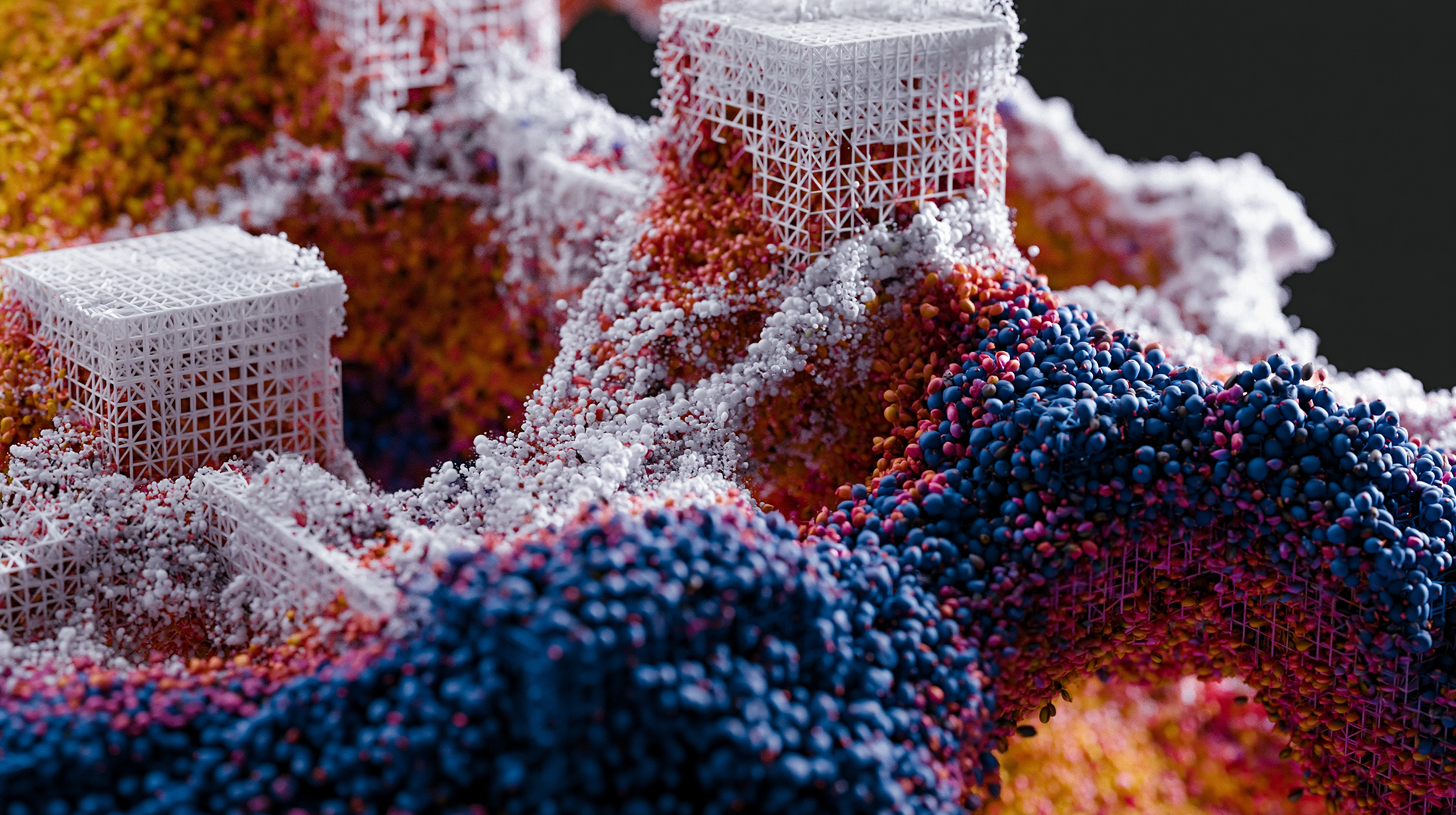
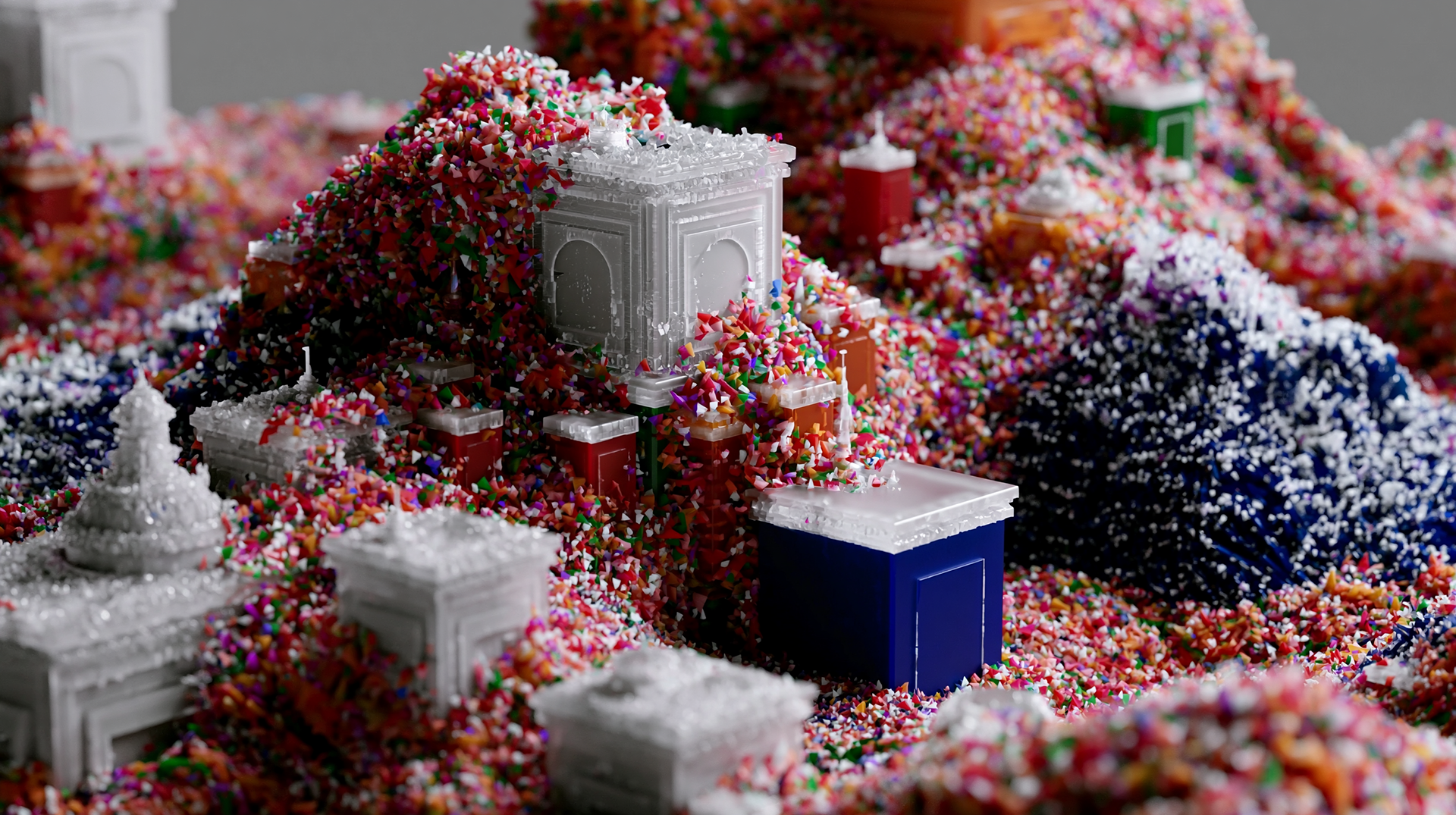
Bead Terrain — Scale lies: a landscape or a millimeter.


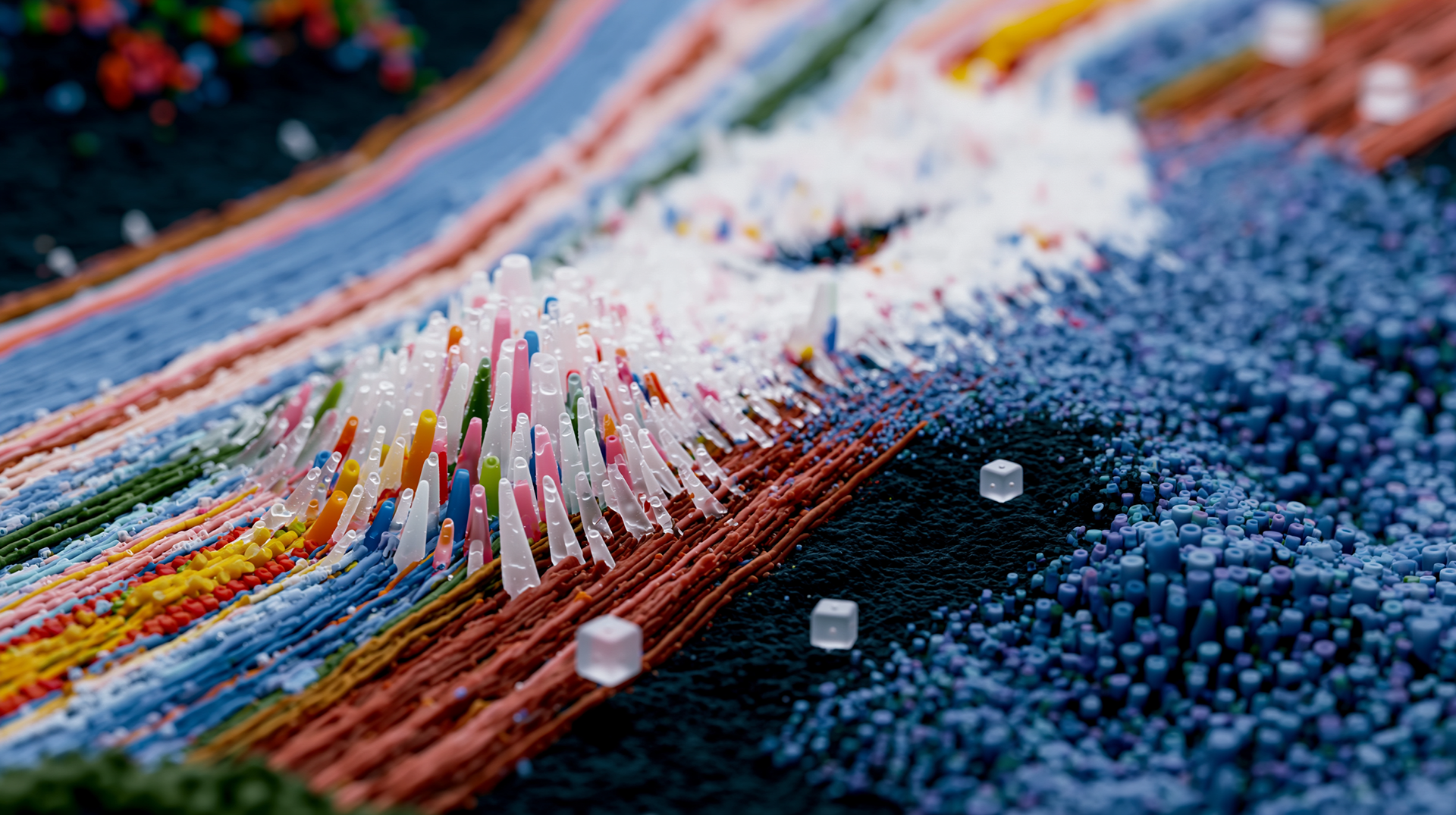

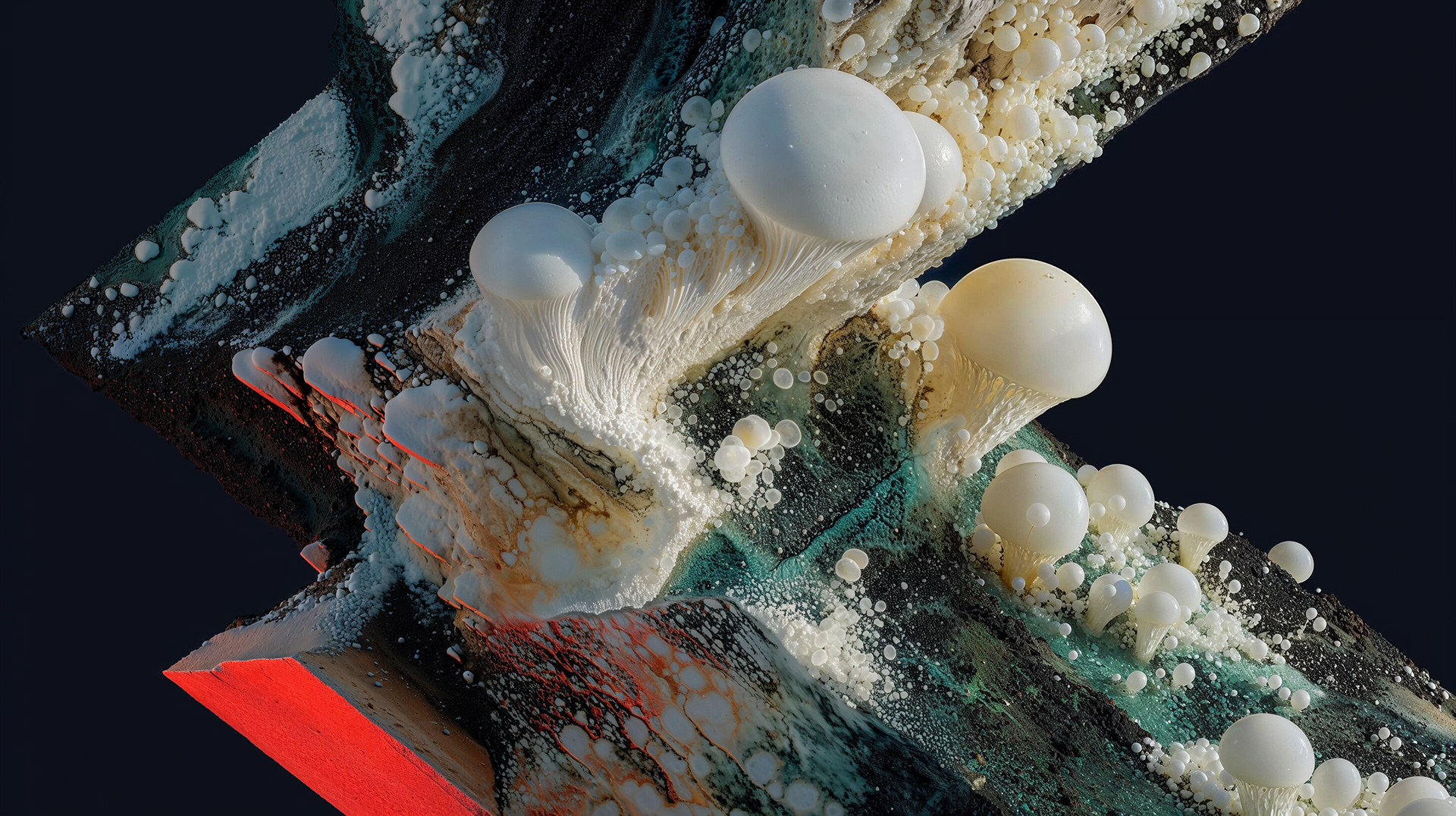
Lattice Growth — Architecture behaving like a mineral. Growth instead of falling.
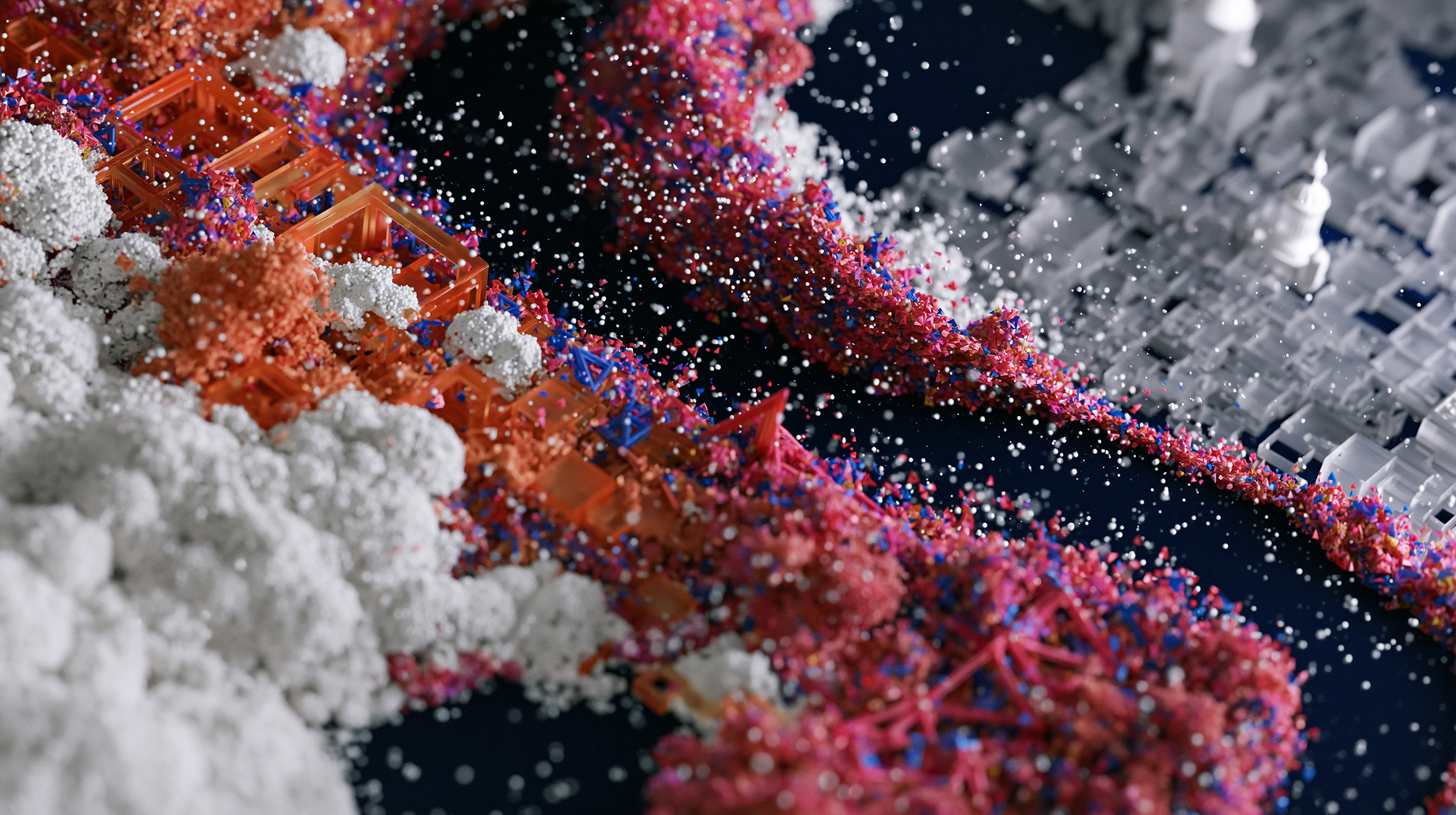
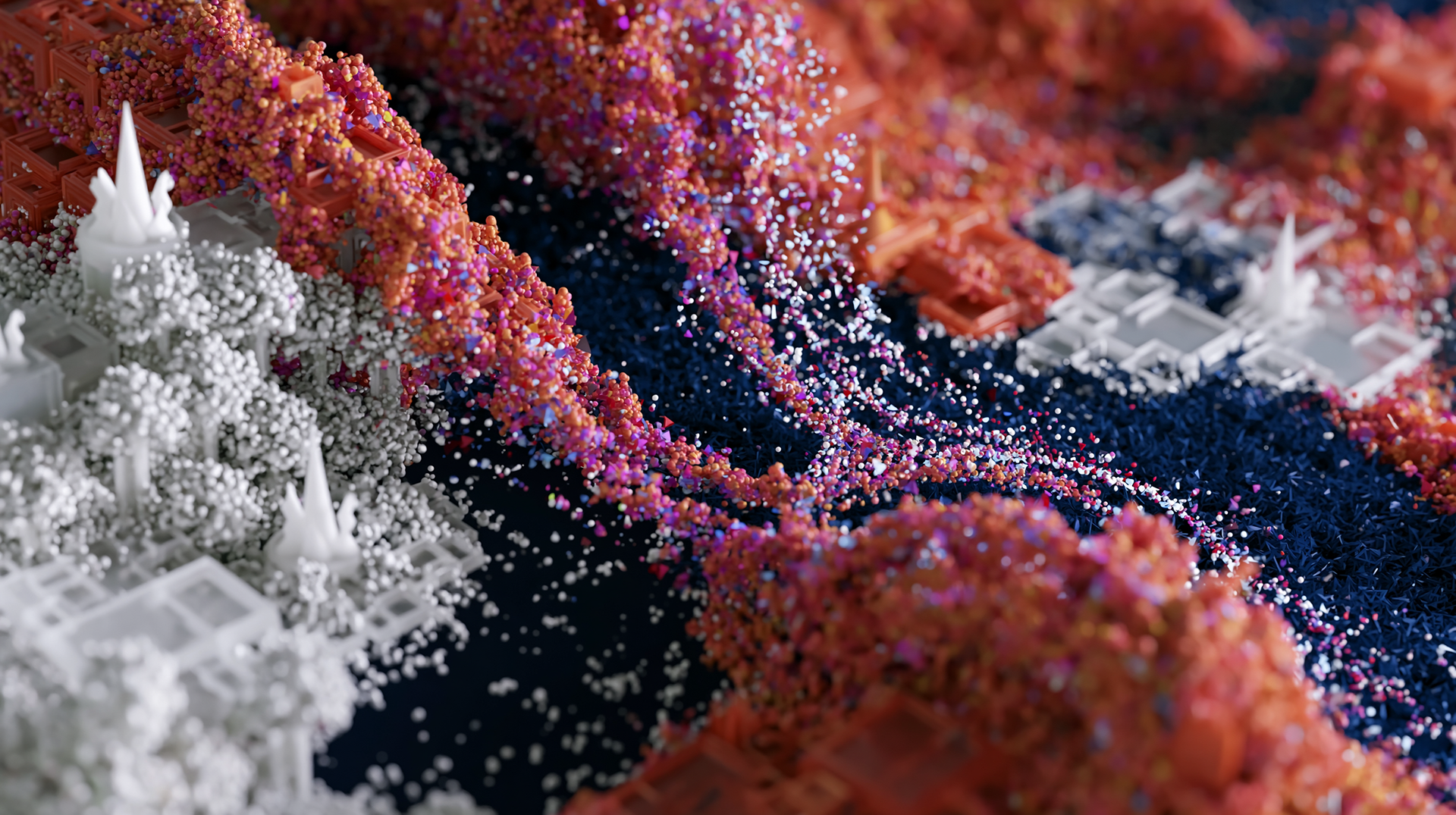

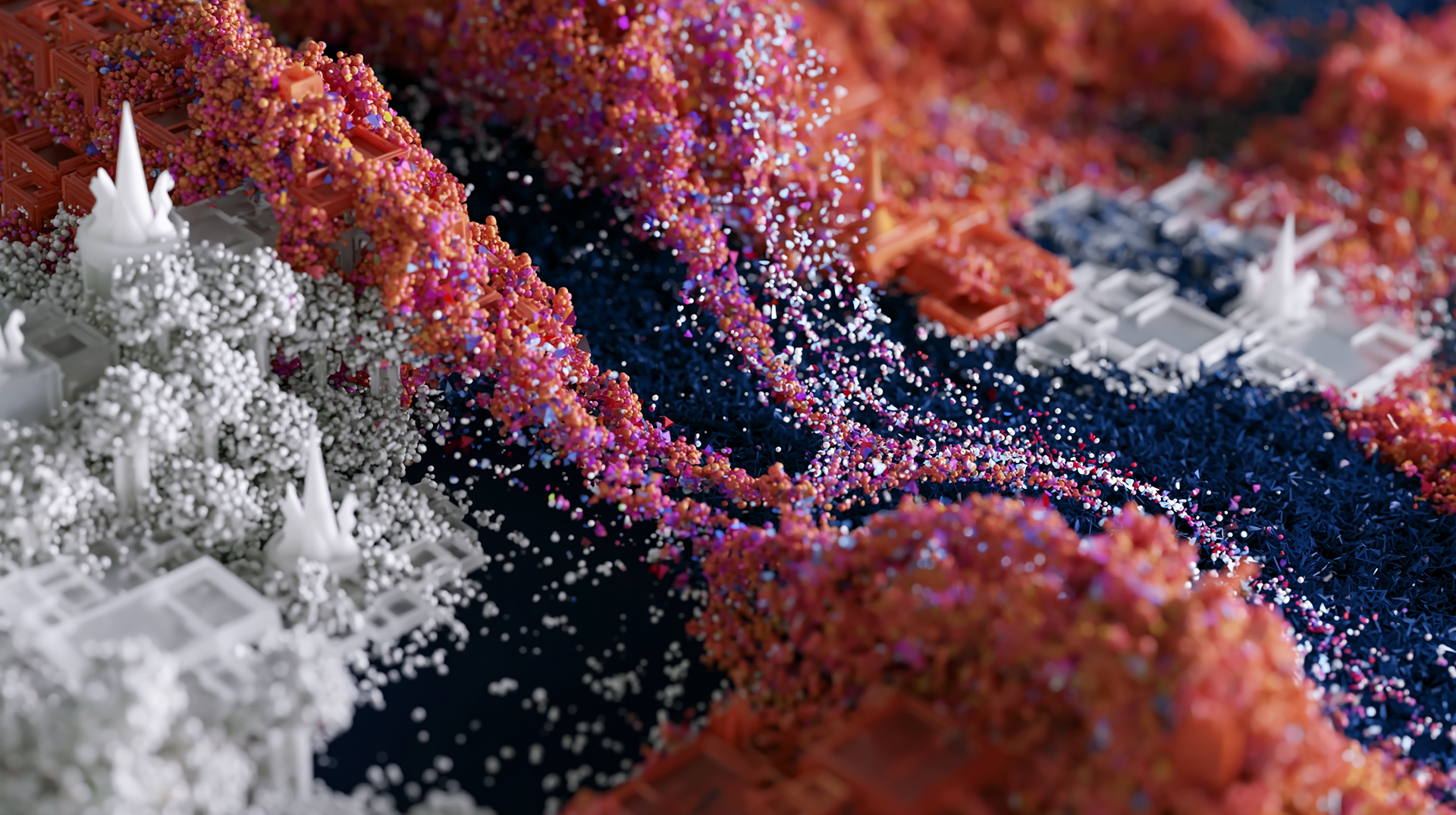
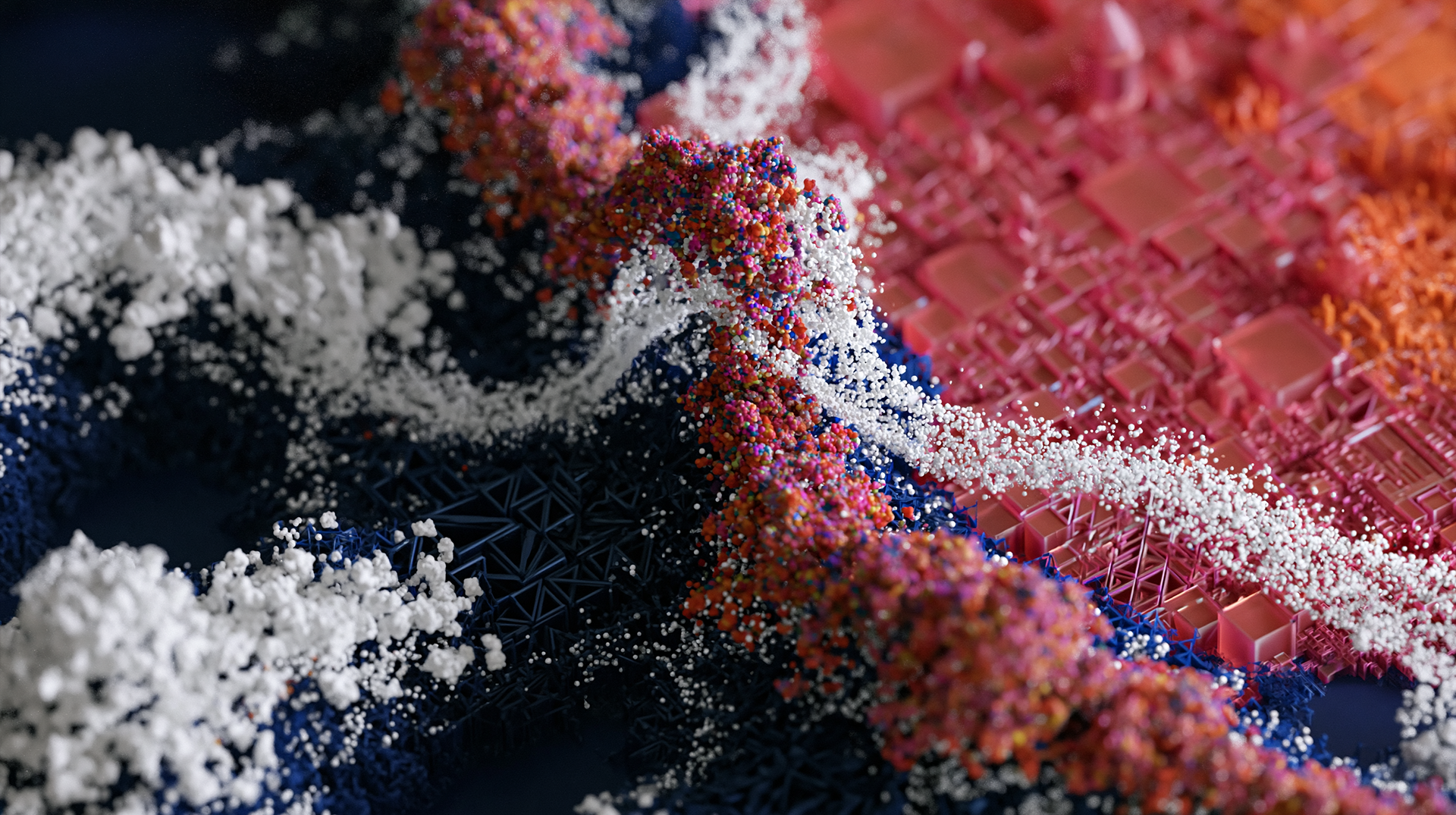


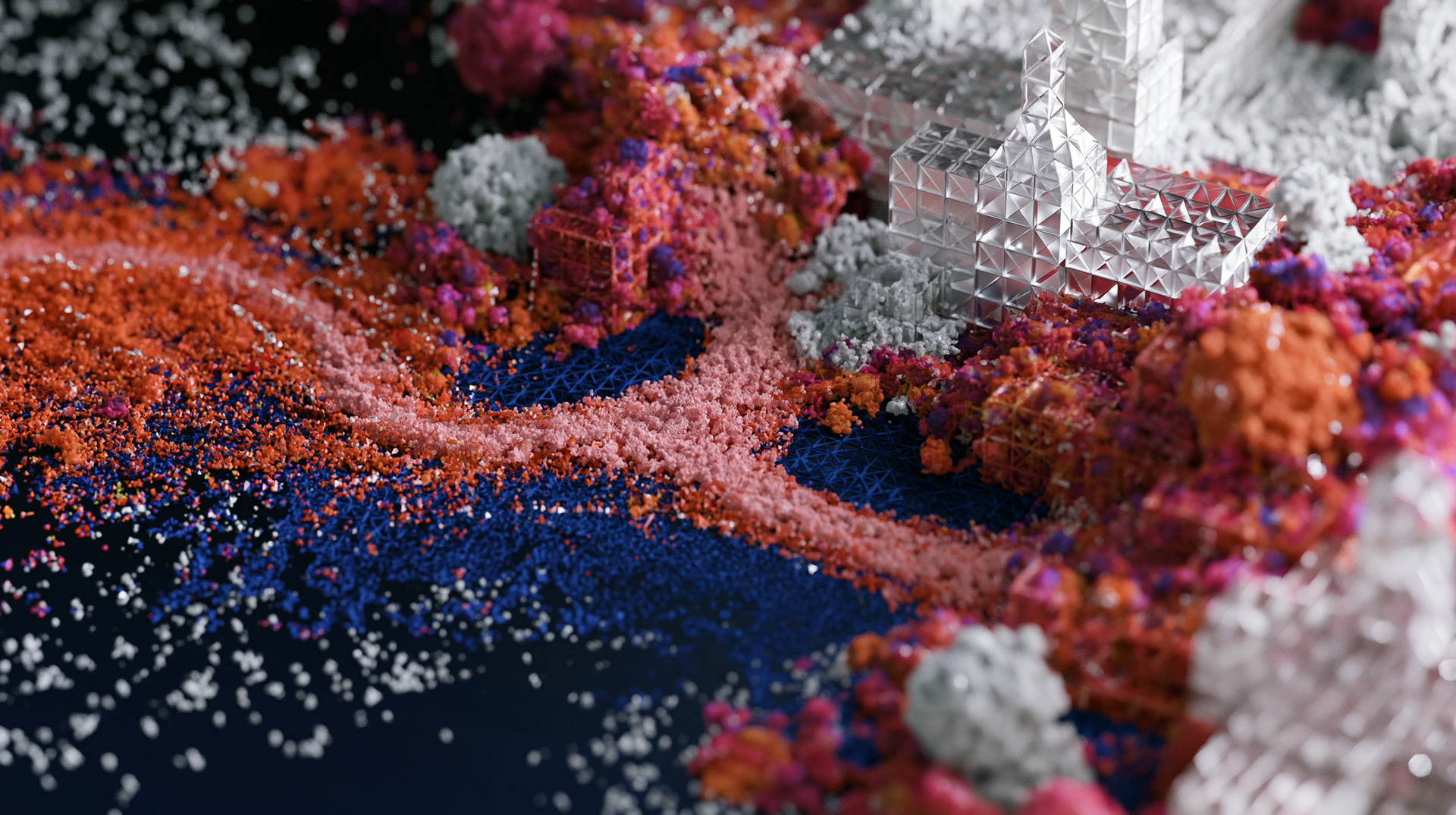
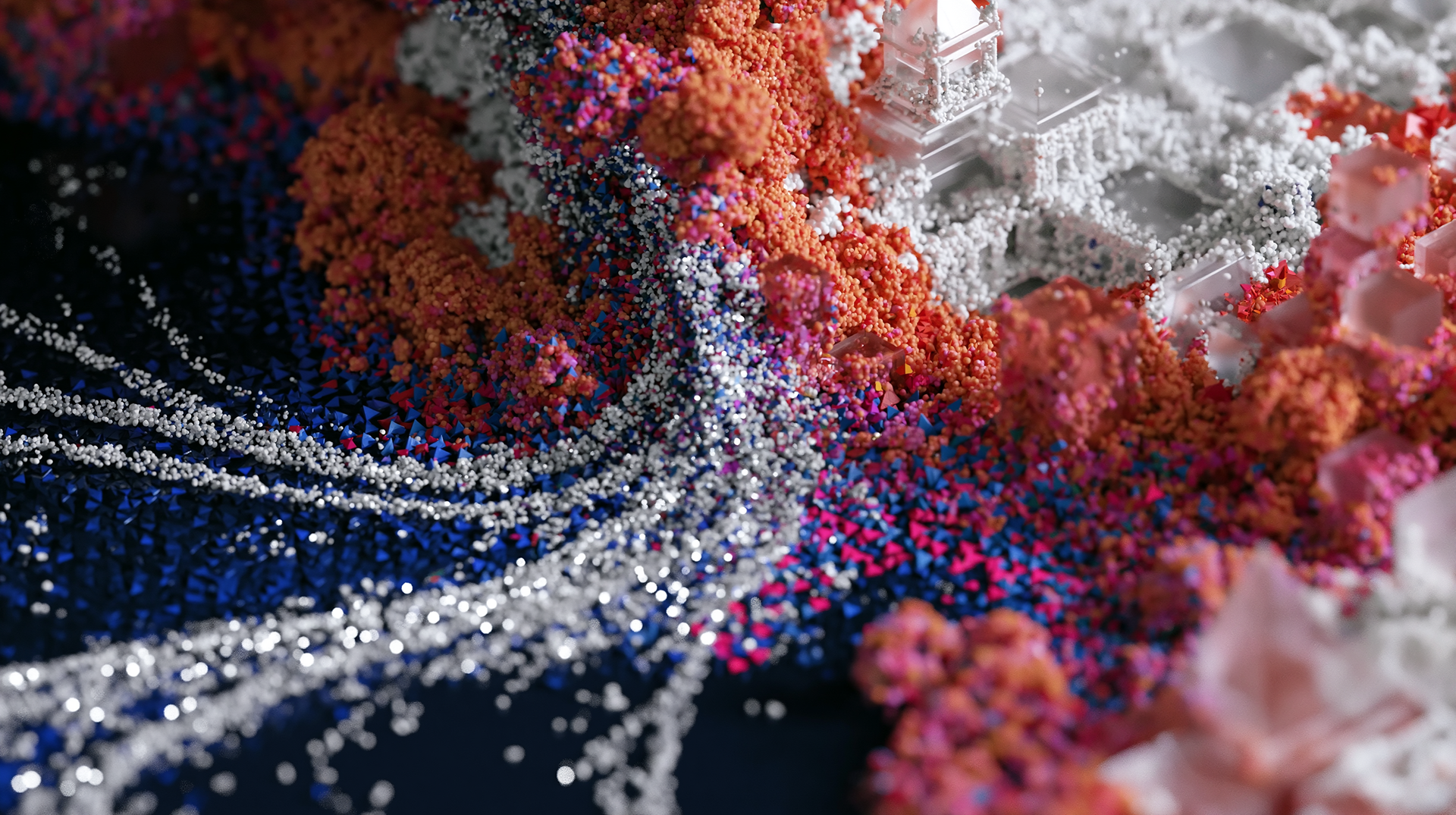
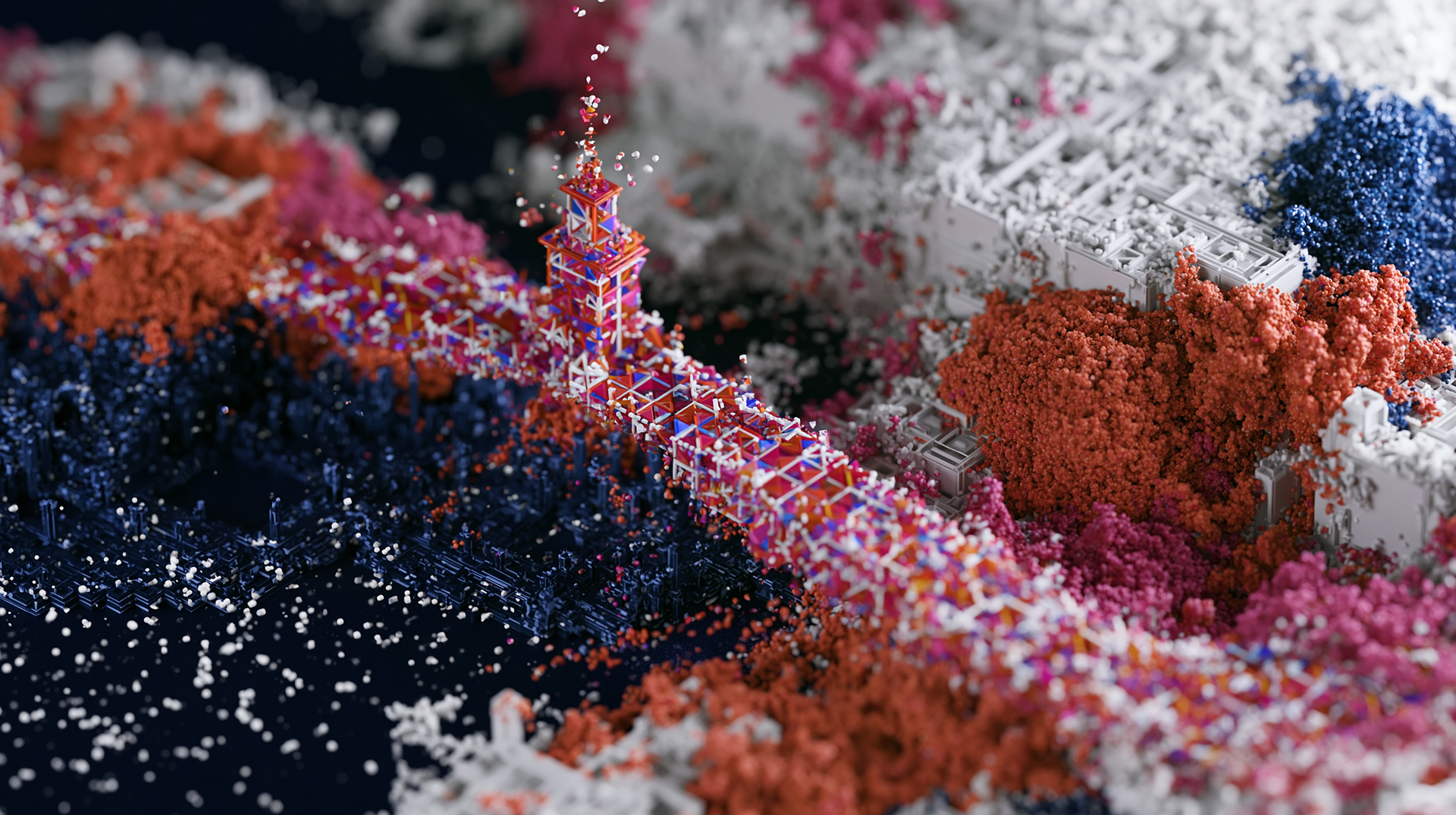
Triangulated Peaks — The particle is not a sphere. The mountain disperses upward.


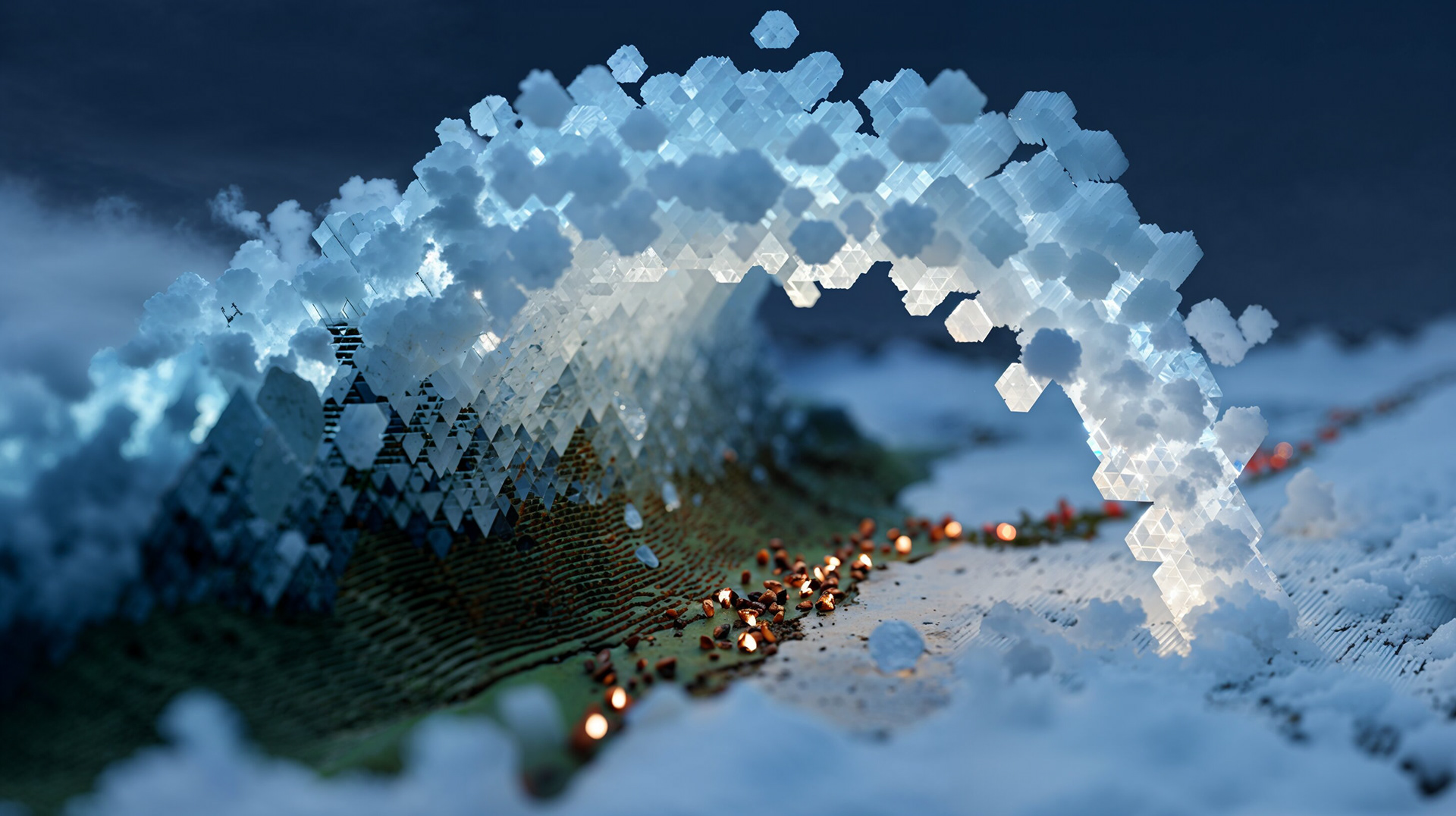
Thermal Band — Colour as data, not as light.
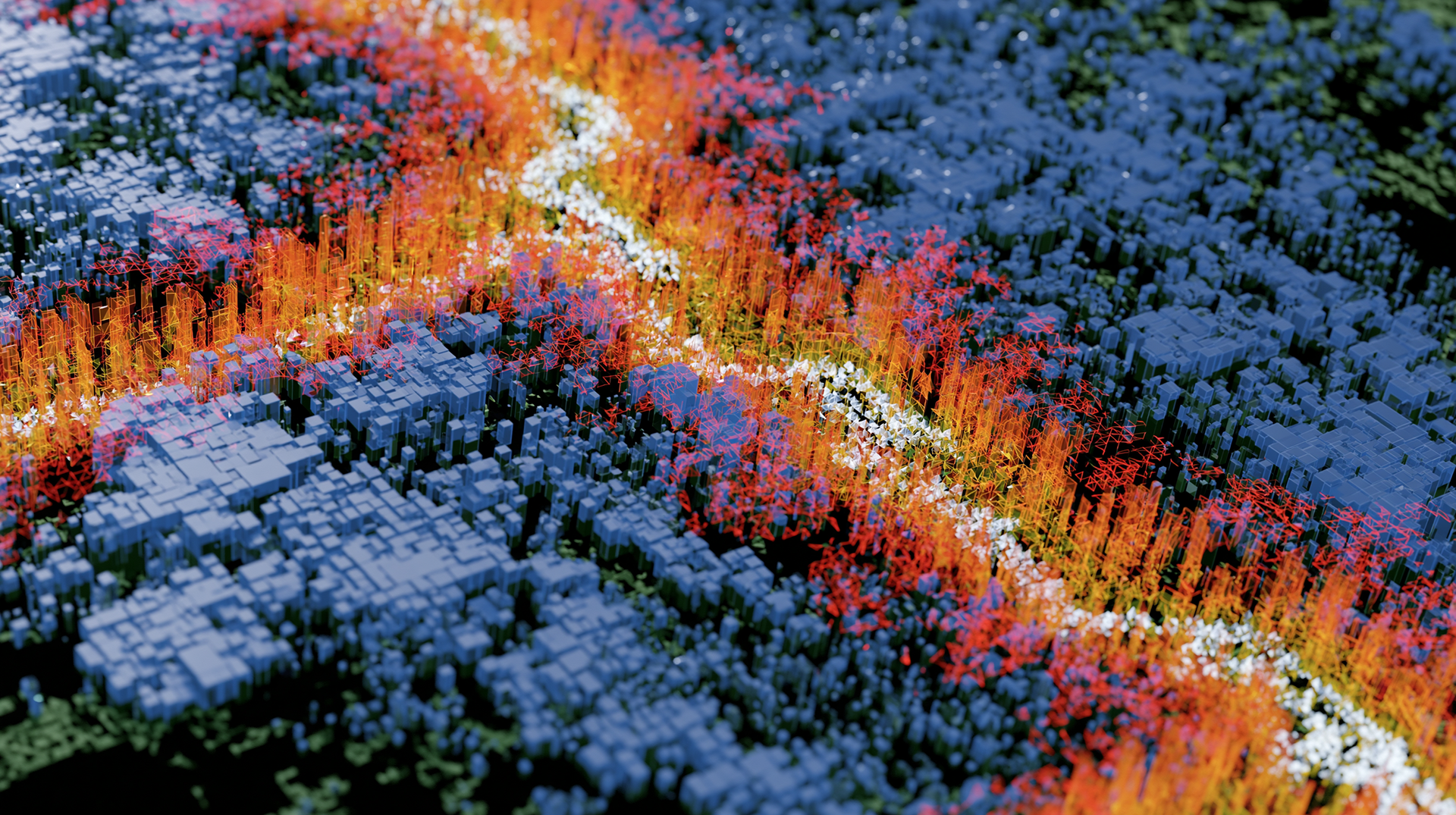
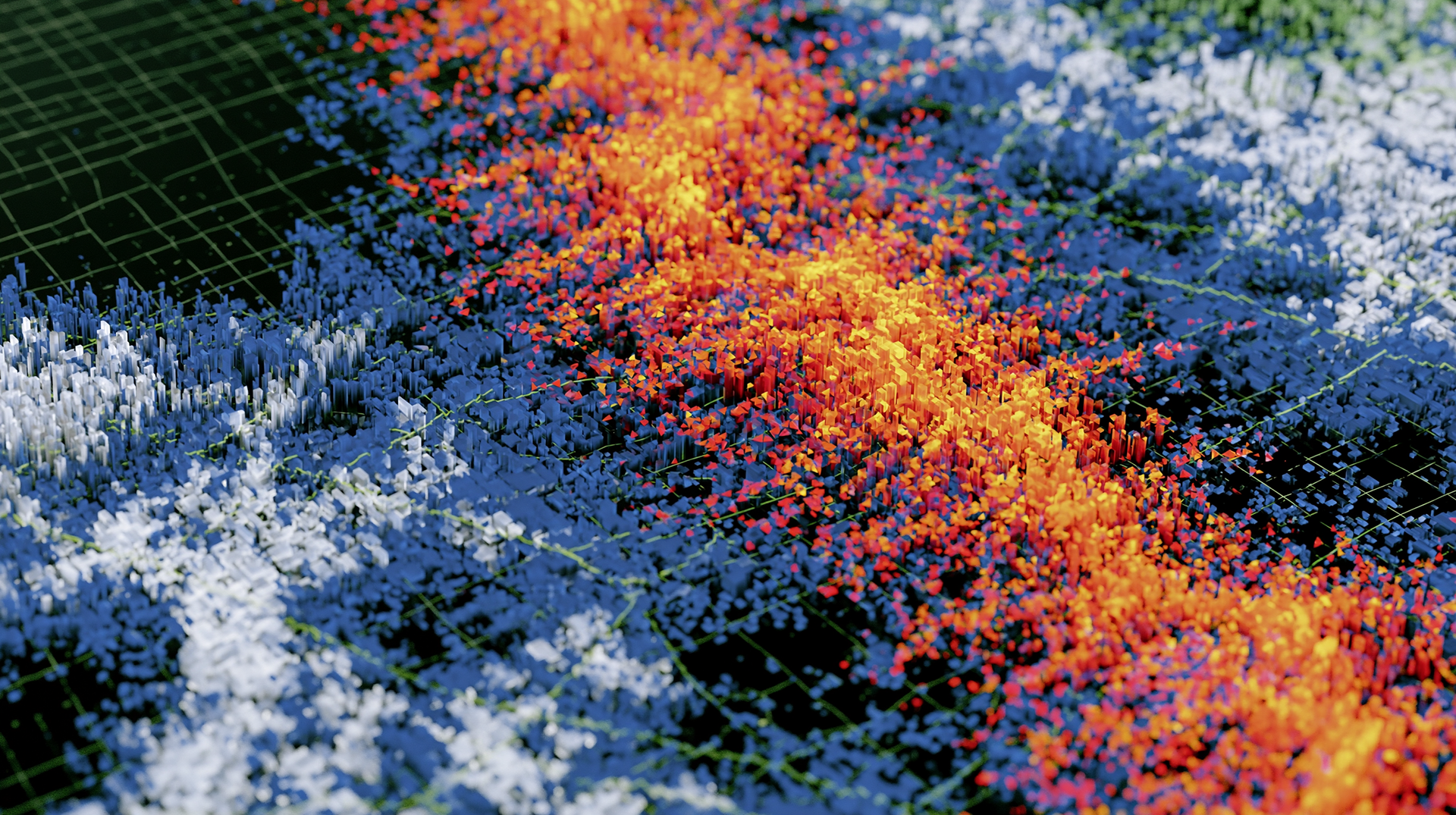

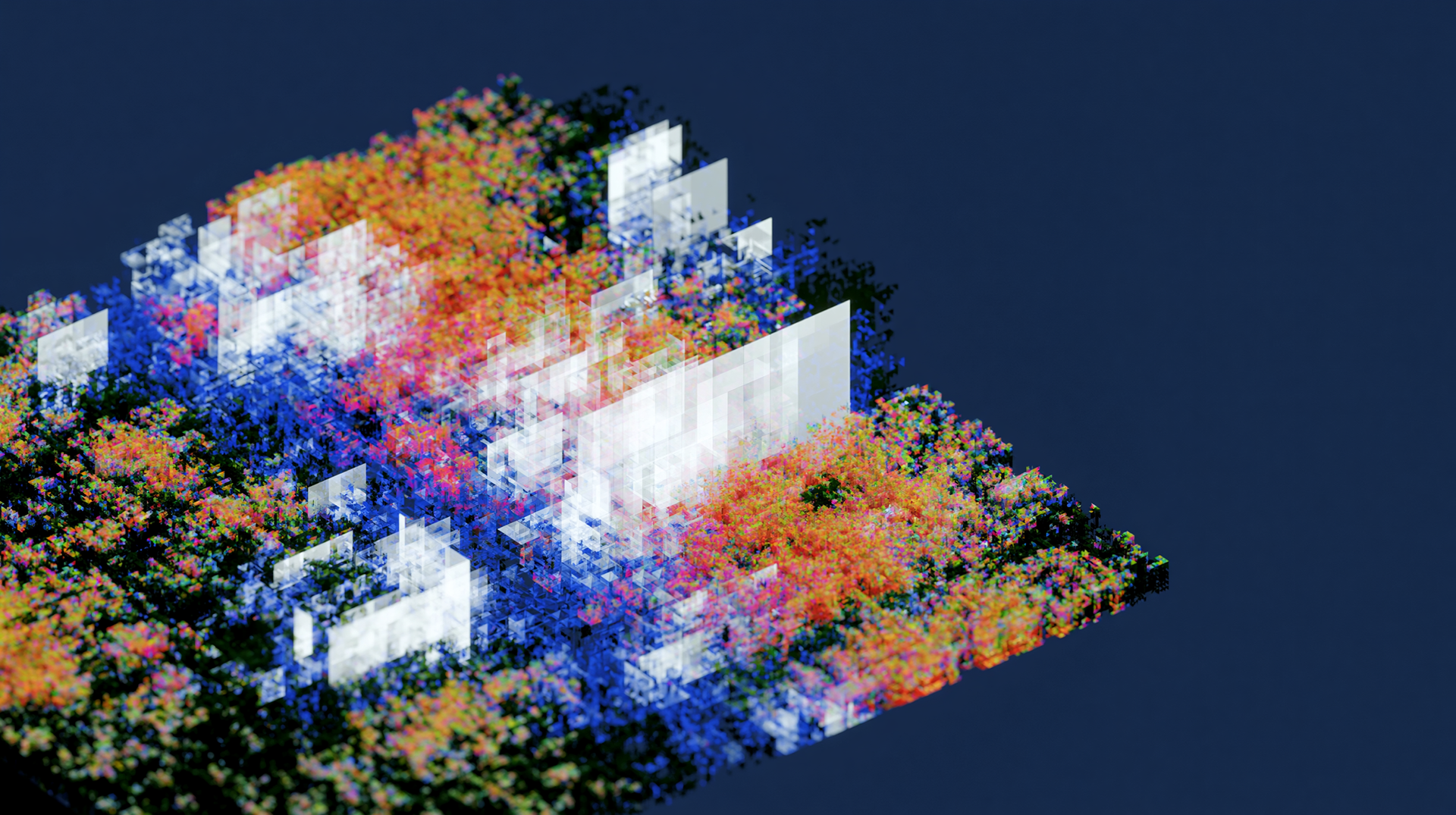
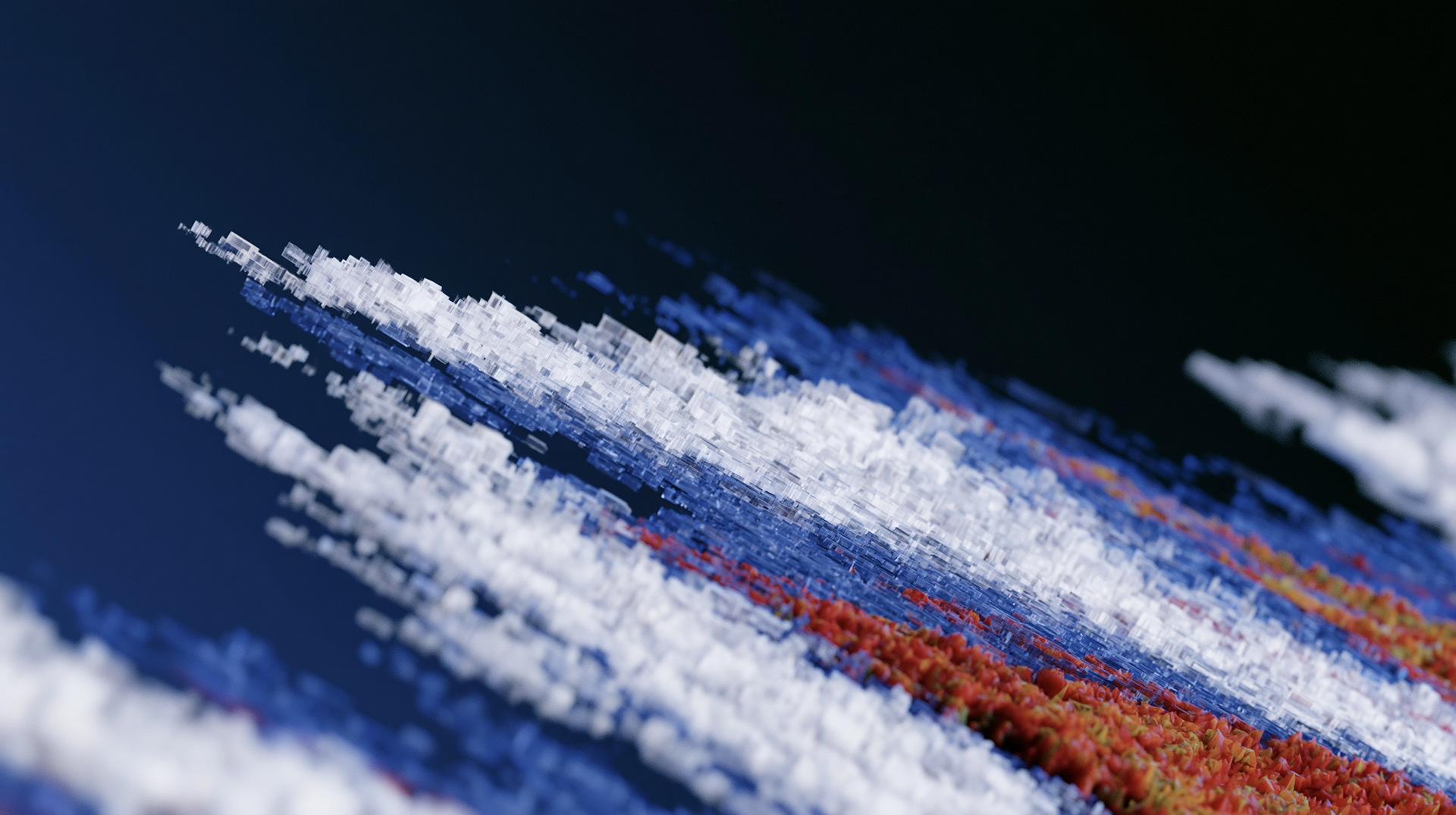
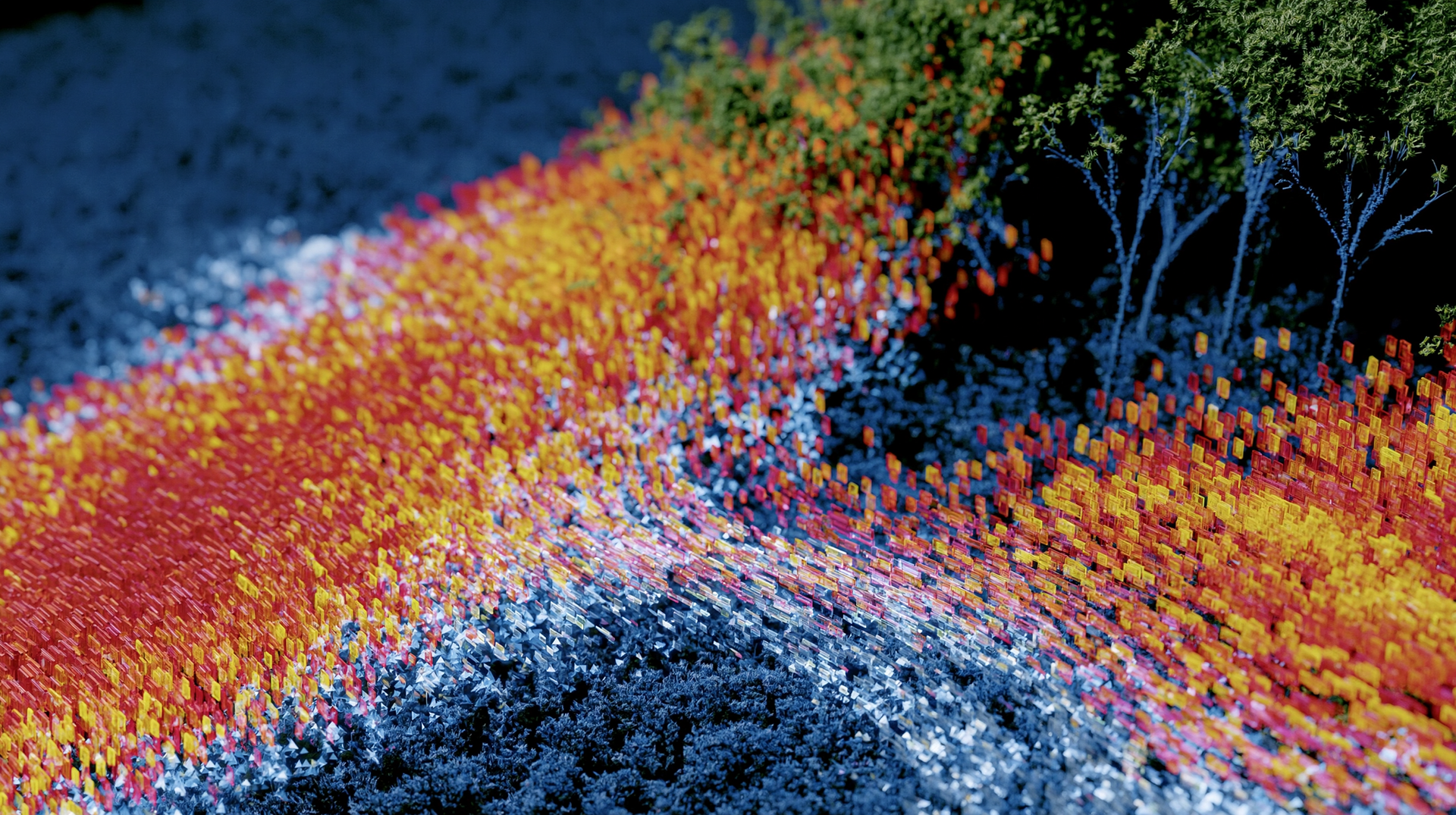
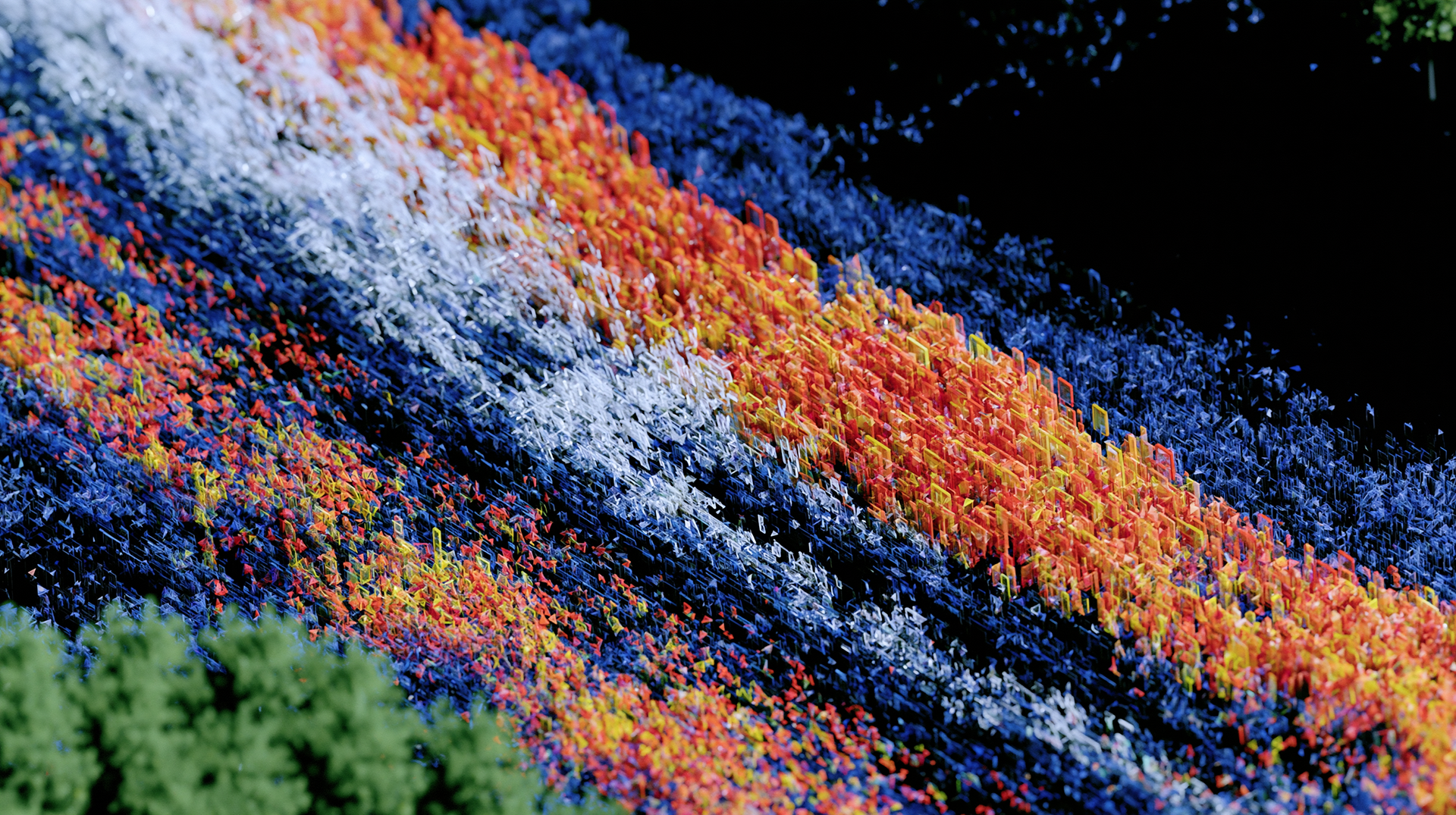
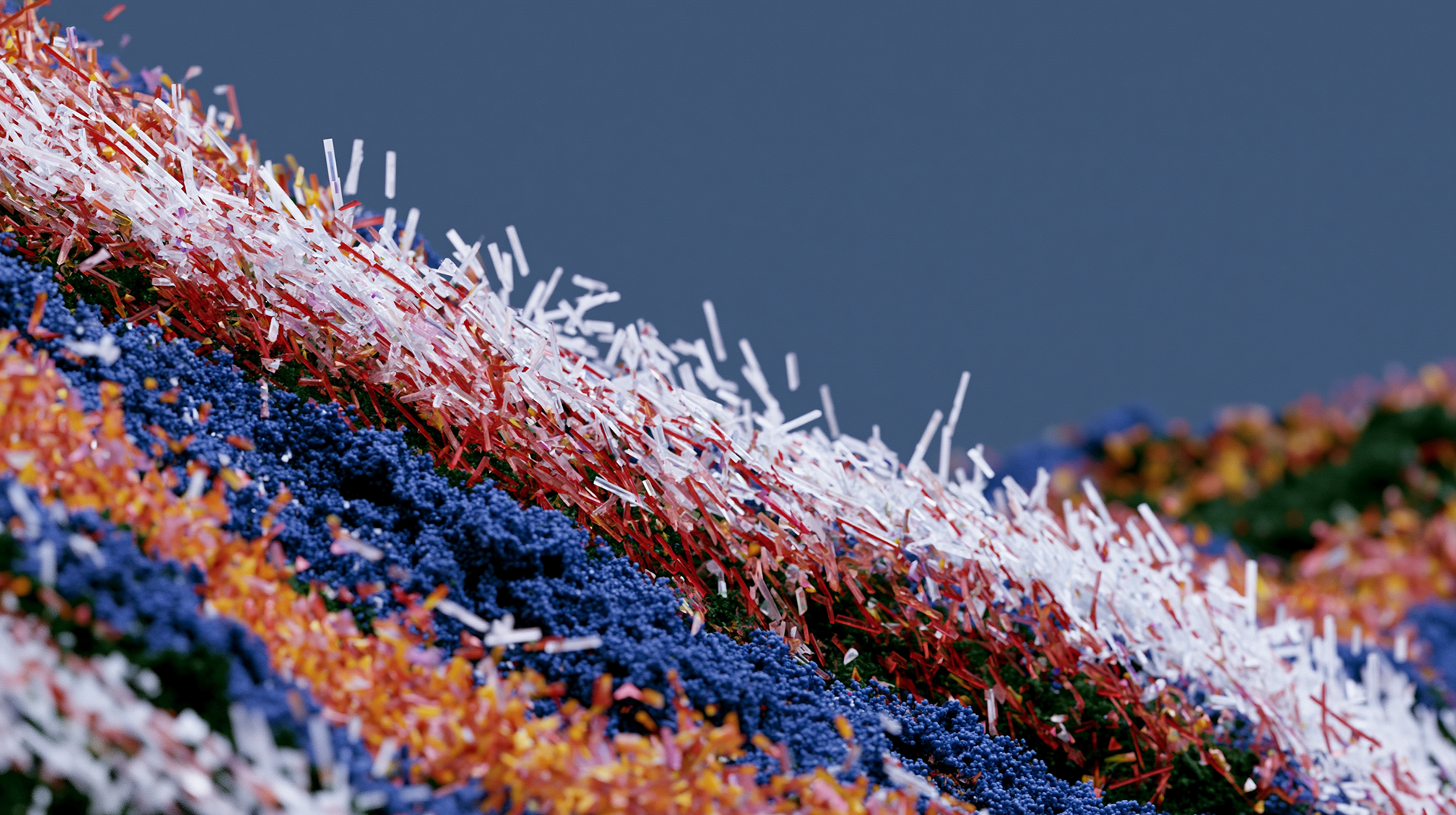

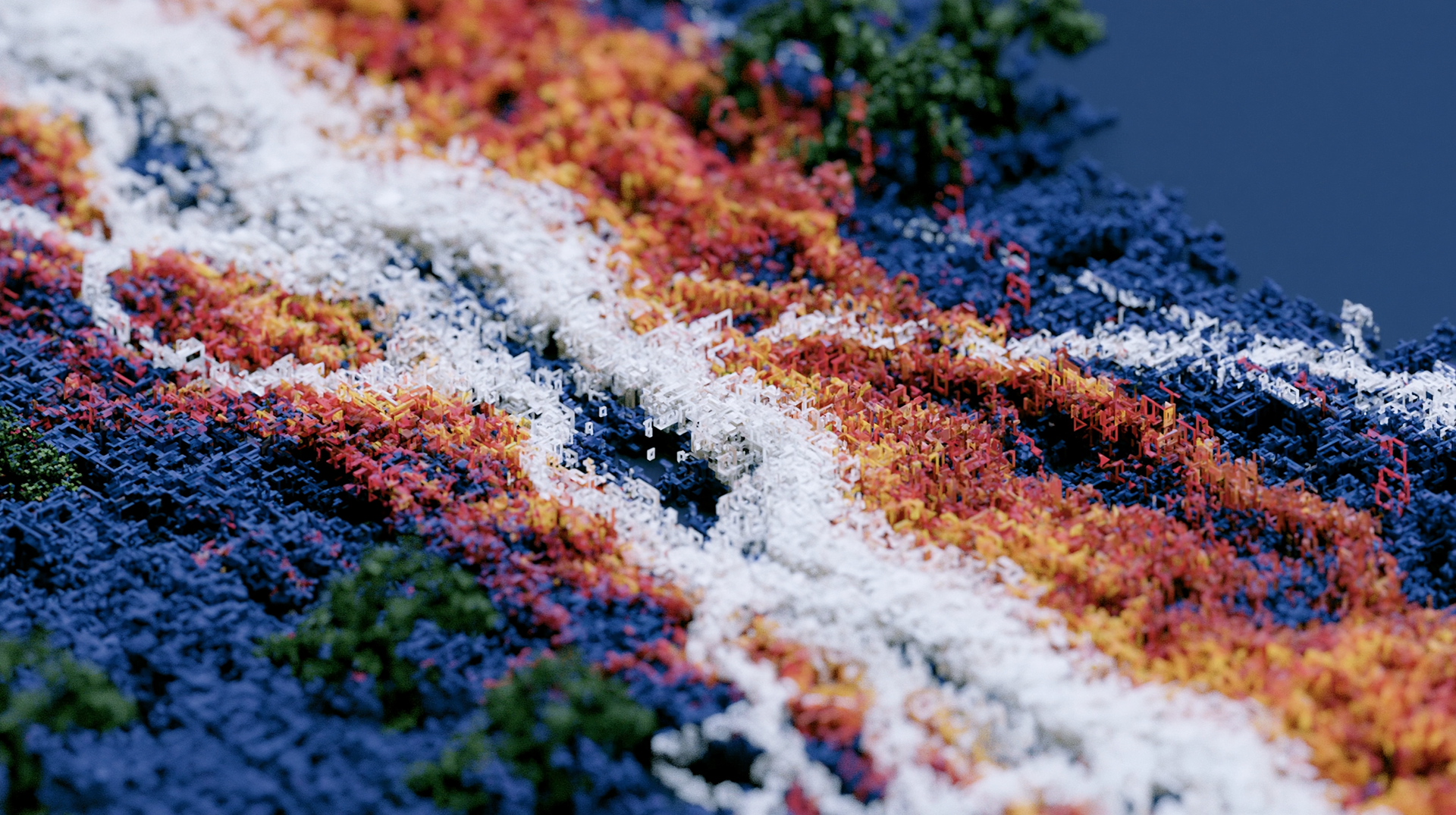
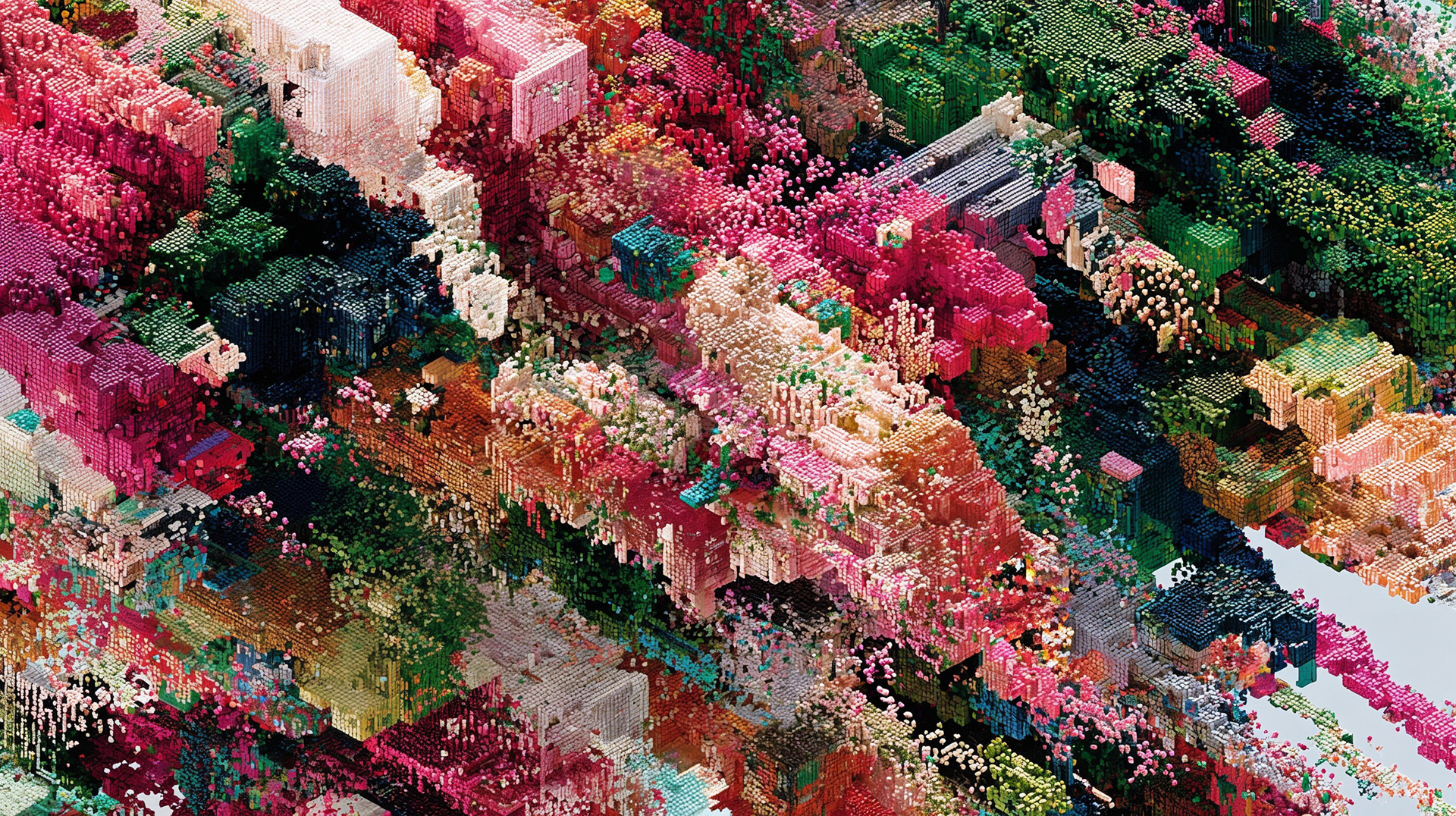
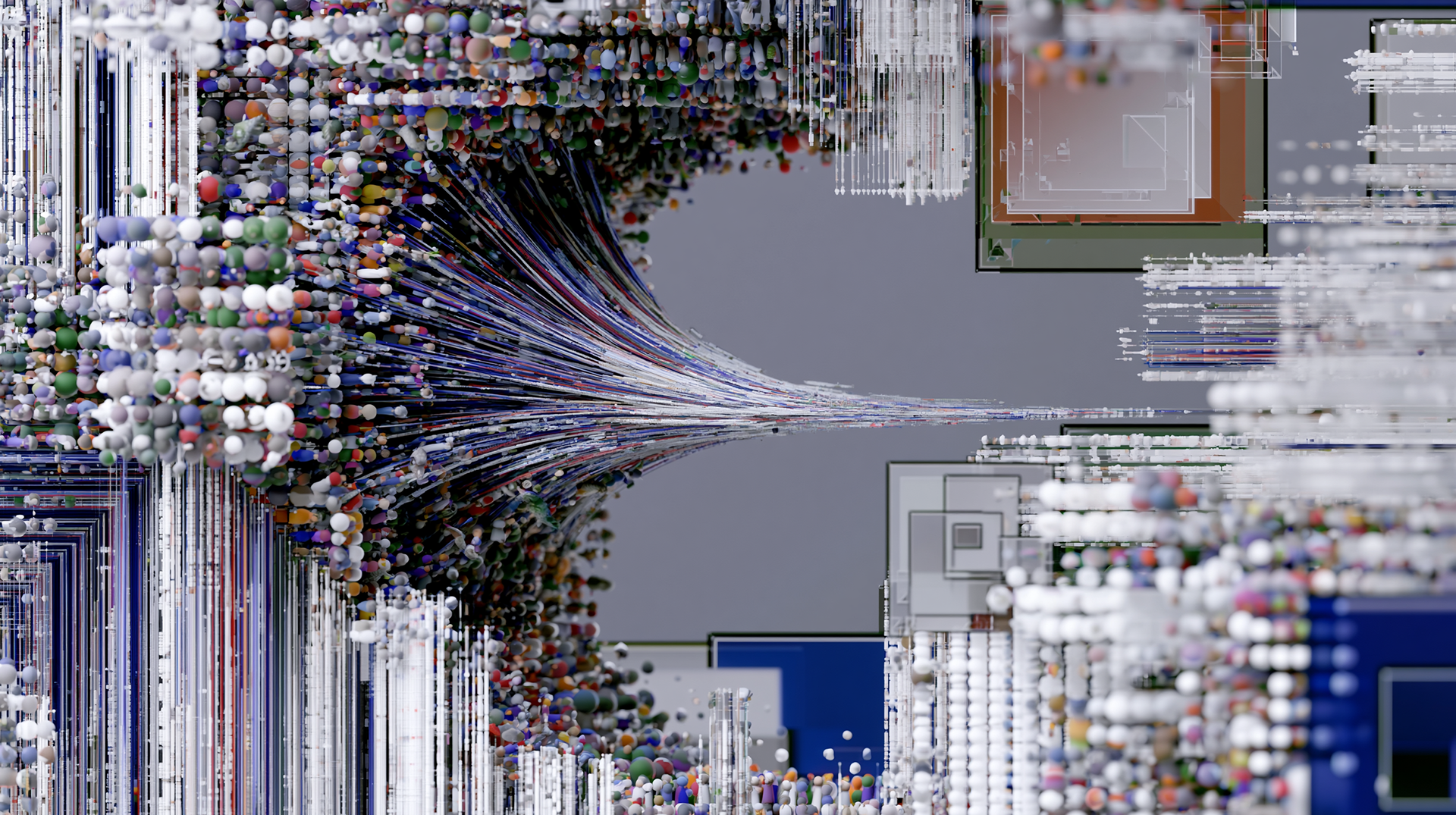
Voxel Flow — Movement without a cause. Only direction.


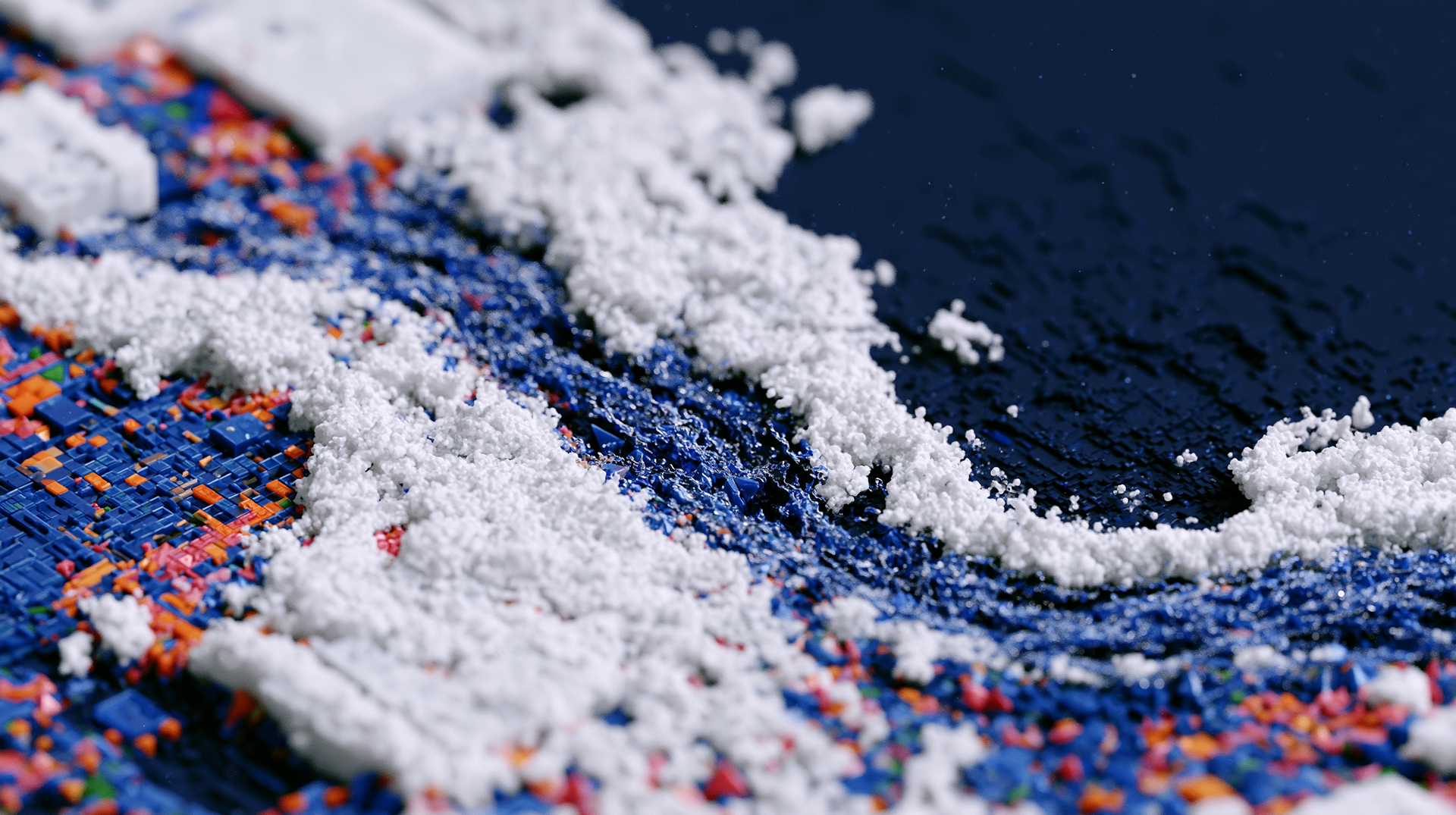
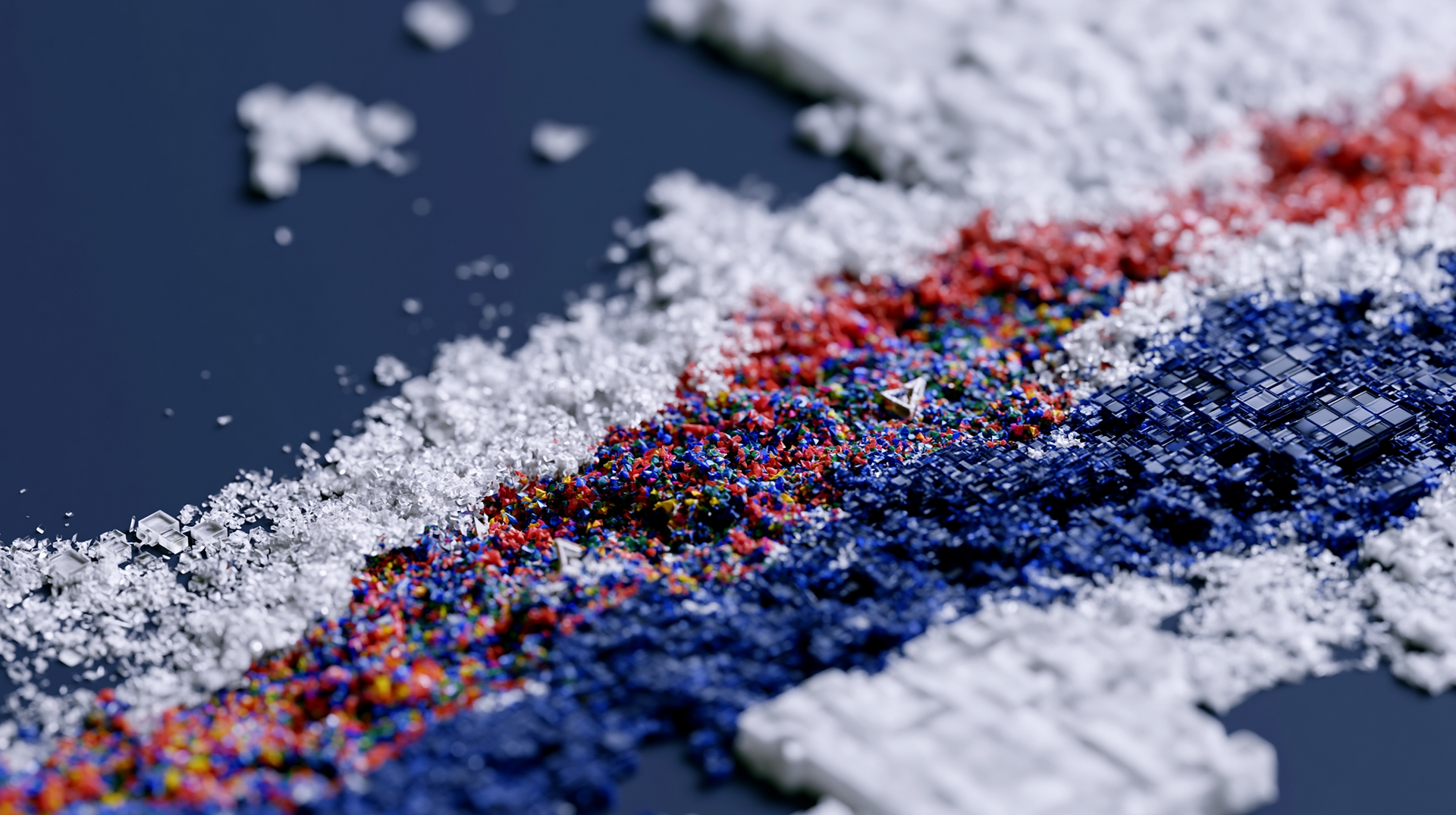
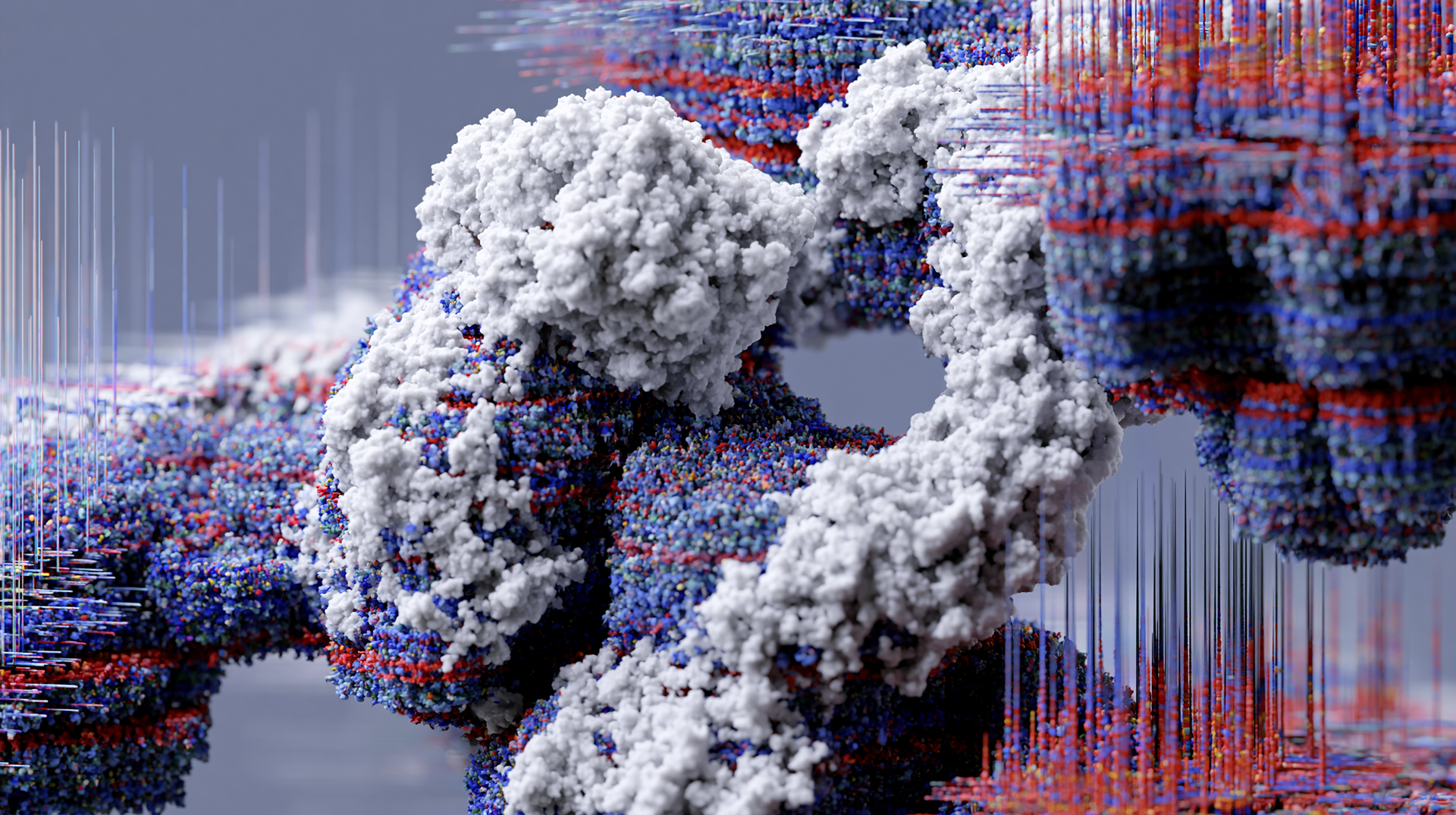
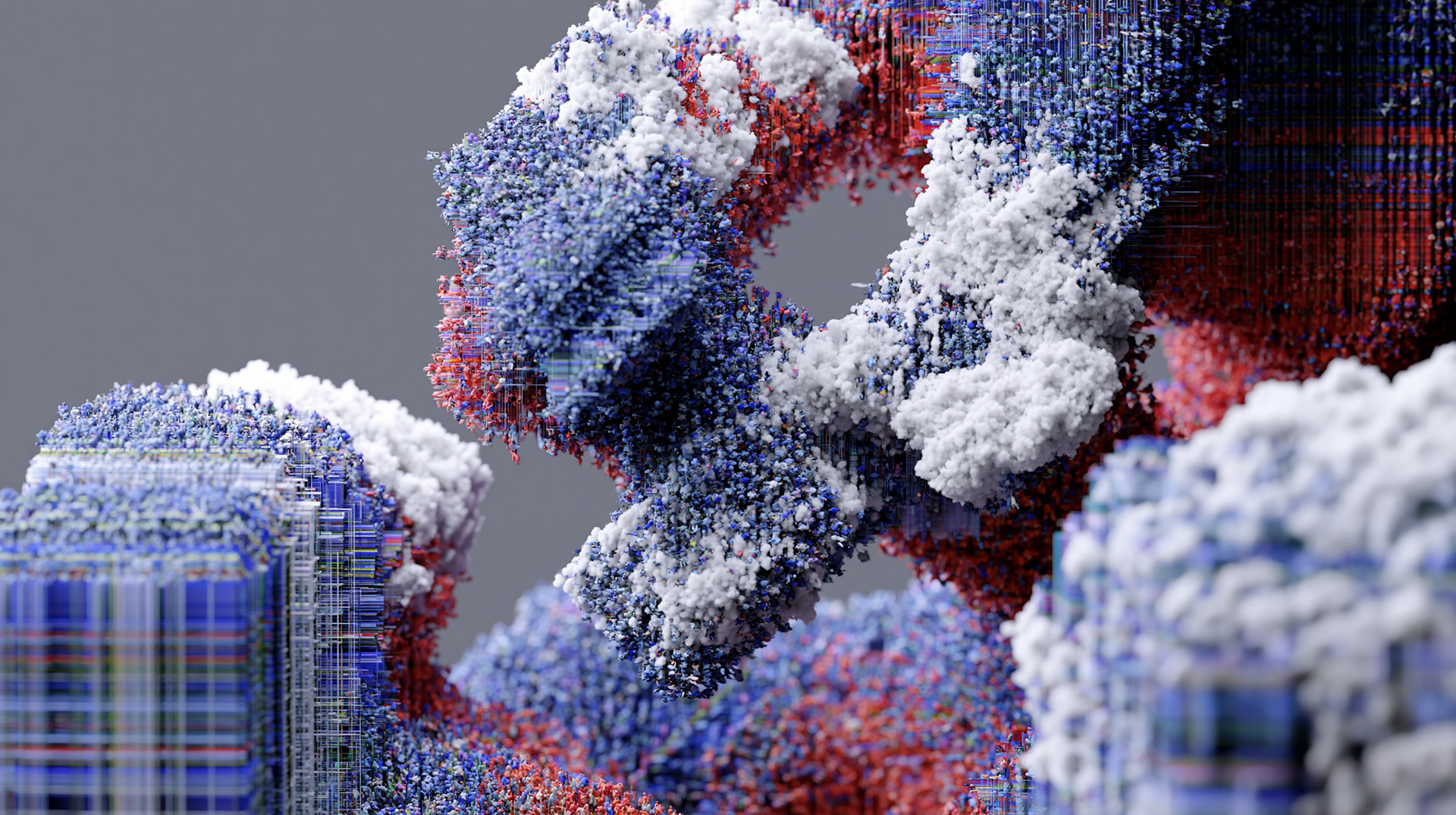
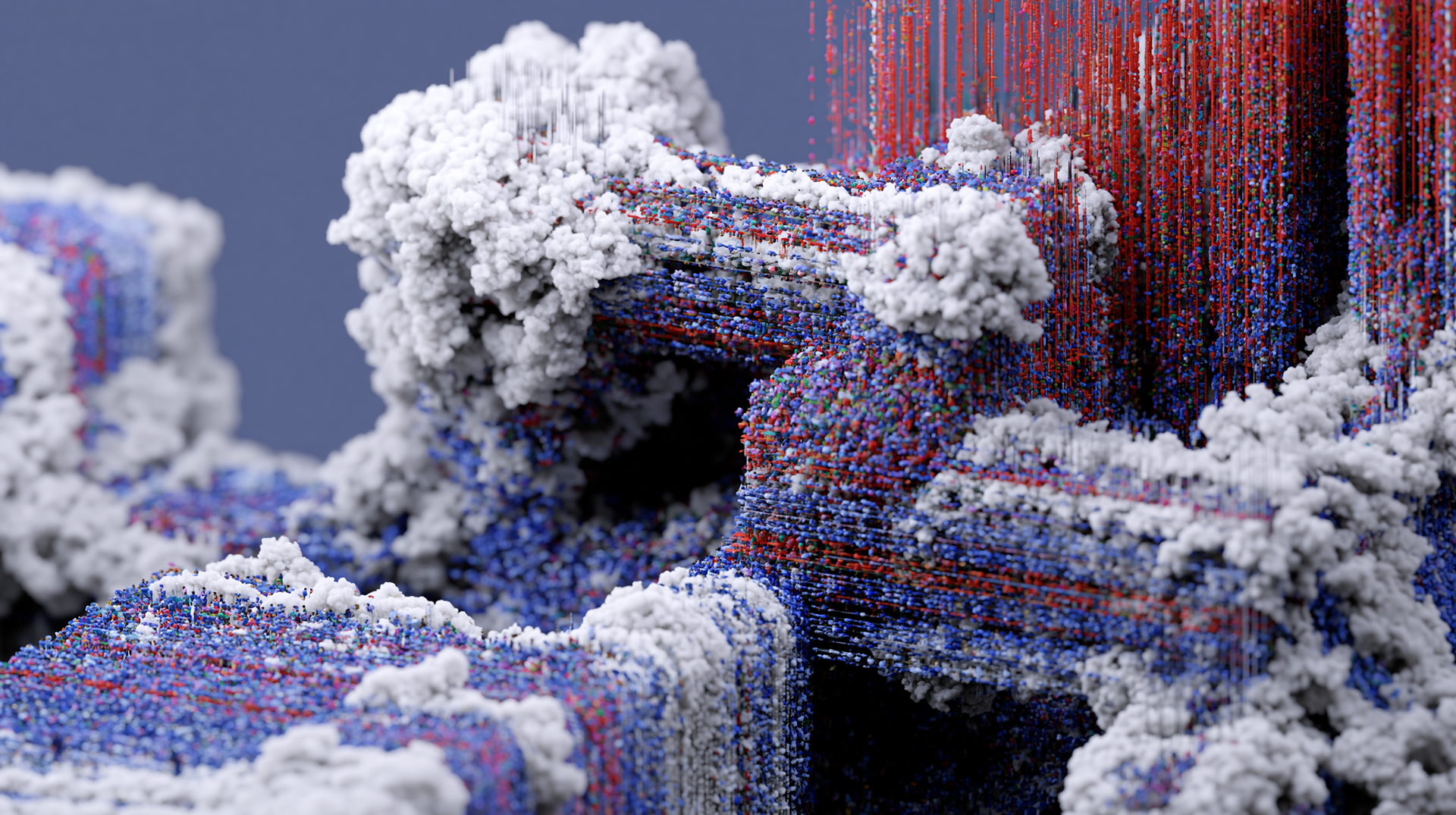
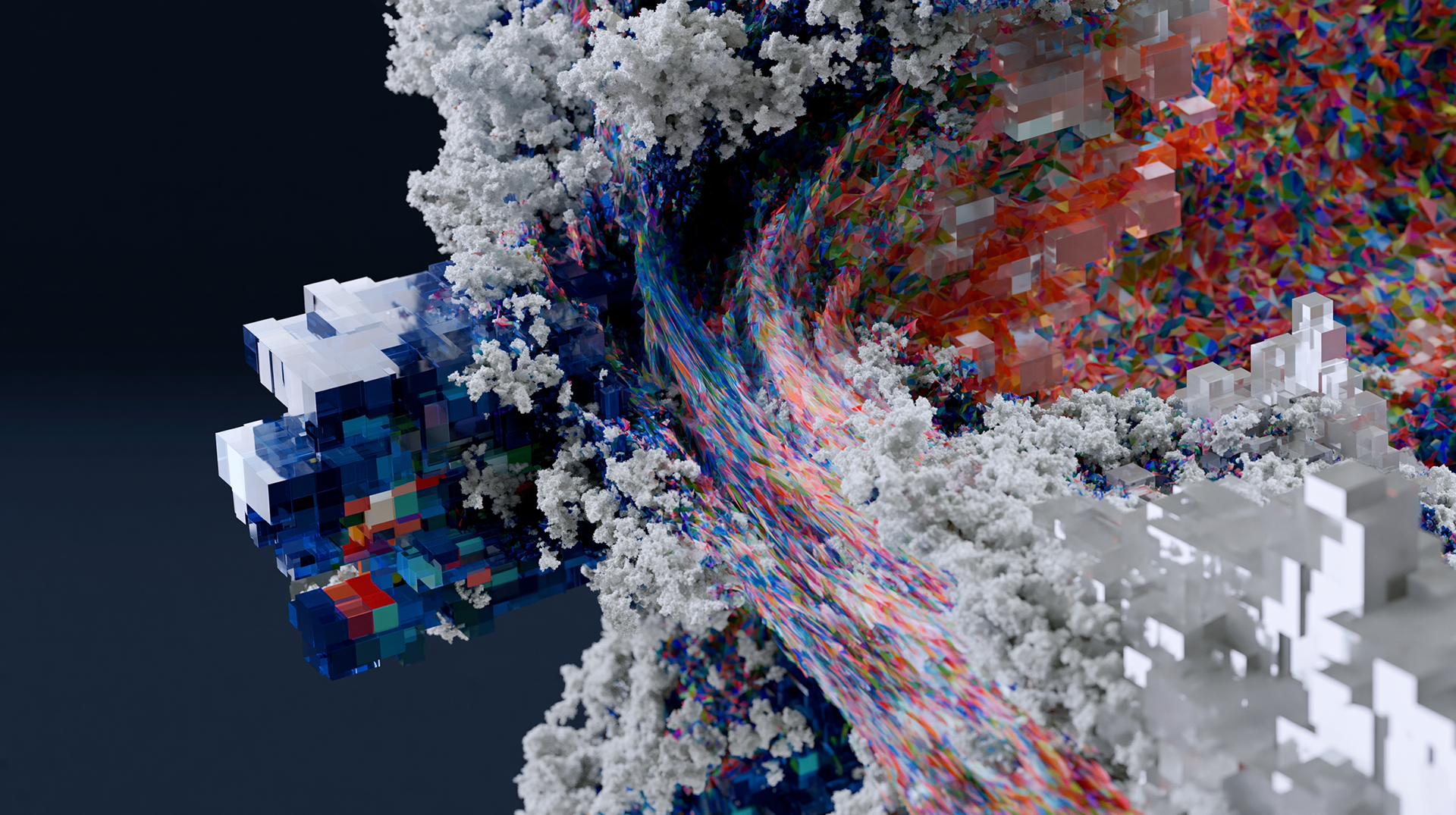
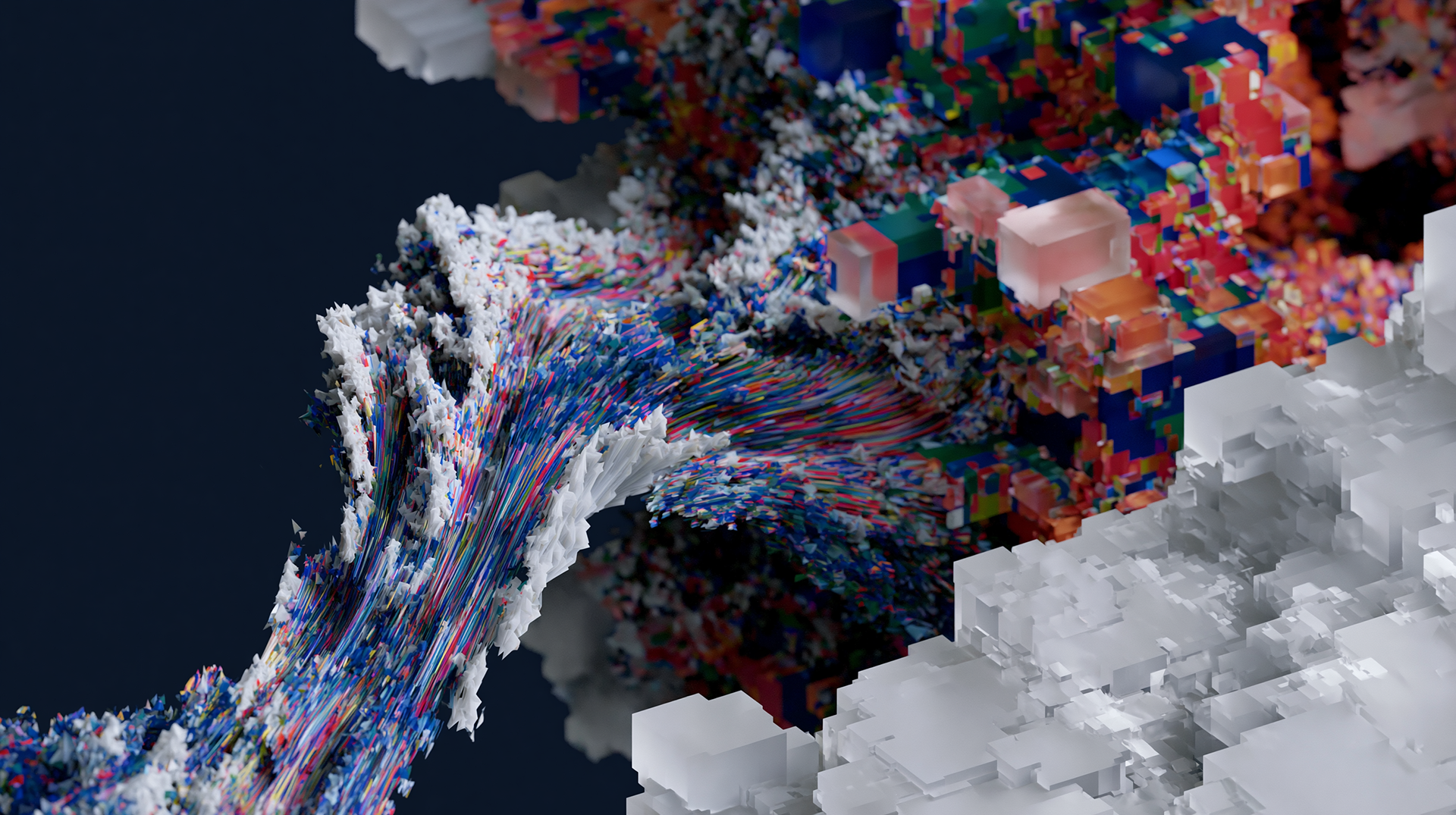


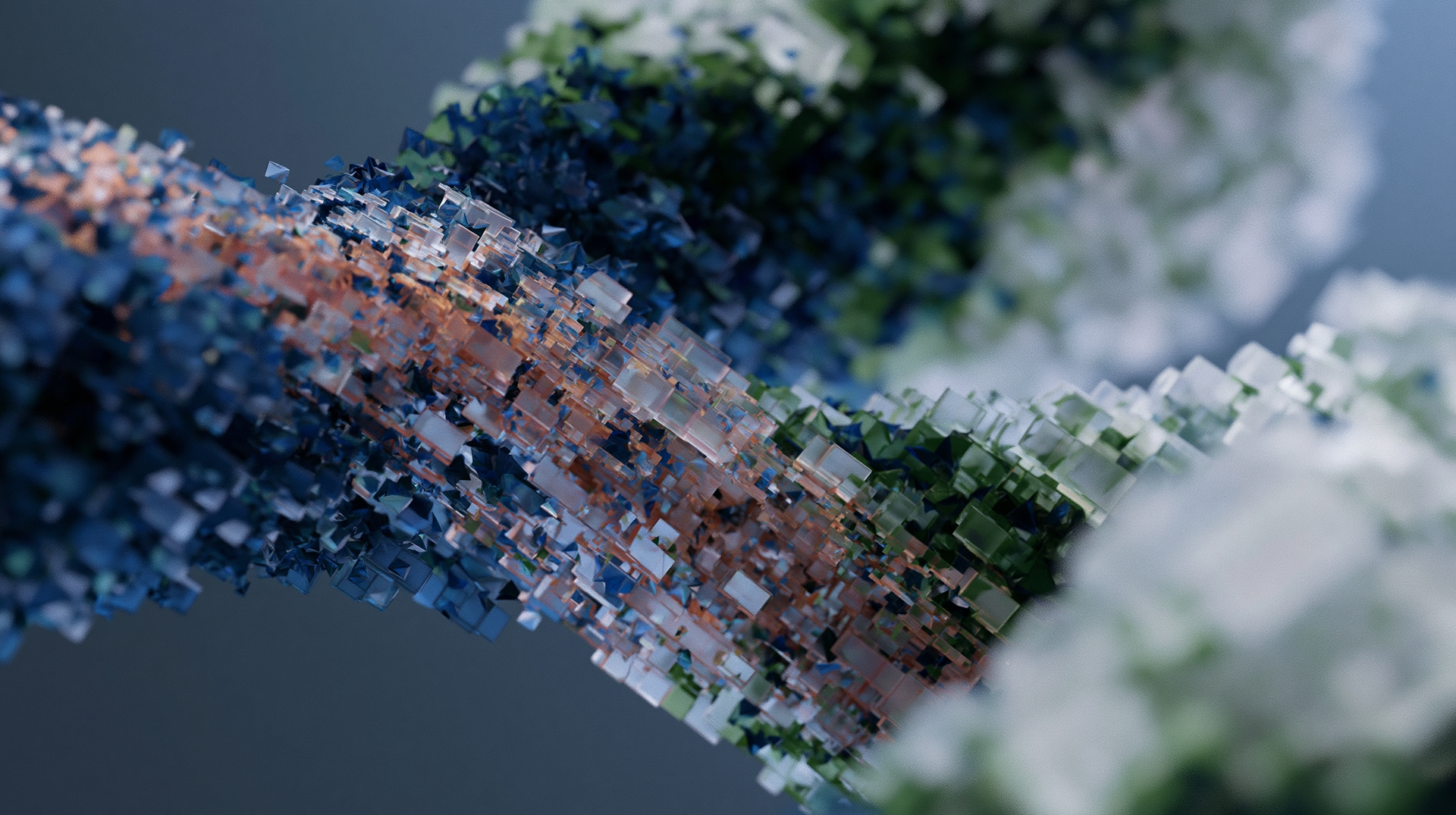
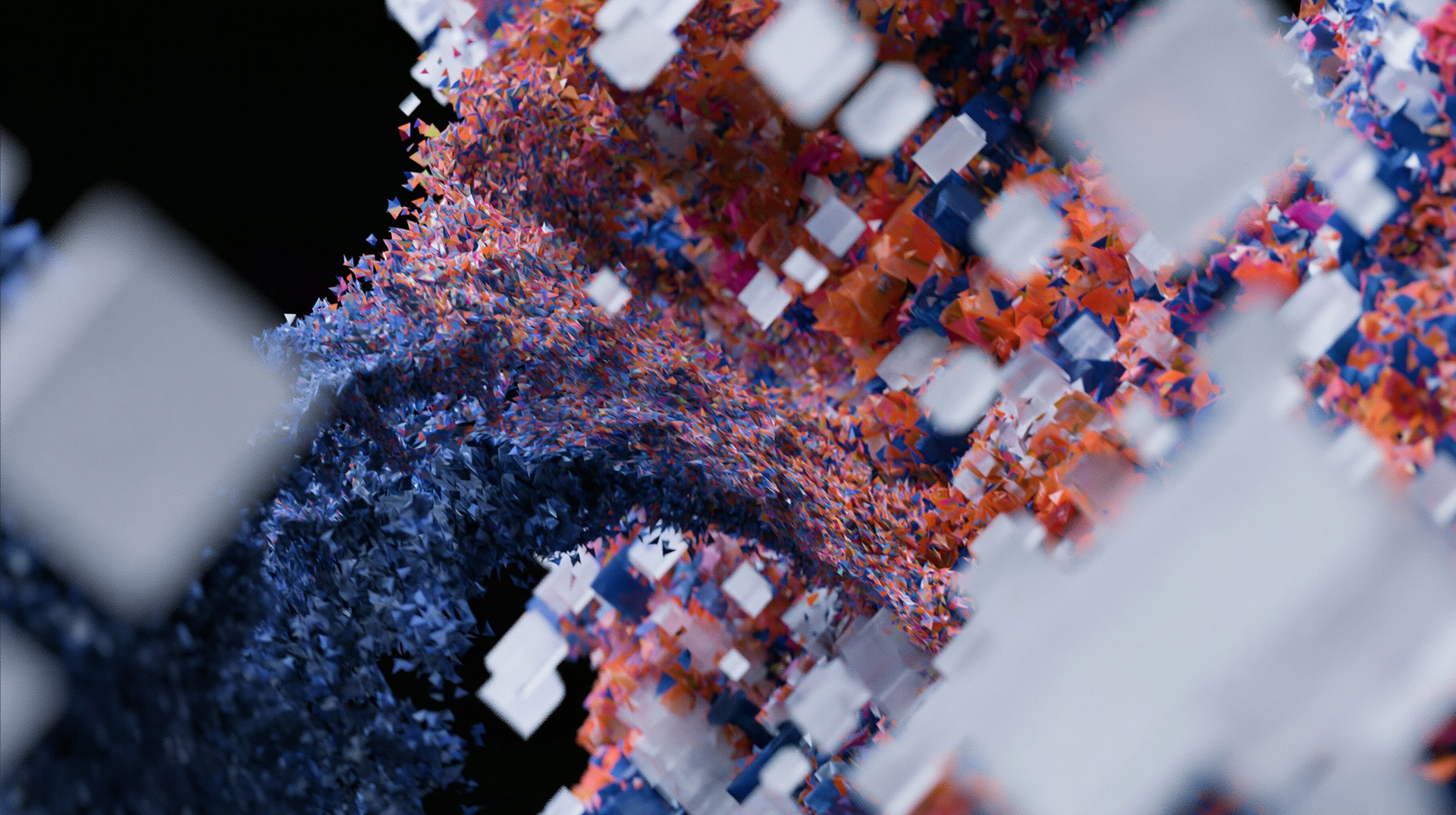
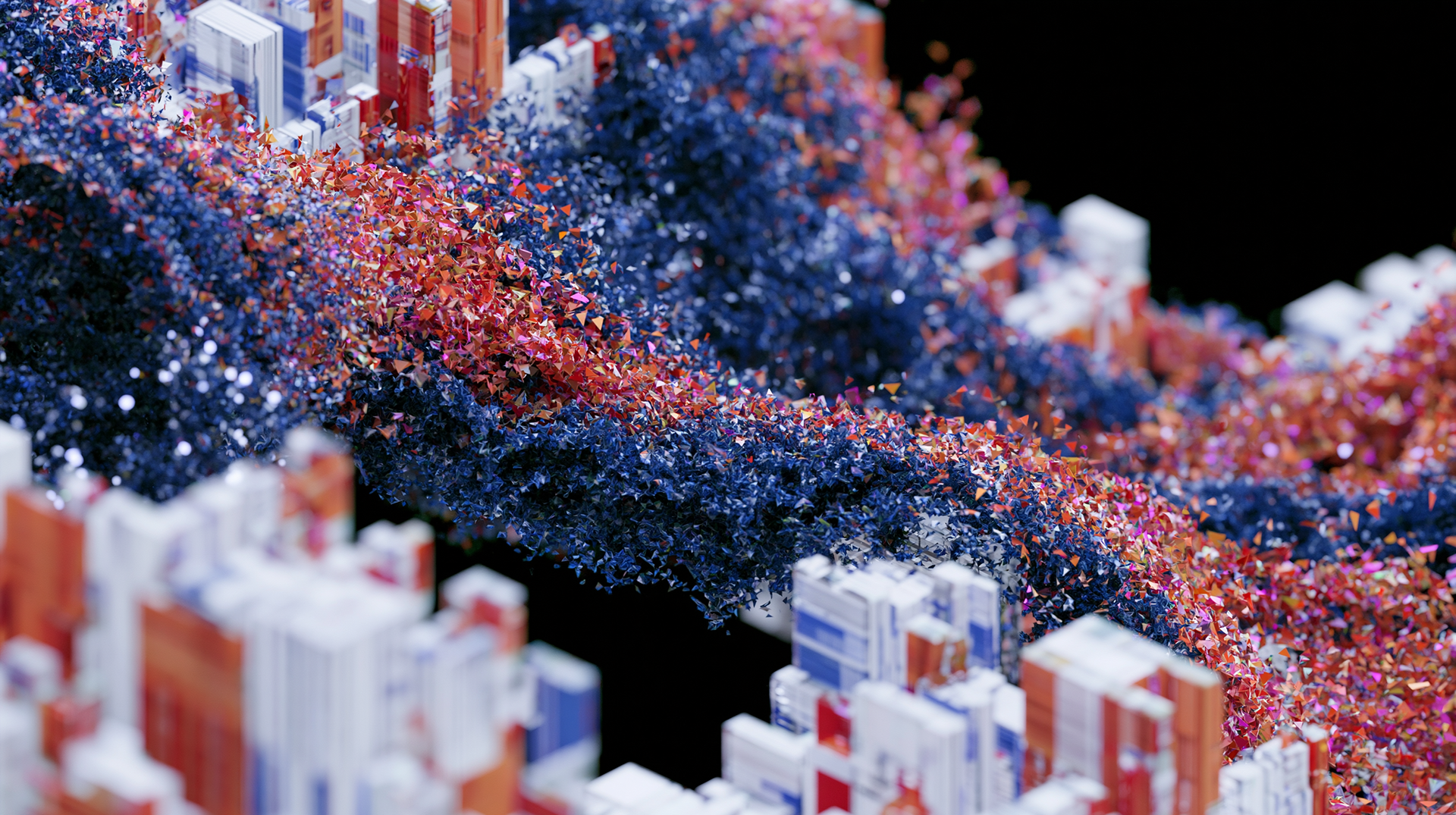
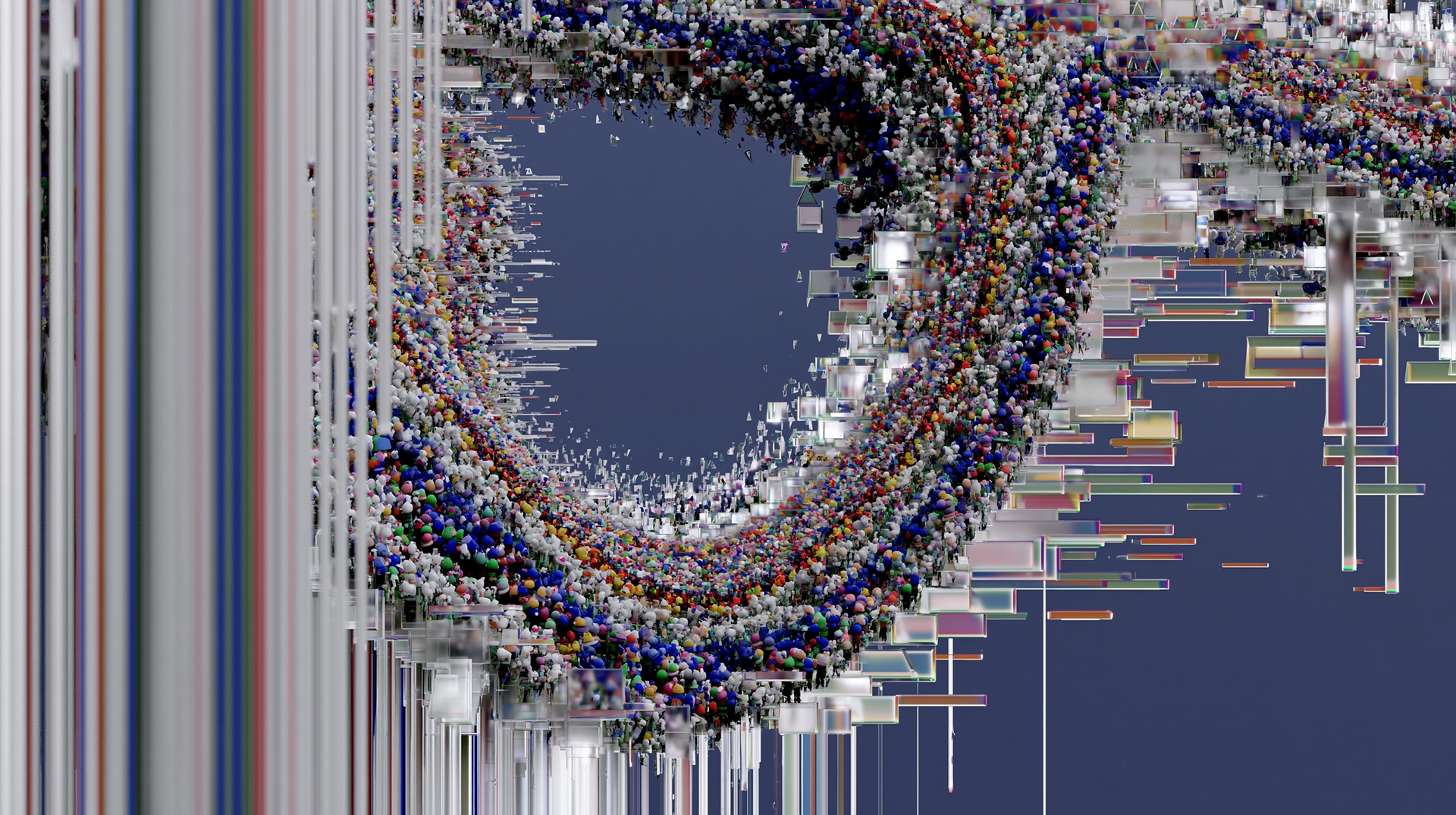
Datamosh Wave — Nothing left of matter. Vertical slices where the surface used to be.
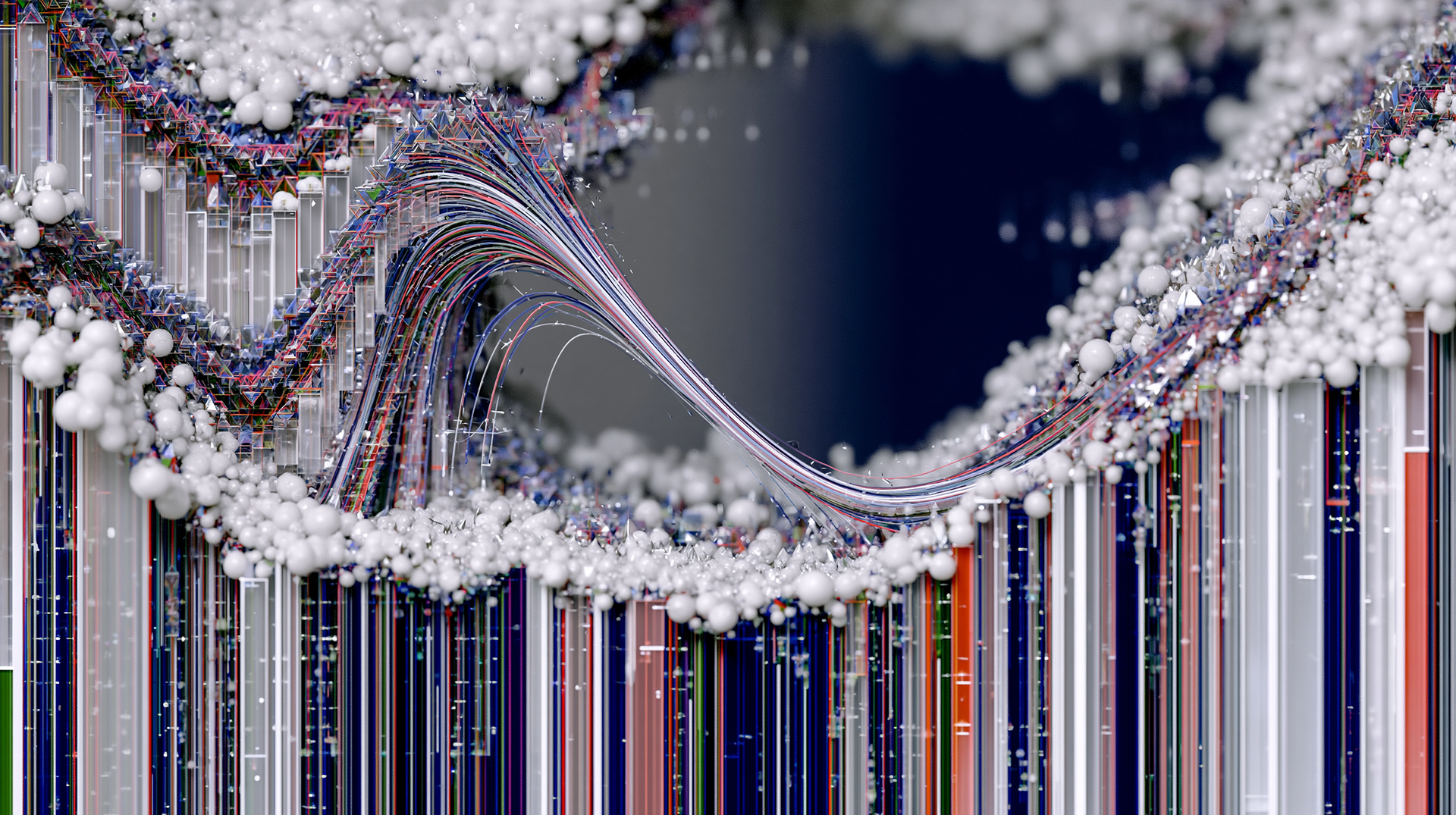
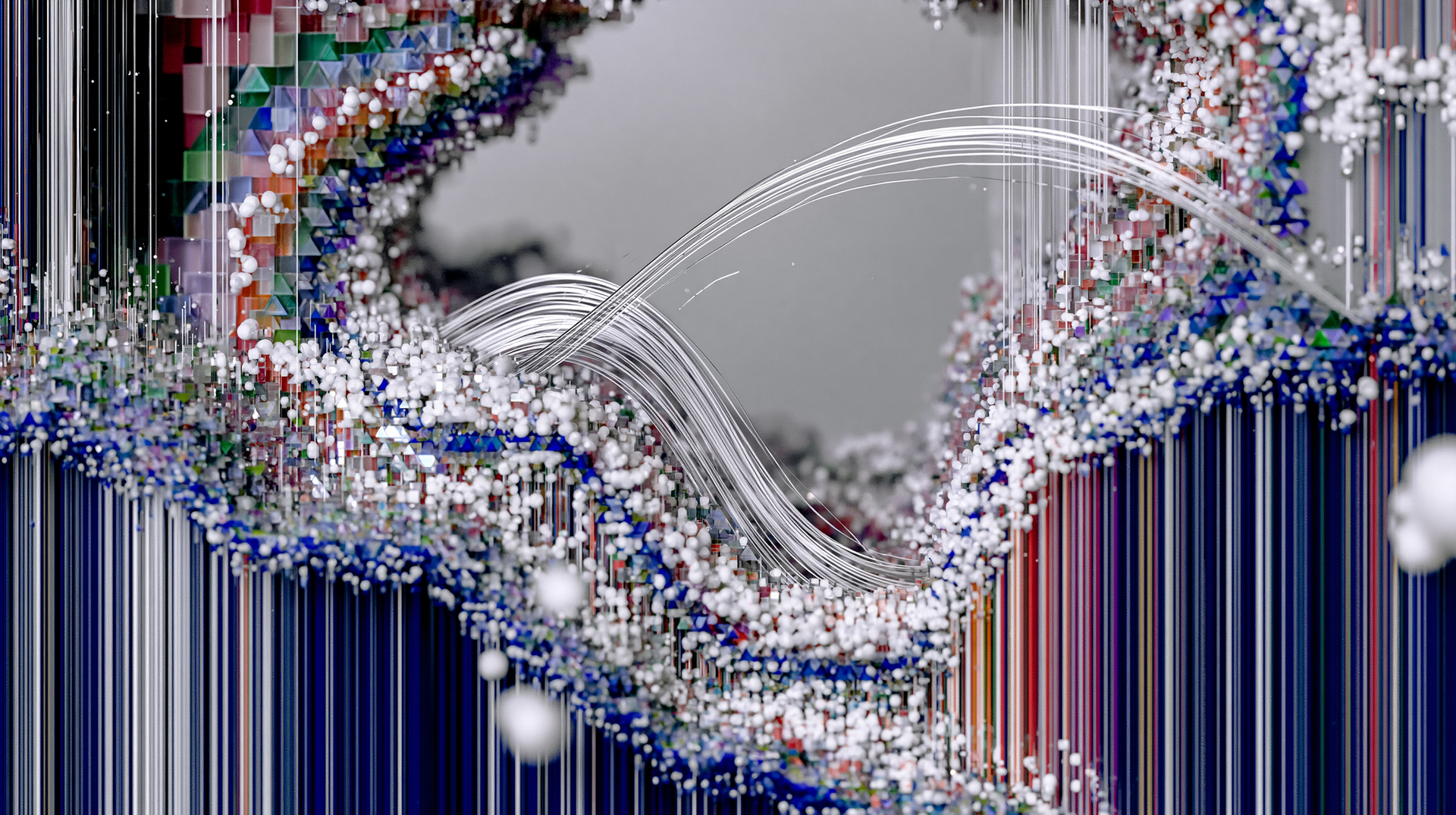


Outtakes — Frames that never became a series.