I. Le Gypaète — projection on a floating cube
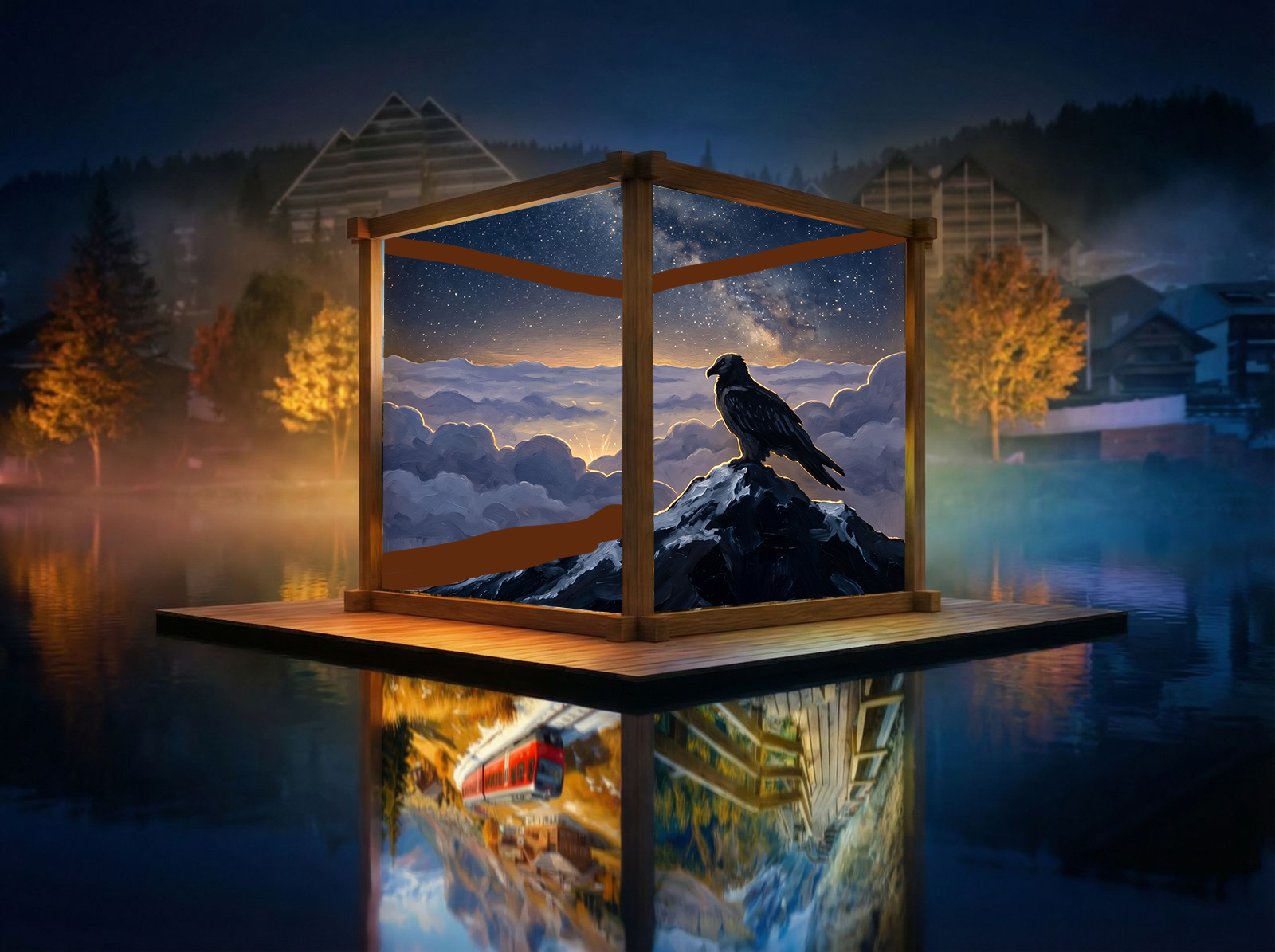
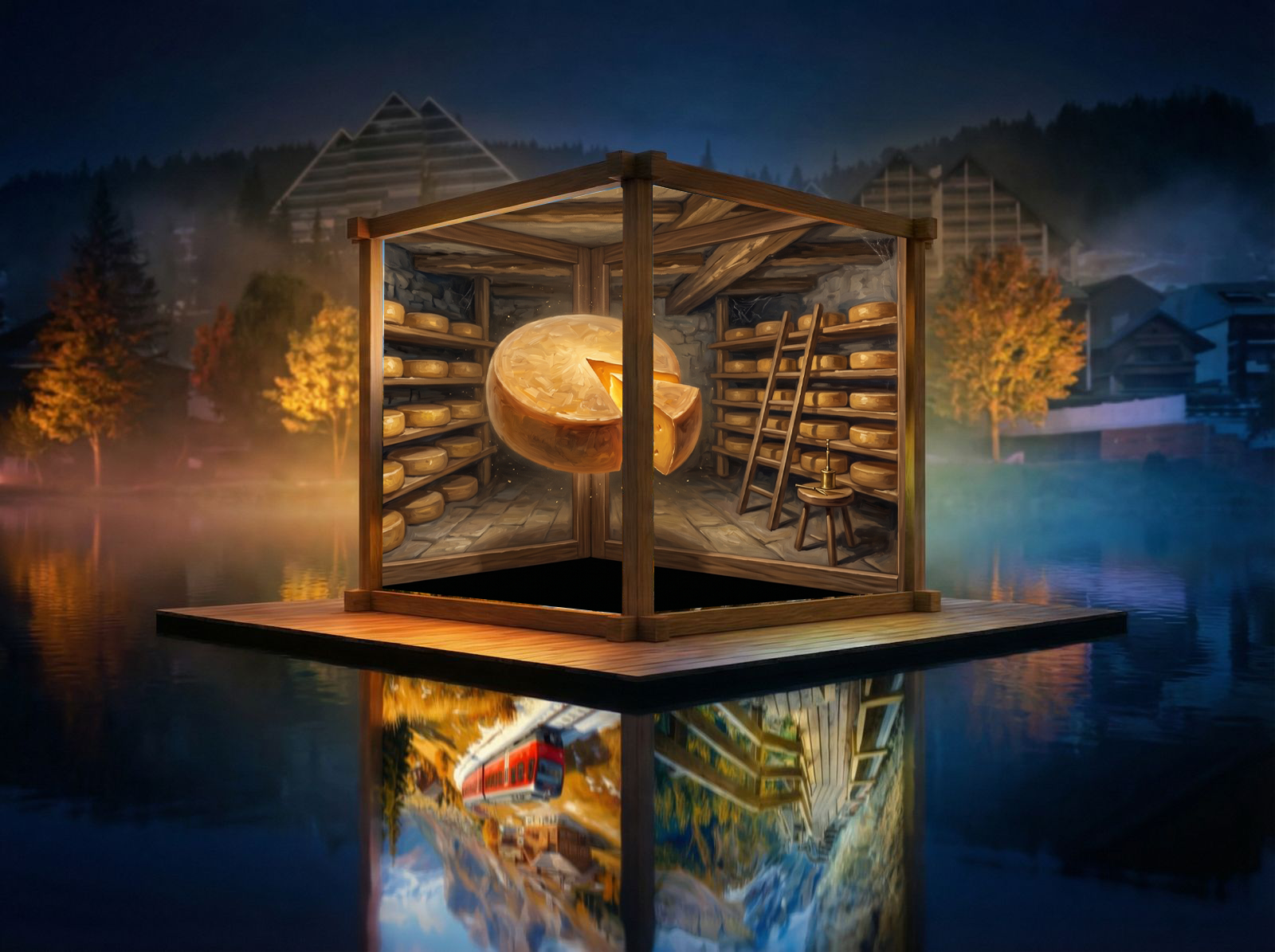
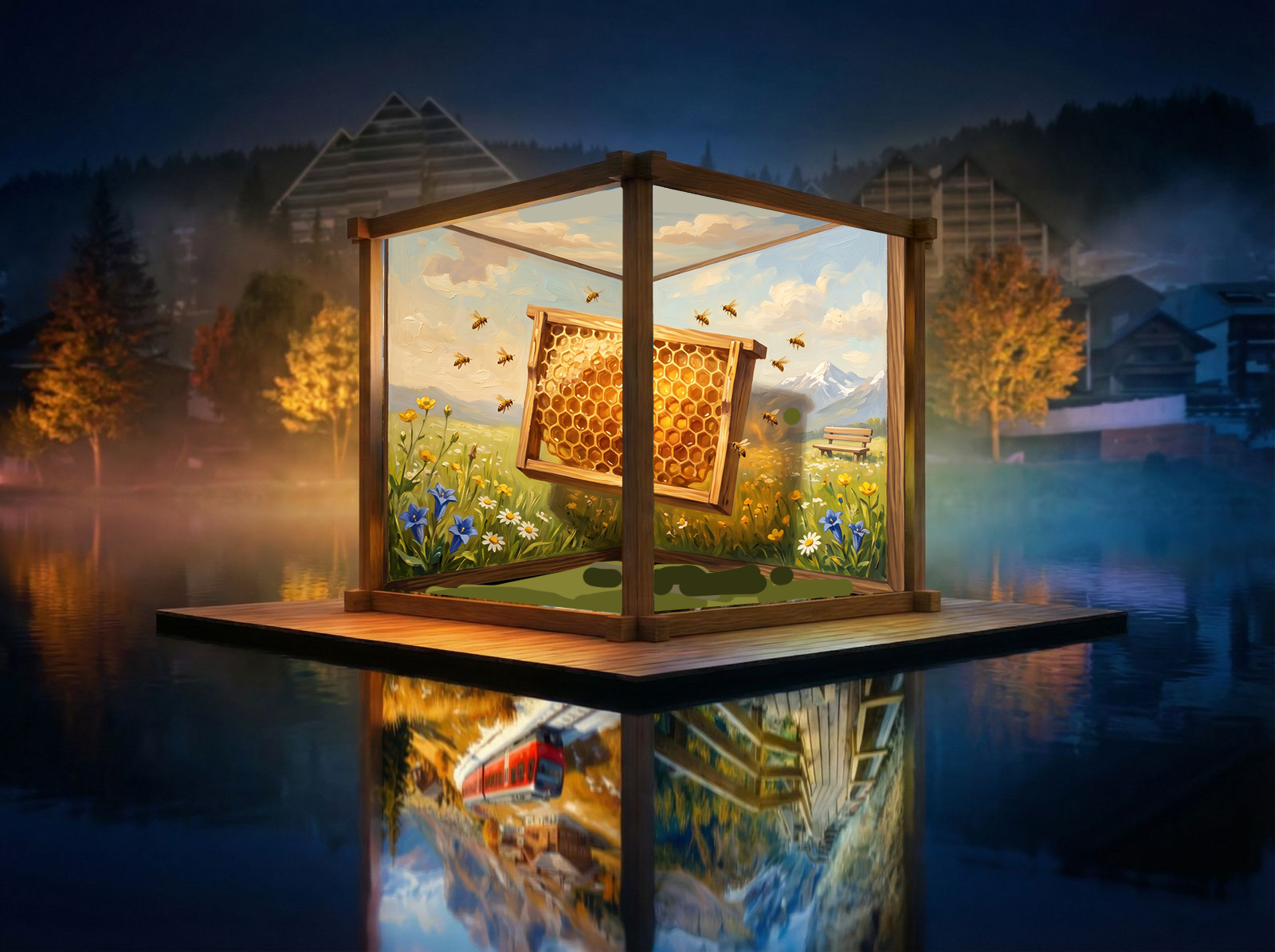
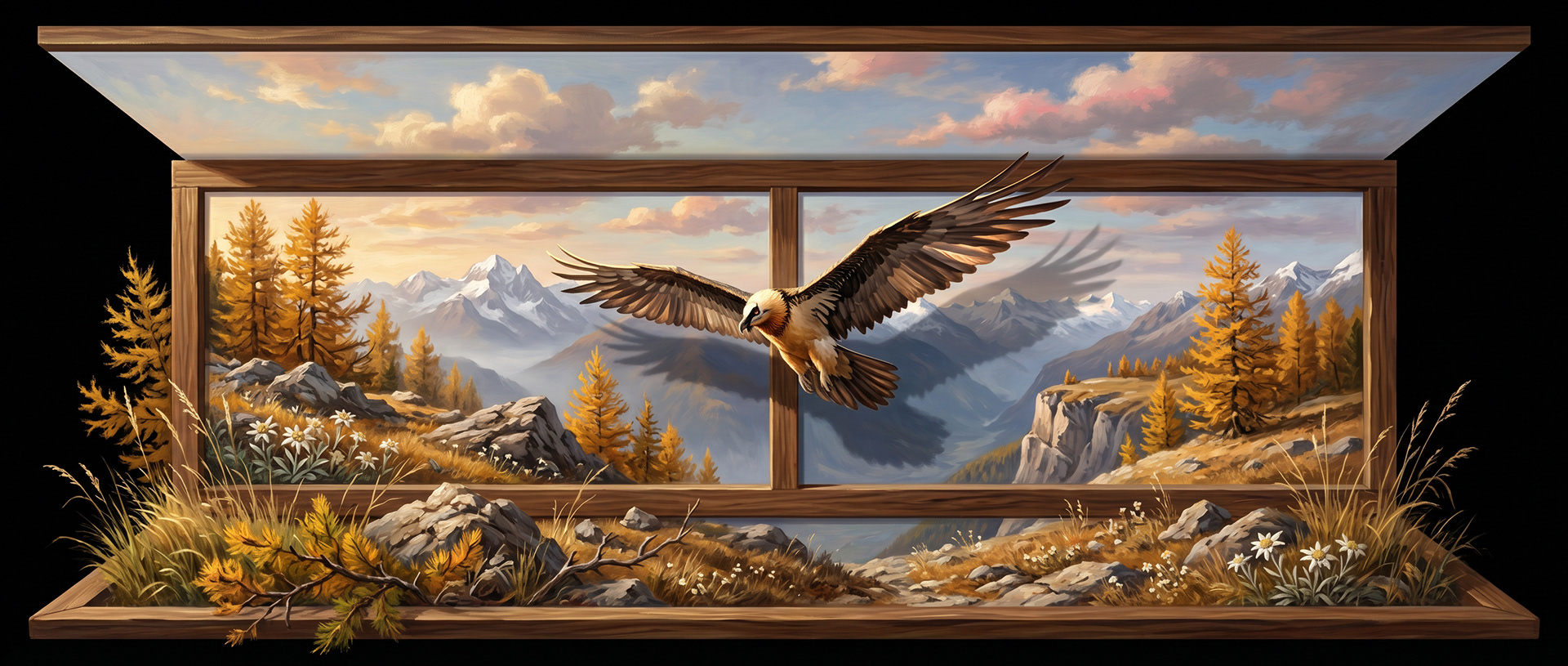
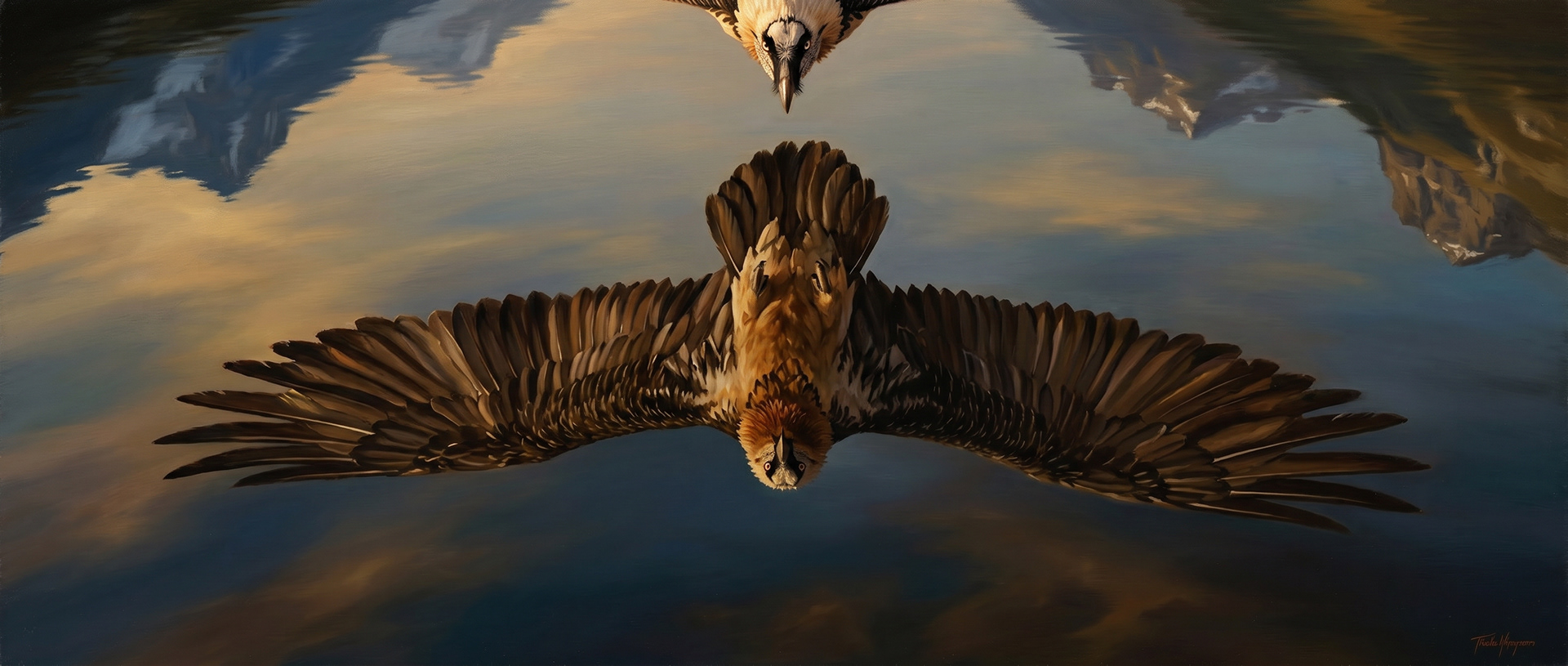
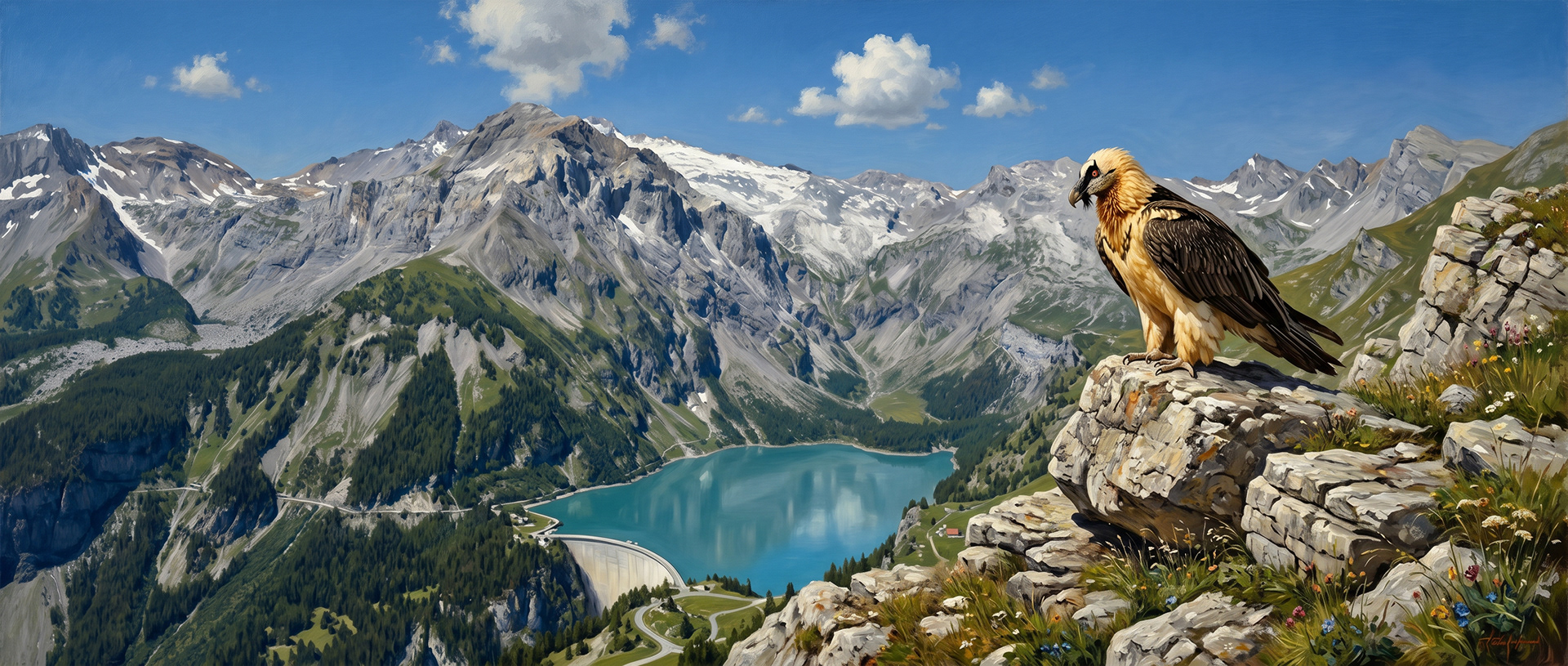
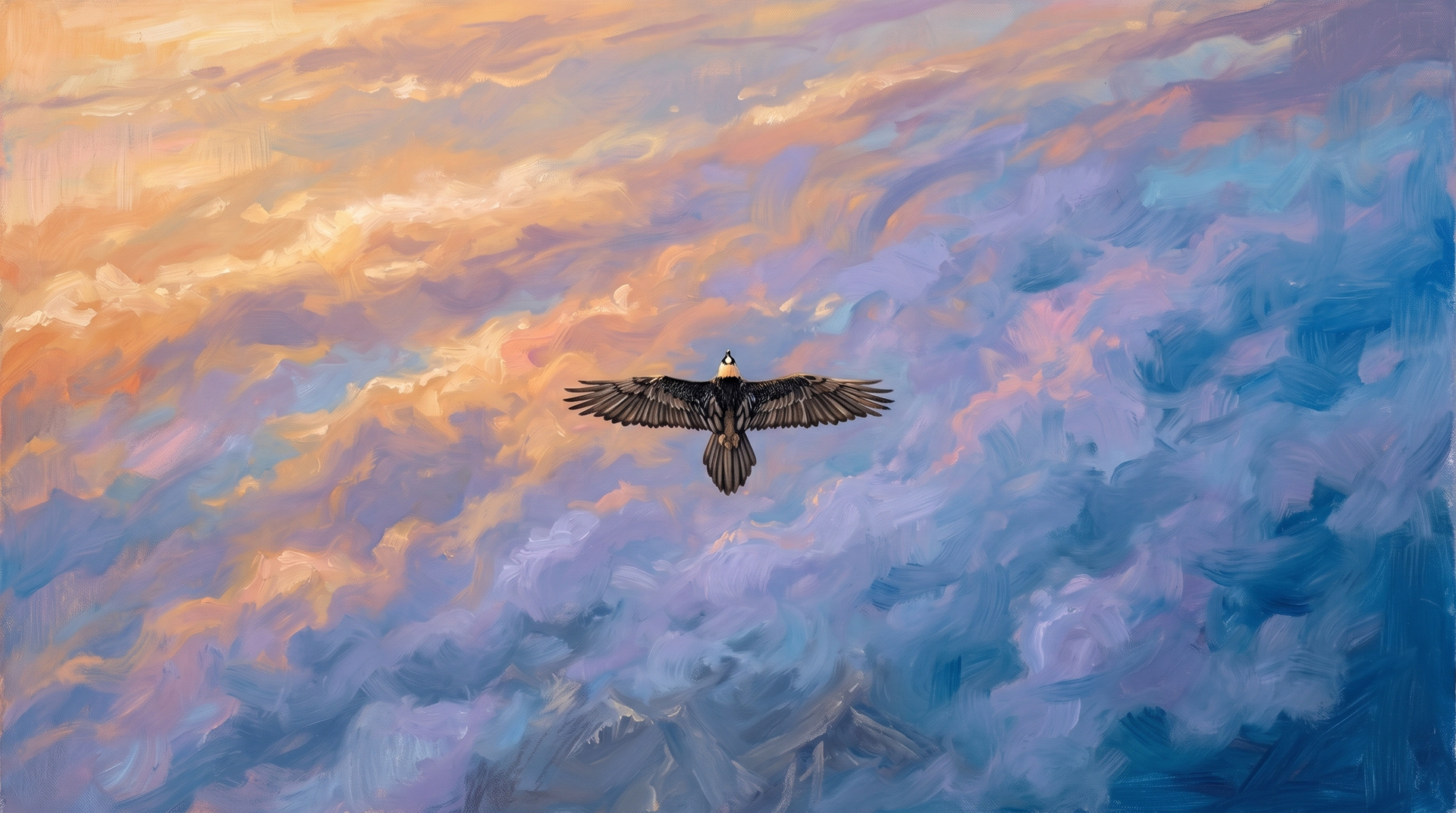
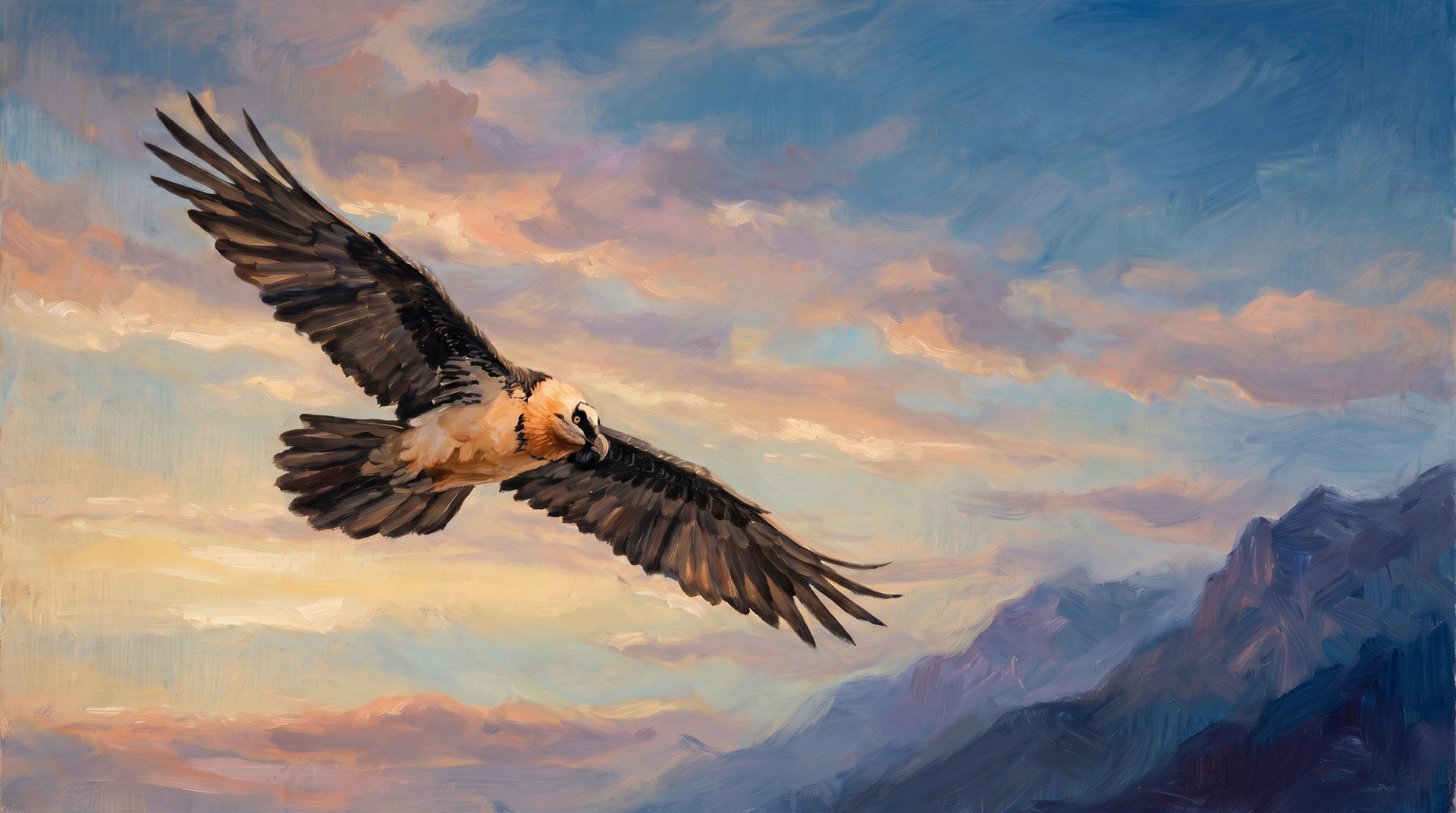
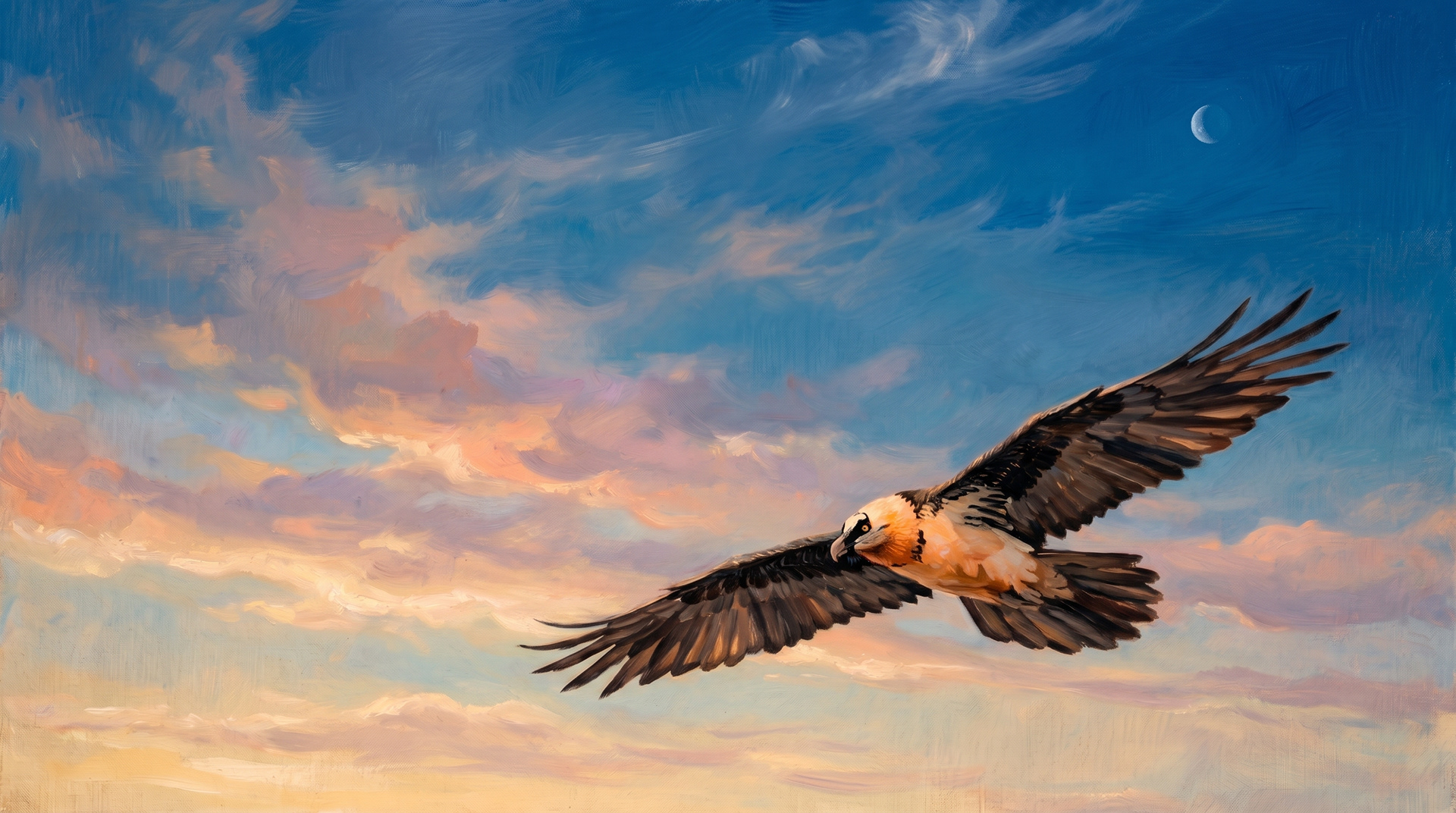
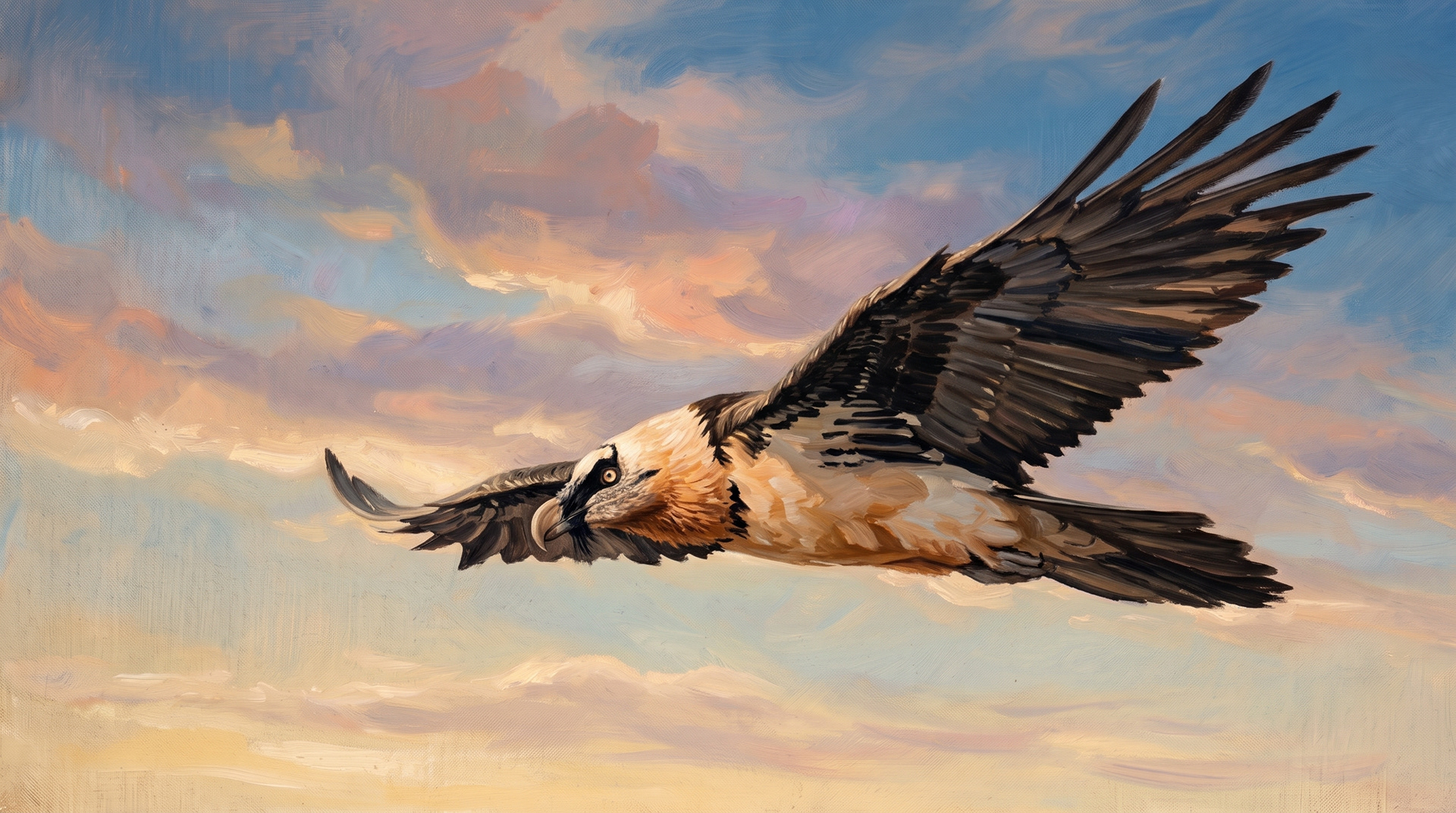
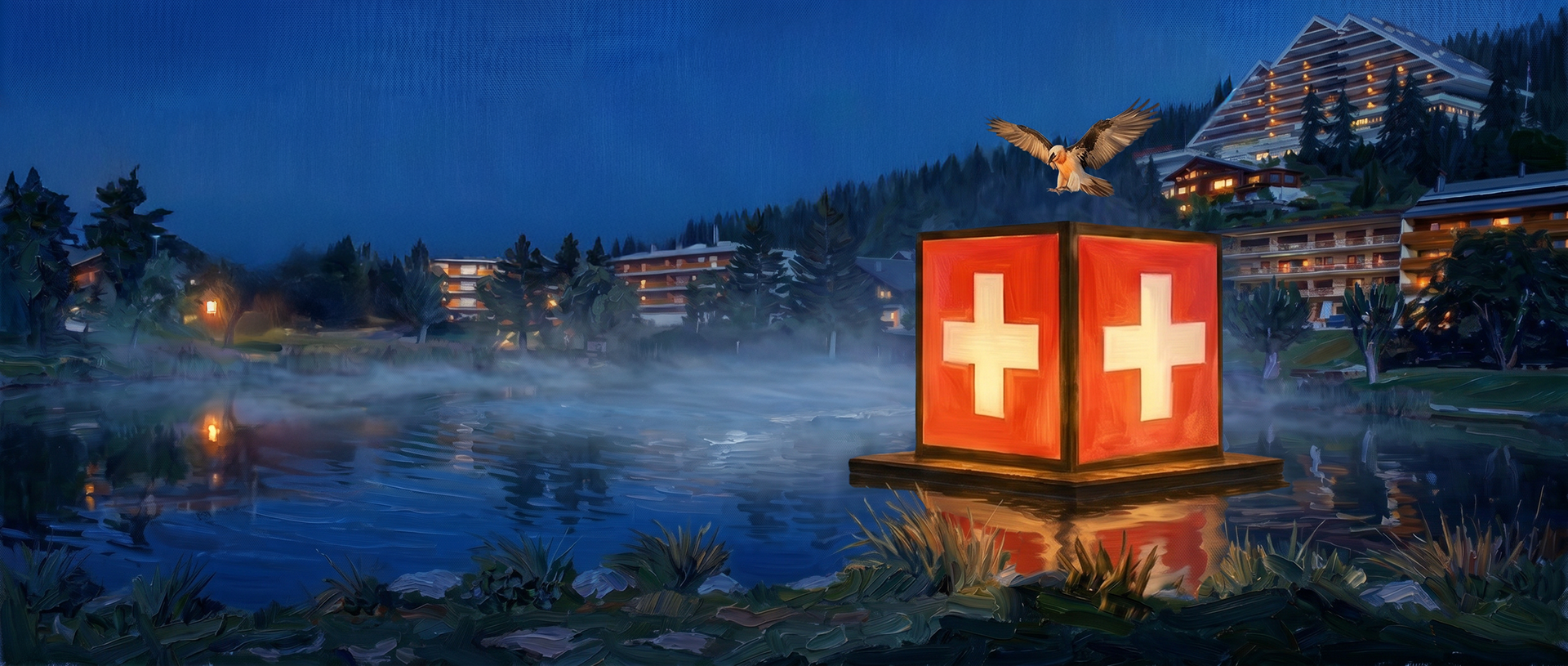
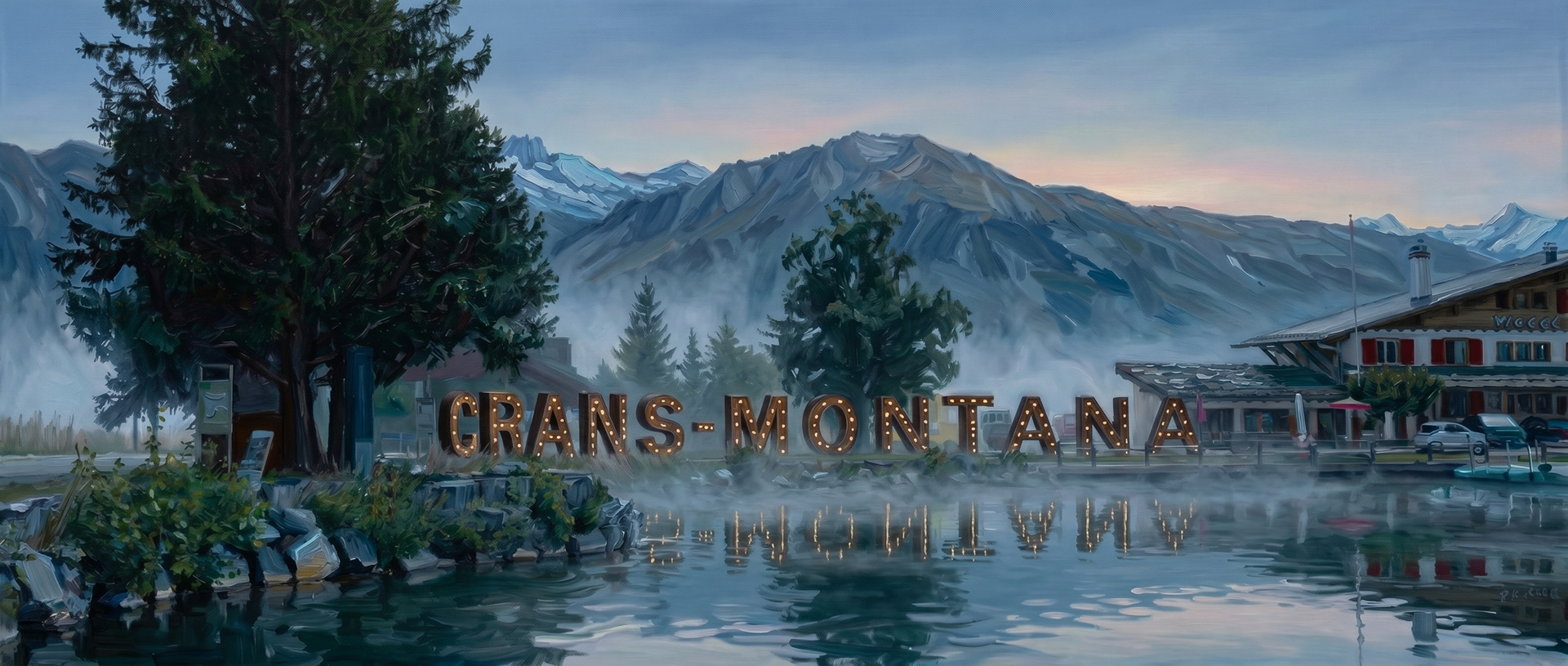
An eight-minute projection film for Swiss National Day 2026, projected onto an illuminated cube floating on a pond in Crans-Montana. 33 scenes across six movements, following a bearded vulture — the gypaète barbu— across Switzerland and back to Valais.
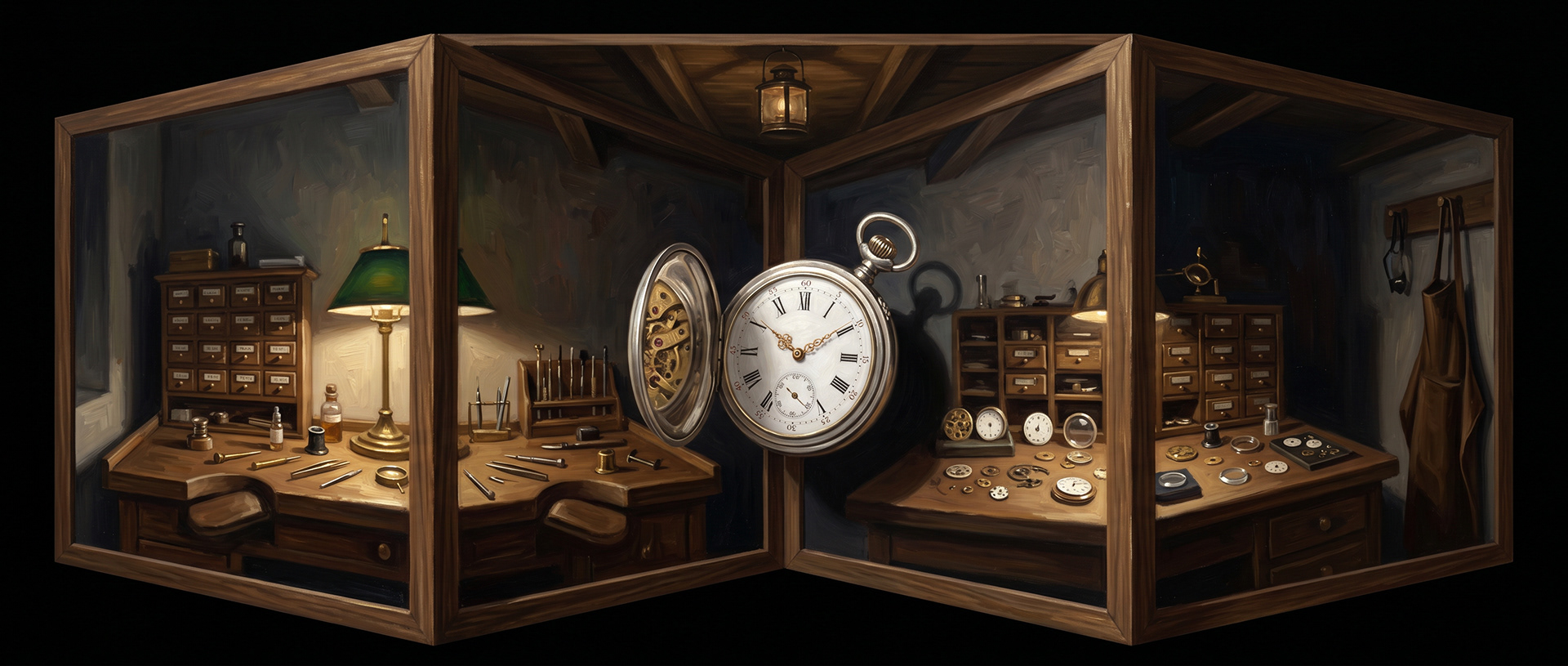
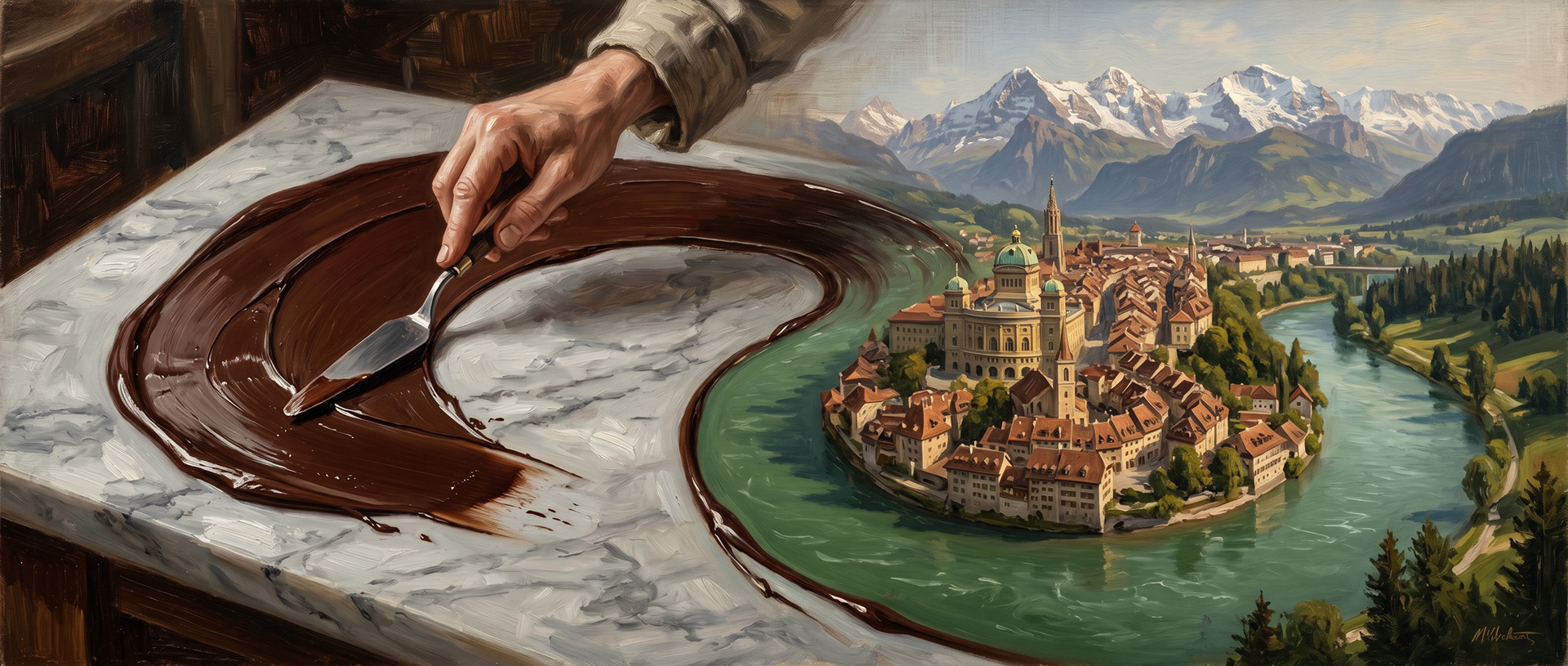
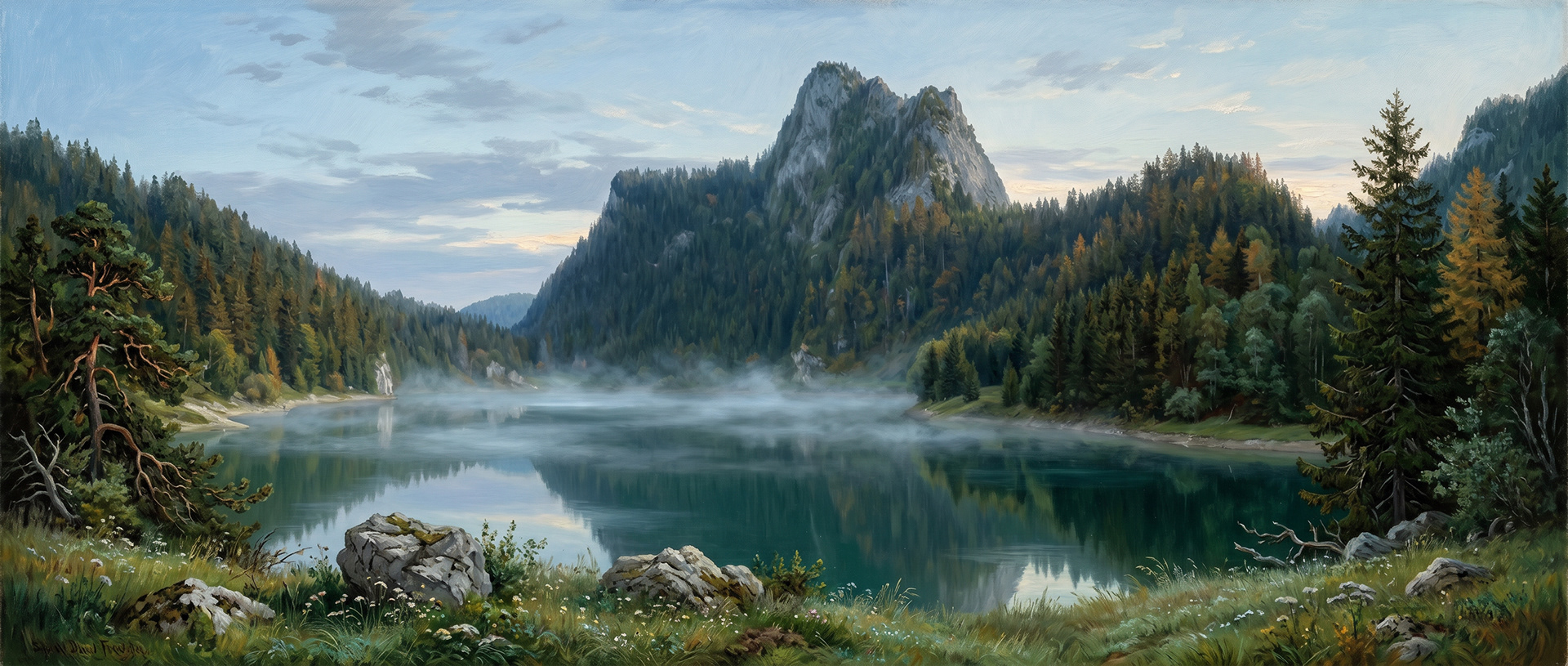
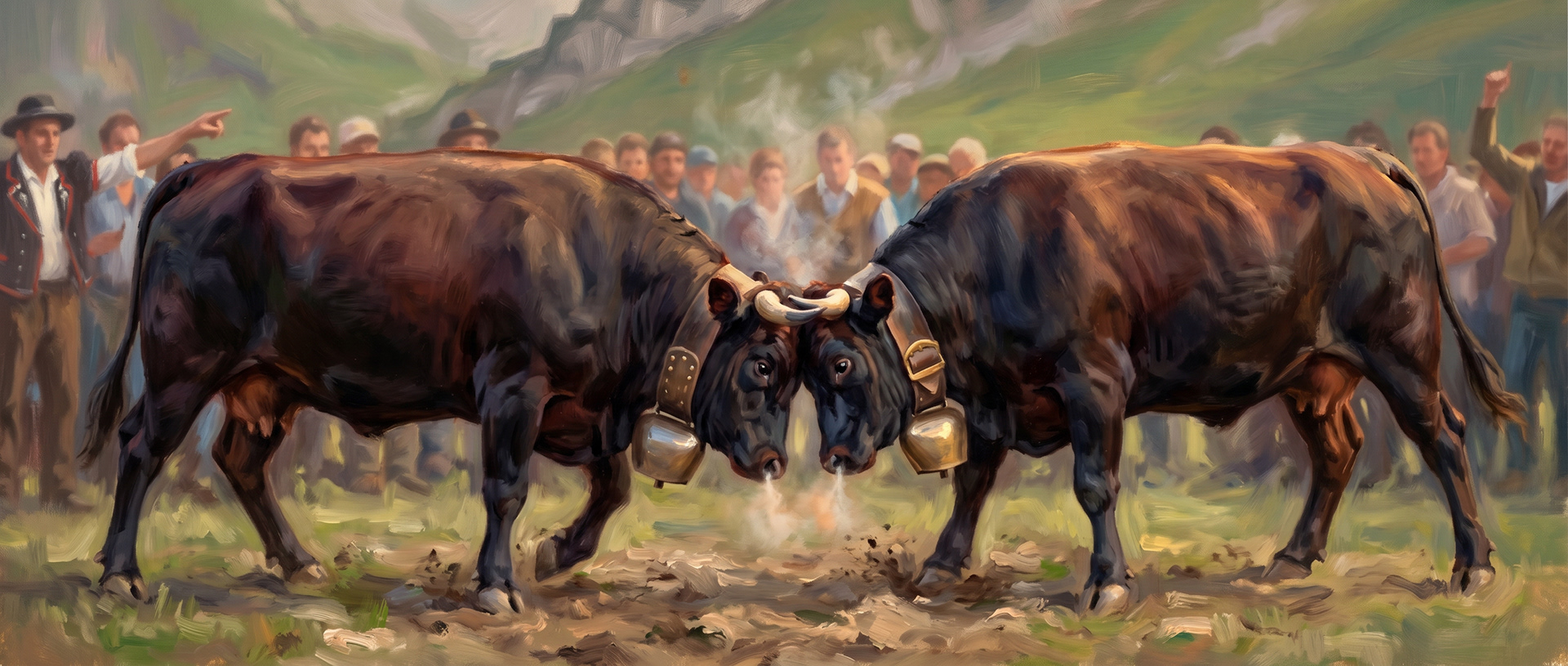
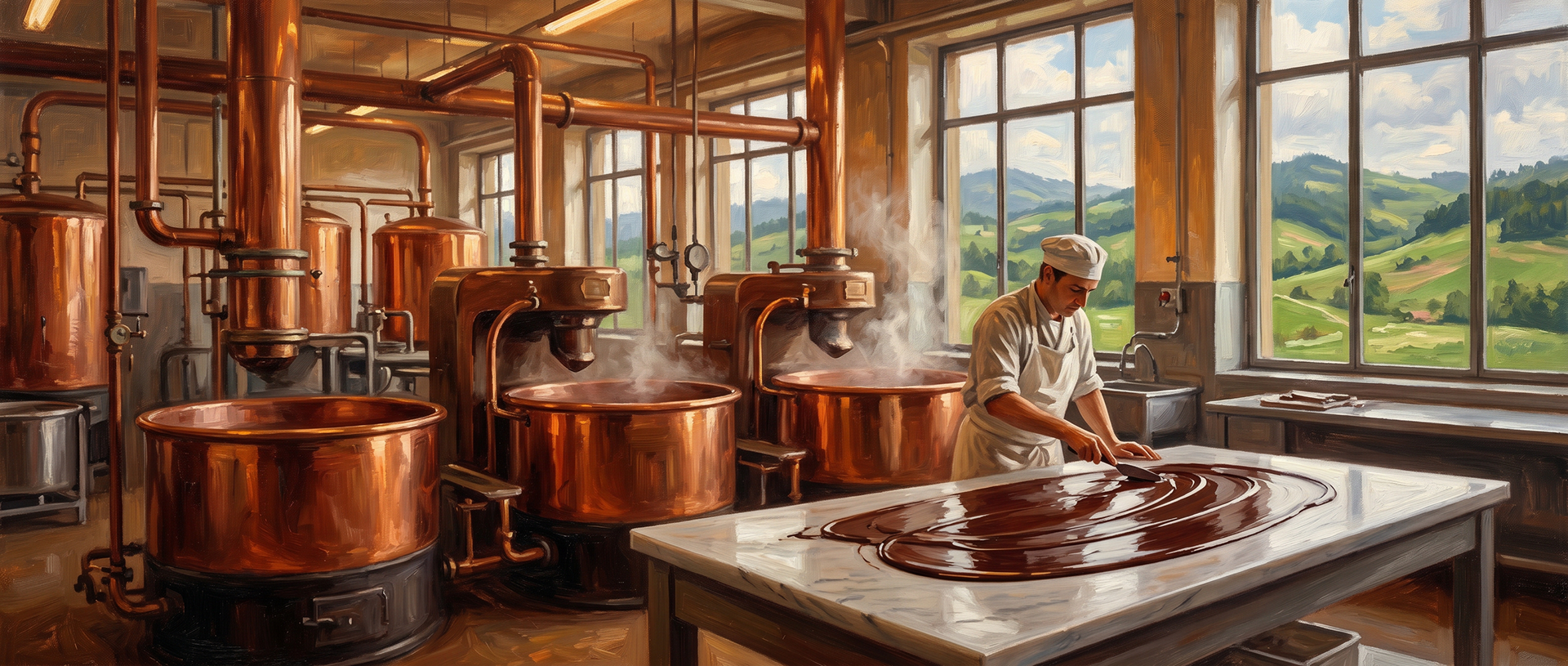
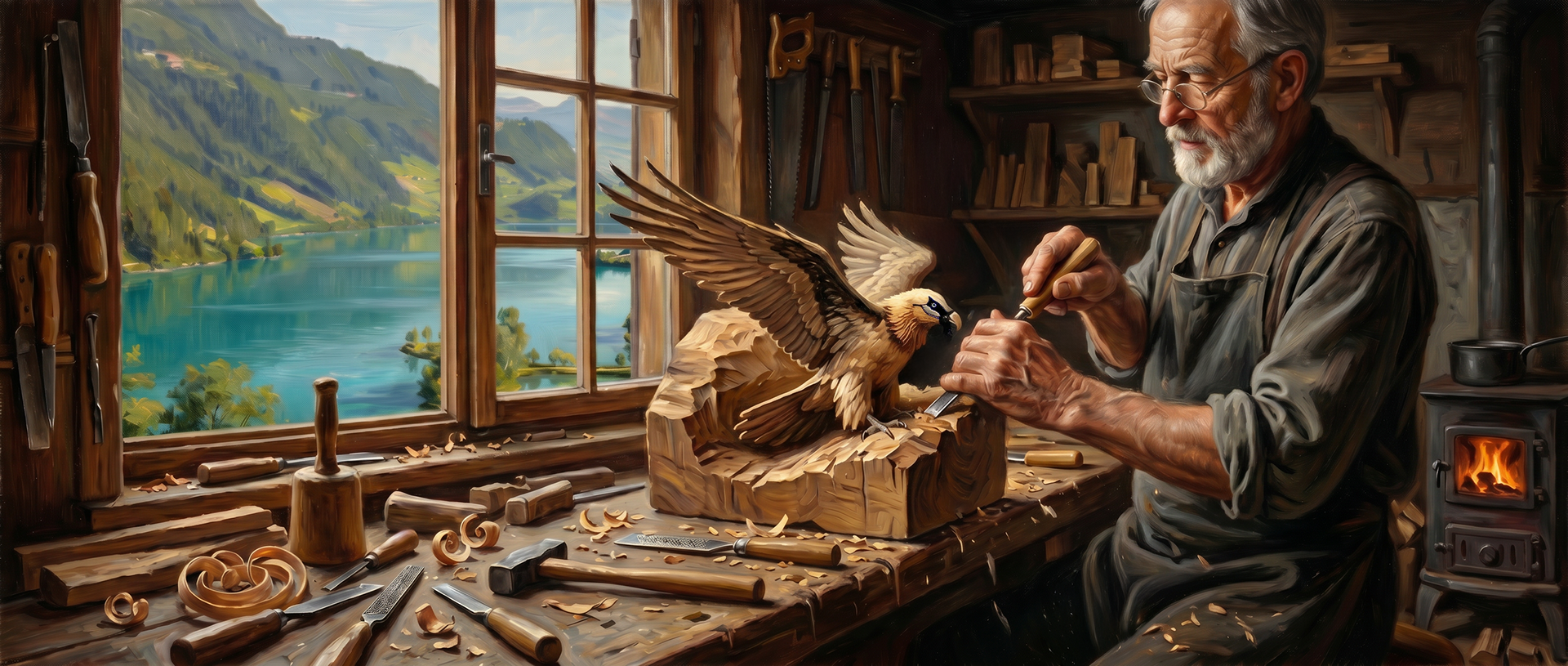
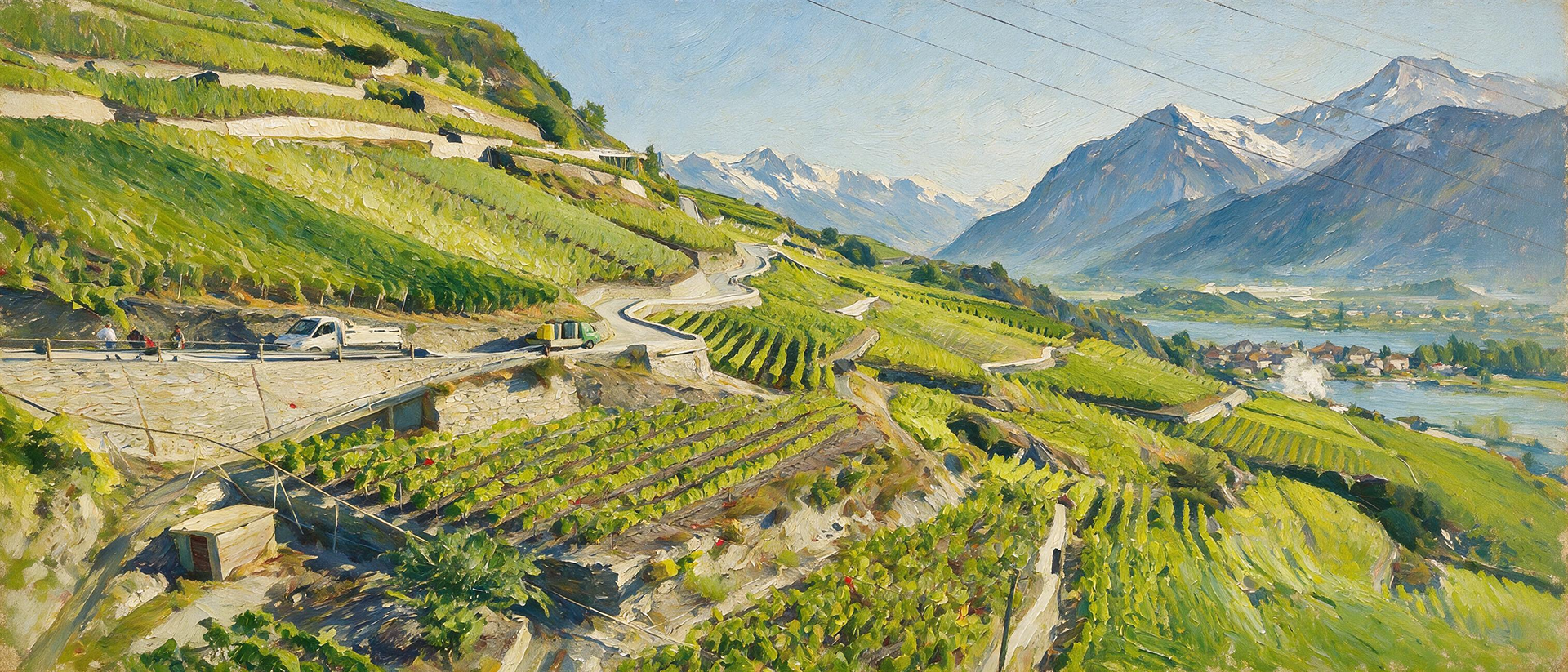
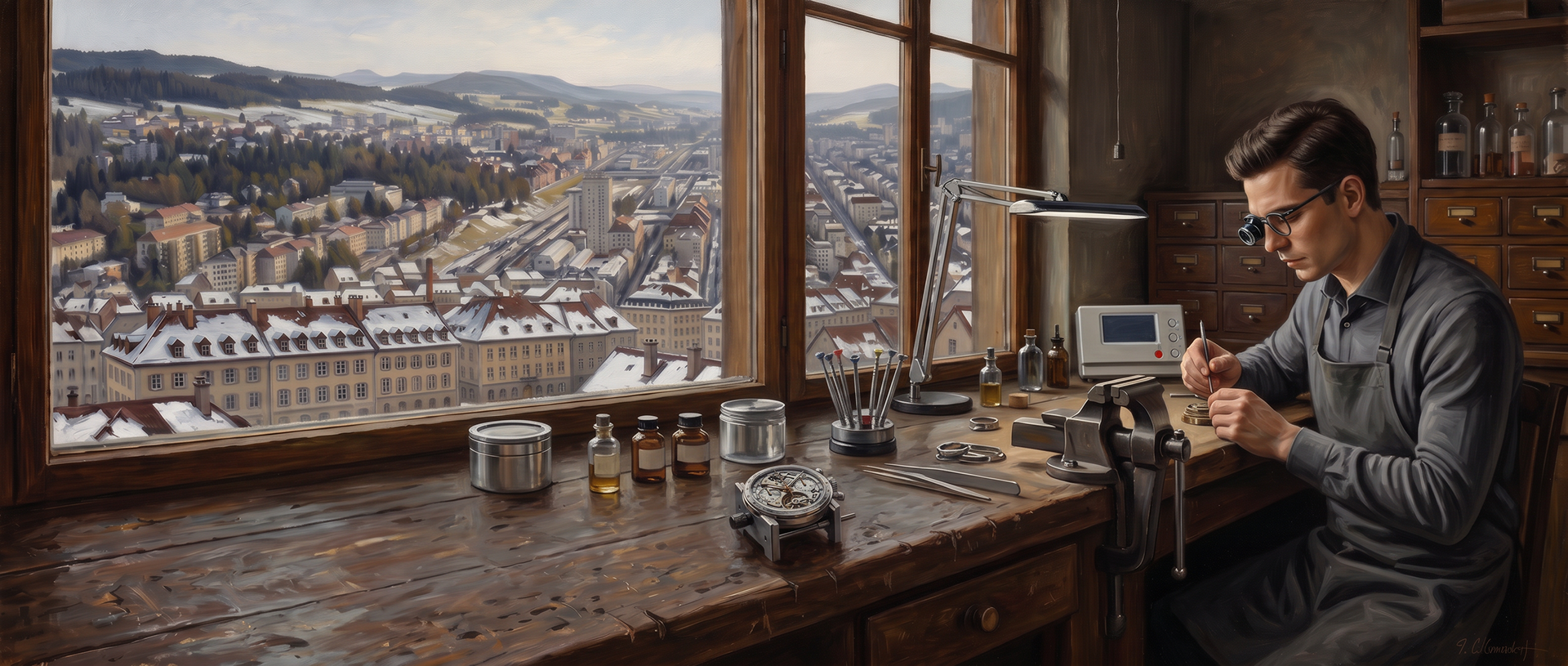
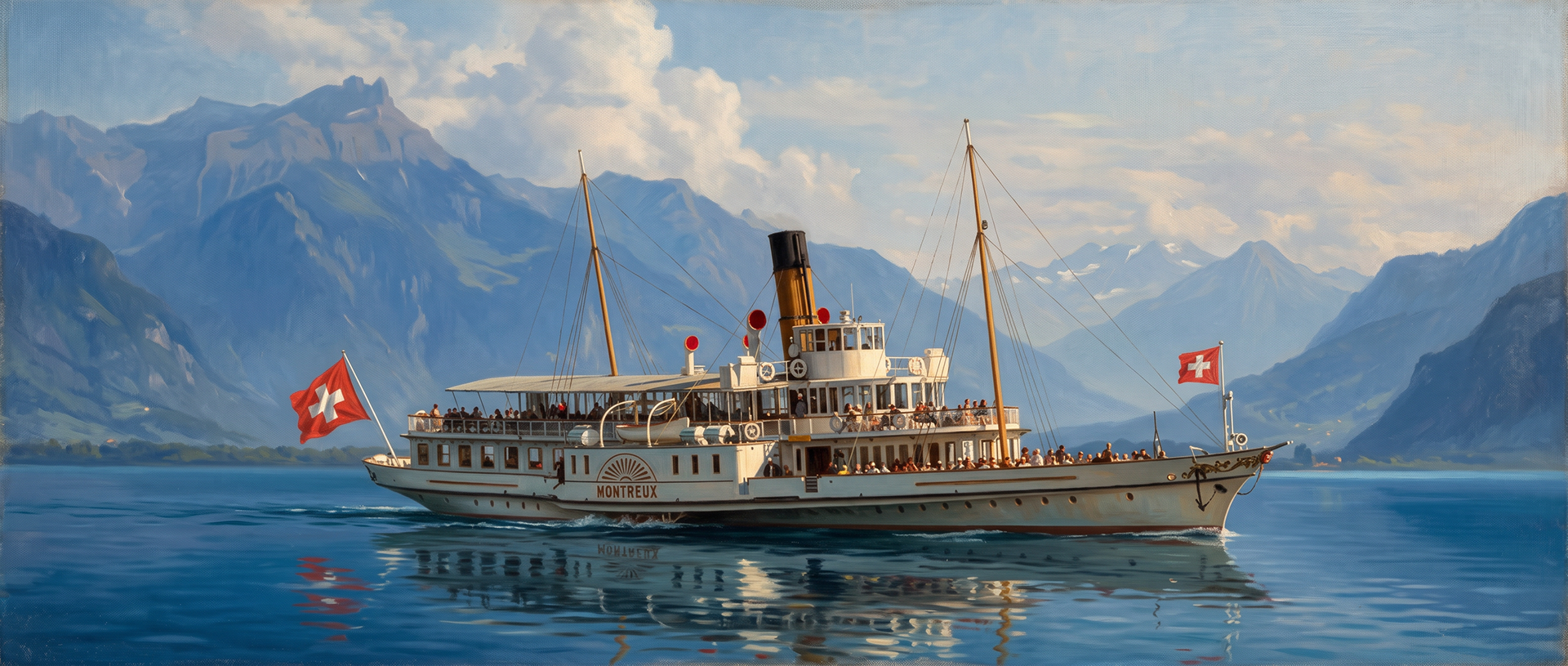
The whole film was built generatively: images in Nano Banana, upscaling through Magnific, animation in Kling and Seedance, assembly and grade in After Effects. The visual register was 19th-century Swiss alpine painting — Calame, Diday, Hodler — which meant working against the tools rather than with them. Generative models default to photographic sharpness and gloss; every scene had to be pulled back toward brushwork, blocked-in masses, and a muted period palette.
The medium's constraint: two faces, one edge.
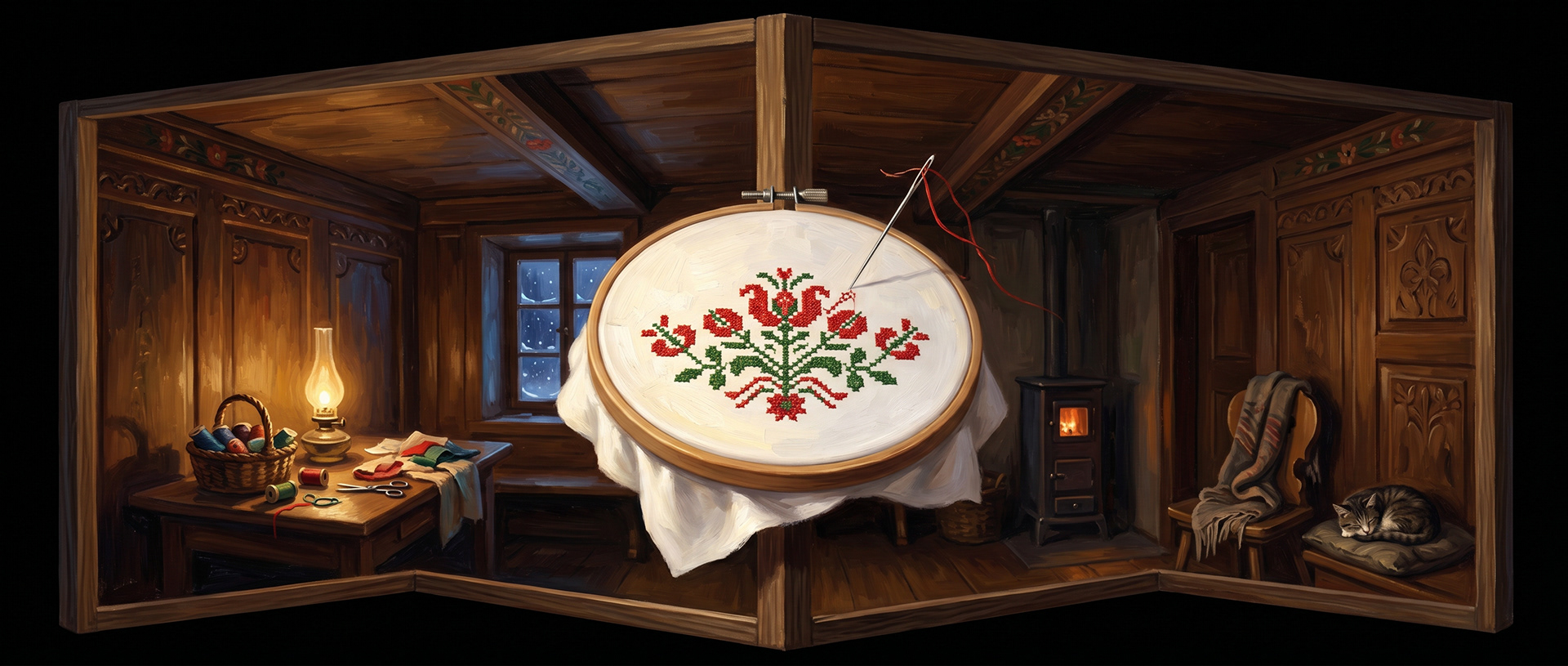
A cube is not a screen. The viewer sees two faces simultaneously, with the vertical corner between them pointing directly at them. Compositions had to be built as anamorphic pairs — two angled panels meeting at a central spine — so the image resolves into a single depth illusion rather than reading as two separate pictures. Anything designed flat falls apart on the corner.
A cube is not a screen. The viewer sees two faces simultaneously, with the vertical corner between them pointing directly at them. Compositions had to be built as anamorphic pairs — two angled panels meeting at a central spine — so the image resolves into a single depth illusion rather than reading as two separate pictures. Anything designed flat falls apart on the corner.
The character problem.
The gypaète had to appear across scenes from consistent angles. Nano Banana couldn't hold a subject through rotation; Google Flow could — for a single isolated object it produced usable angles, from which the character was built and cut out.
The gypaète had to appear across scenes from consistent angles. Nano Banana couldn't hold a subject through rotation; Google Flow could — for a single isolated object it produced usable angles, from which the character was built and cut out.
The method that worked was simple. A still plate — no animation of its own — goes into Kling; the character goes in separately through Elements; the prompt describes only its path. Enters frame, crosses, exits. The bird carries all the movement and the landscape stays a painting, which is exactly right for a film built in an oil-painting register. Occasionally the model returned a bird that wasn't mine, but rarely — most passes held the character.
The limit is the flip side of the same behaviour: Elements holds the tracked subject and lets everything else settle. On a scene that needed a living crowd behind the bird, it was the wrong tool — there the character had to be masked in After Effects and composited over an animated plate. Deciding which scenes got which treatment turned out to be the real work.
Google Flow → character, multiple angles ↓ cut-out asset ↓ Kling · Elements ← still plate (no internal motion) ↓ path: enter → cross → exit
II. Waterscreen
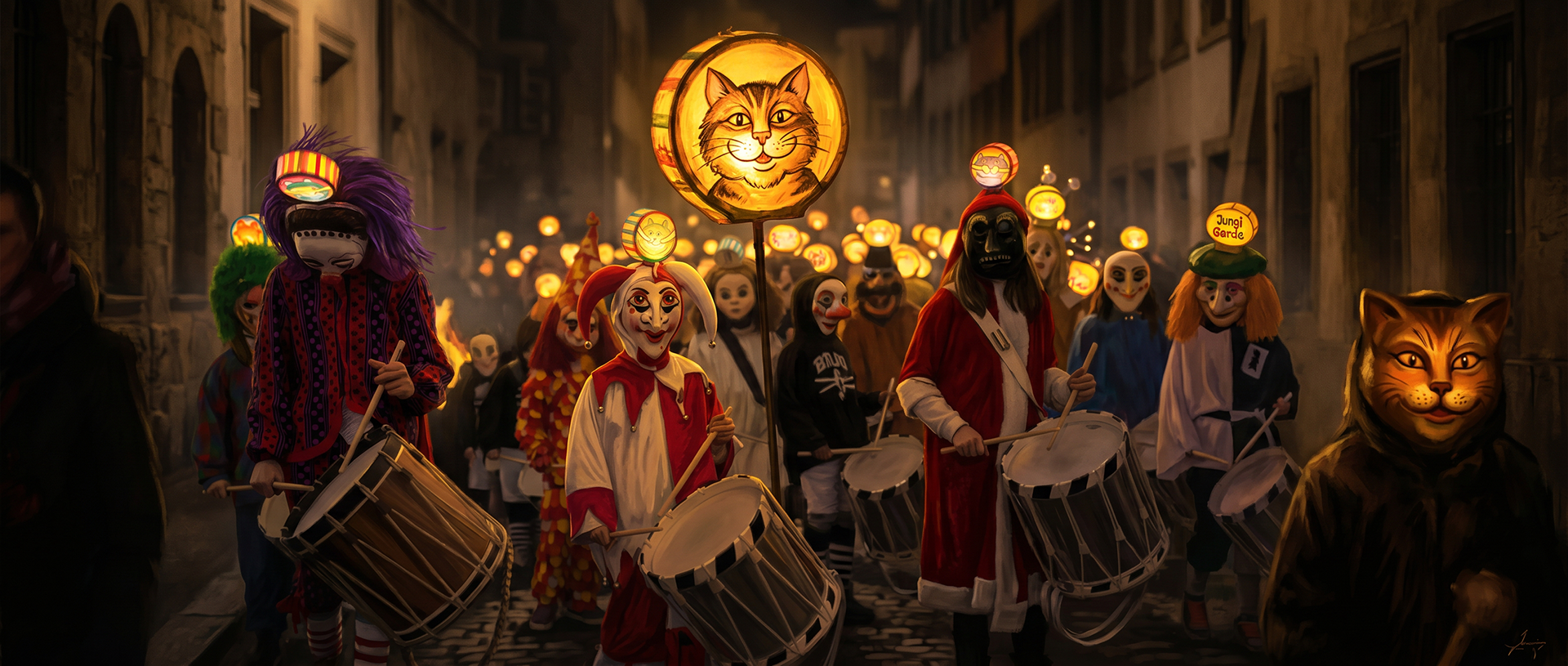
The second installation for the same client and the same night: projection onto a water screen — a fountain throwing spray upward into a moving, semi-transparent surface.
I had never worked with this medium. What follows is what it taught me.
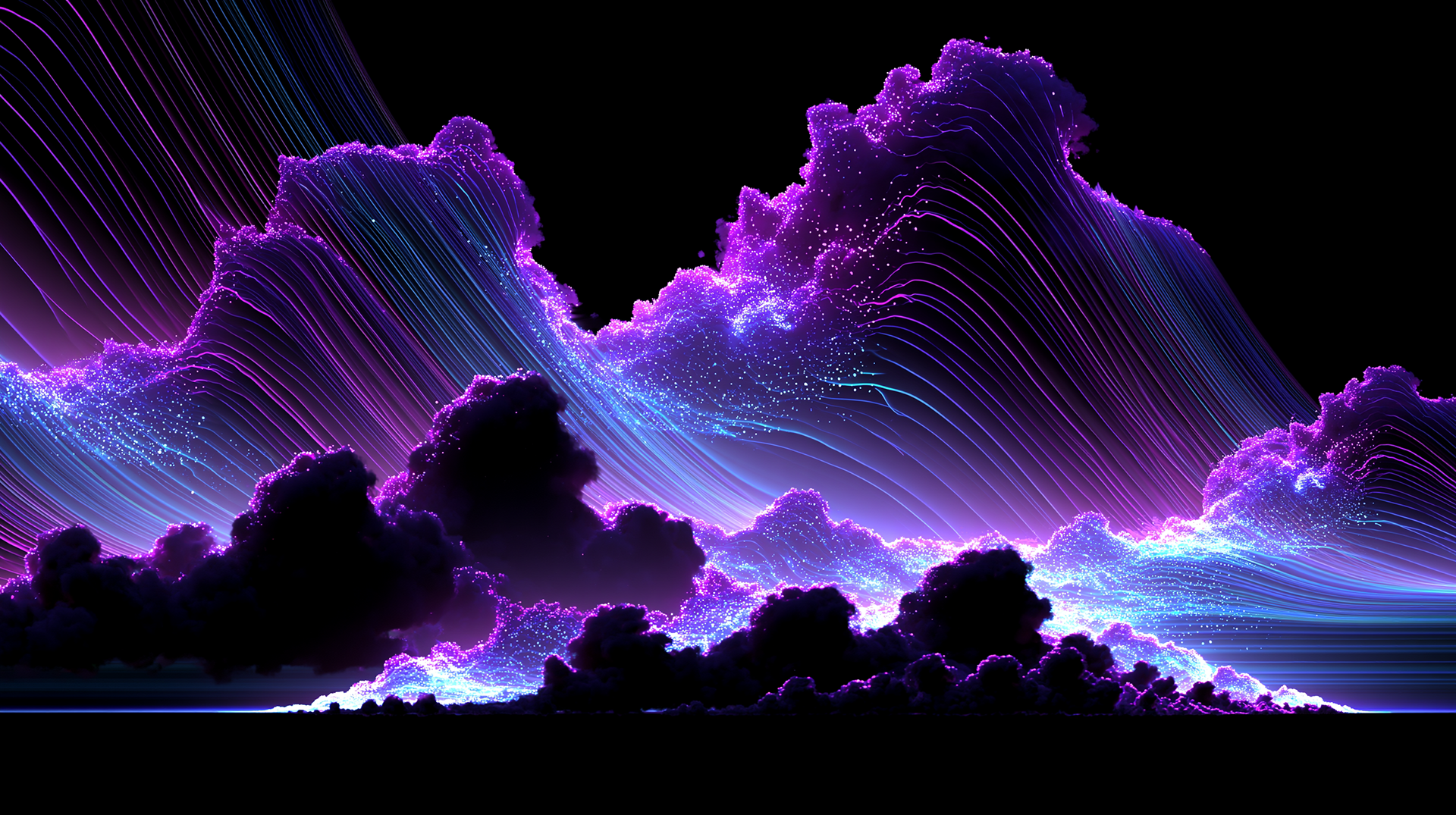
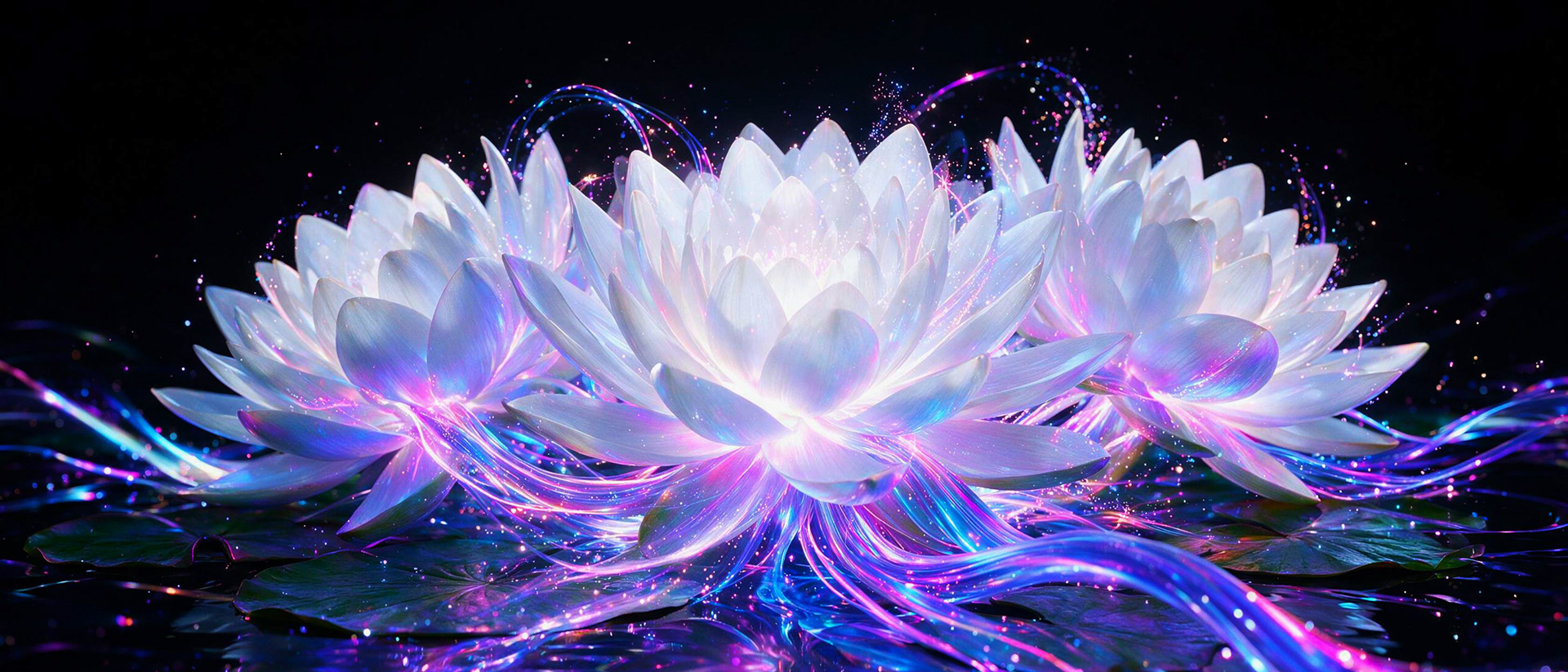
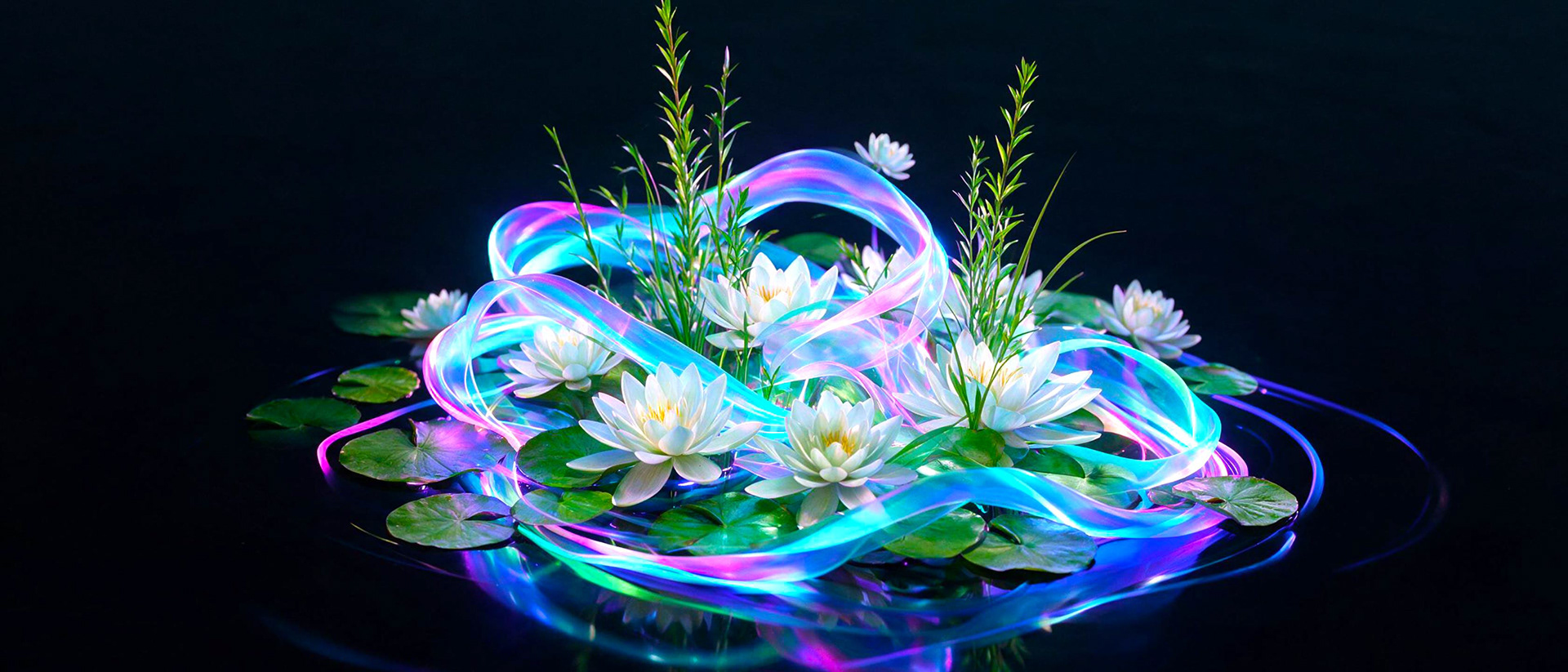
Detail does not survive. The image lands on moving spray. Fine texture, thin lines, and internal detail collapse into a blur. Rich compositions read as a murky smear.
Only the lower centre is reliable. Water density is highest close to the nozzles. Everything above and to the sides diffuses. The whole message has to sit low and central.
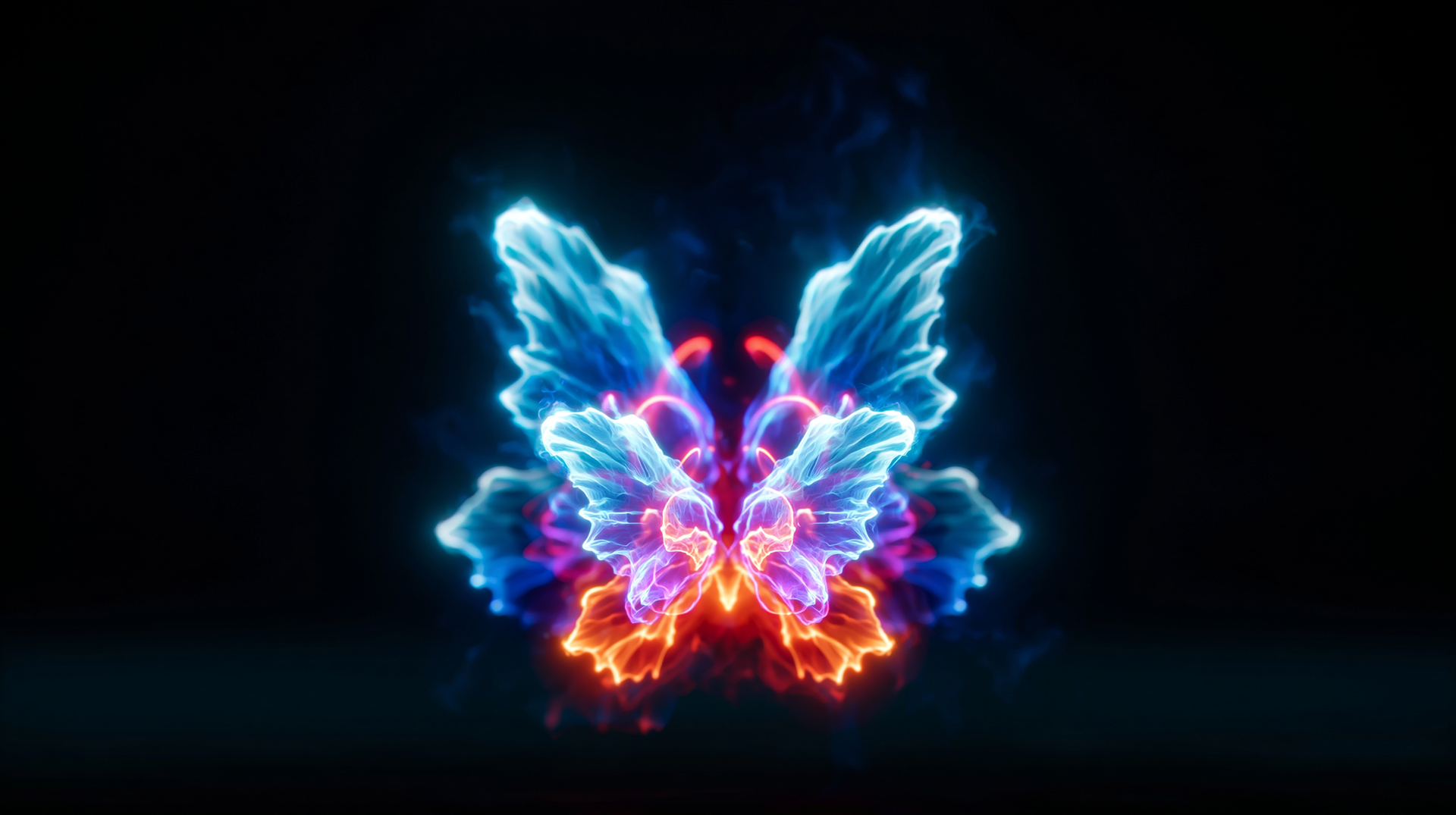
Contrast over beauty. What survives is silhouette and luminance separation. Colour relationships drift toward each other in the spray.
The reversal. The first round was elaborate and carefully made — and effectively invisible on site. Everything was rebuilt in the opposite direction: vector forms, neon lines, maximum simplification. The client had initially chosen the richer options; the medium overruled both of us.
Tool note. Seedream produced the best sketches — genuinely beautiful, and for exactly that reason unusable. Nano Banana's flatter, plainer output was the correct tool here. Animation carried through Kling.
The medium dictates style harder than anyone wants it to. Beautiful is not the same as legible.